Germany no longer faces gas shortages this winter, with storage to refill quickly over summer

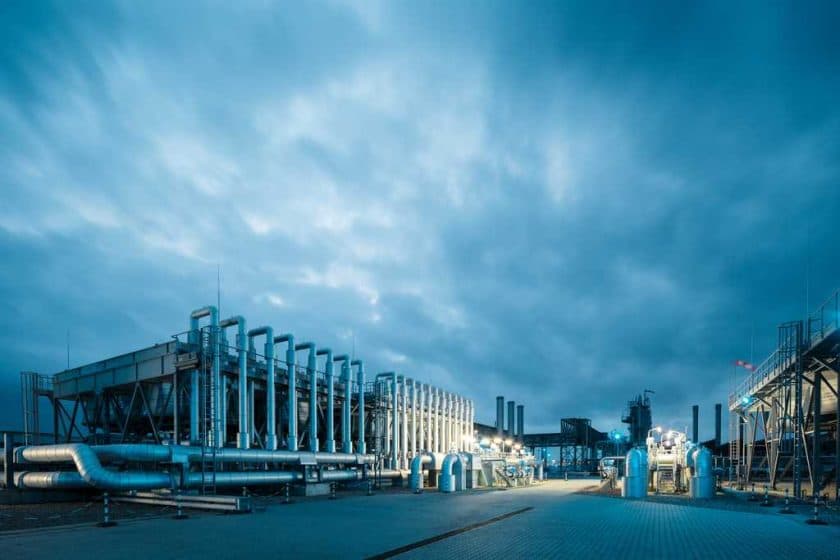
Berlin, Jan. 16 (CTK correspondent) – Germany no longer faces a risk of gas shortages this winter, even in the event of extreme and prolonged frosts. Sebastian Heinermann, head of the German association of gas and hydrogen storage operators INES, said this at a press conference today. As recently as mid-December, the association had not ruled out problems with gas supplies, but in its revised, more positive outlook Heinermann pointed to above-average gas storage levels and an optimised import system.
German gas storage facilities are currently around 84 percent full. Heinermann said they can be expected to fill quickly after the end of the heating season. With favourable temperatures, they could be completely full by the end of July.
„If no extraordinary risks arise, there is no need to worry about gas shortages for the rest of the winter, even in extreme frosts. Storage facilities can be completely refilled ahead of the next winter, at the turn of 2024/2025,“ Heinermann said.
The December analysis did not rule out a gas shortage and also warned that the statutory requirement to keep gas storage levels at 40 percent on Feb. 1 might not be met. According to INES, however, it is now clear that Germany faces neither of these risks. The threshold will be met even in the event of severe frosts.
At the beginning of January, German storage facilities were 91 percent full. Gas stocks currently stand at 83.8 percent, according to the Federal Network Agency, which acts as the regulator. Even in the worst-case scenario, in which Germany is gripped by freezing temperatures, INES assumes that storage levels will not fall below 15 percent by the beginning of April. In an average winter, Germany’s storage facilities will be 54 percent full when the season ends, but refilling will begin in April. If temperatures are above average for the rest of the winter, as they were in Europe in 2020, INES expects storage levels to start rising gradually as early as February, approaching 90 percent full at the beginning of May.
According to INES, storage facilities will be completely full by the end of September at the latest. Under favourable conditions, however, they could be full by the end of July. Germany will therefore once again have no problem meeting the requirements of the Energy Security Act. The law requires storage facilities to be 85 percent full on Oct. 1 and 95 percent full on Nov. 1. Germany reached the November target at the end of September last year, and exceeded 100 percent by November. This is possible because the calculated storage capacity is lower than the facilities’ actual technical capacity. The storage facilities can therefore hold more gas than their guaranteed volume.
The German association INES now has 16 members, which manage more than 90 percent of Germany’s gas storage capacity and around 25 percent of the European Union’s storage capacity.
Translation disclaimer
This article is a machine translation of the Czech original and has not yet been fully reviewed. In case of any doubt, please refer to the Czech version.




