Montel: Bulgaria's tax on Russian gas will be paid by Gazprom, not buyers

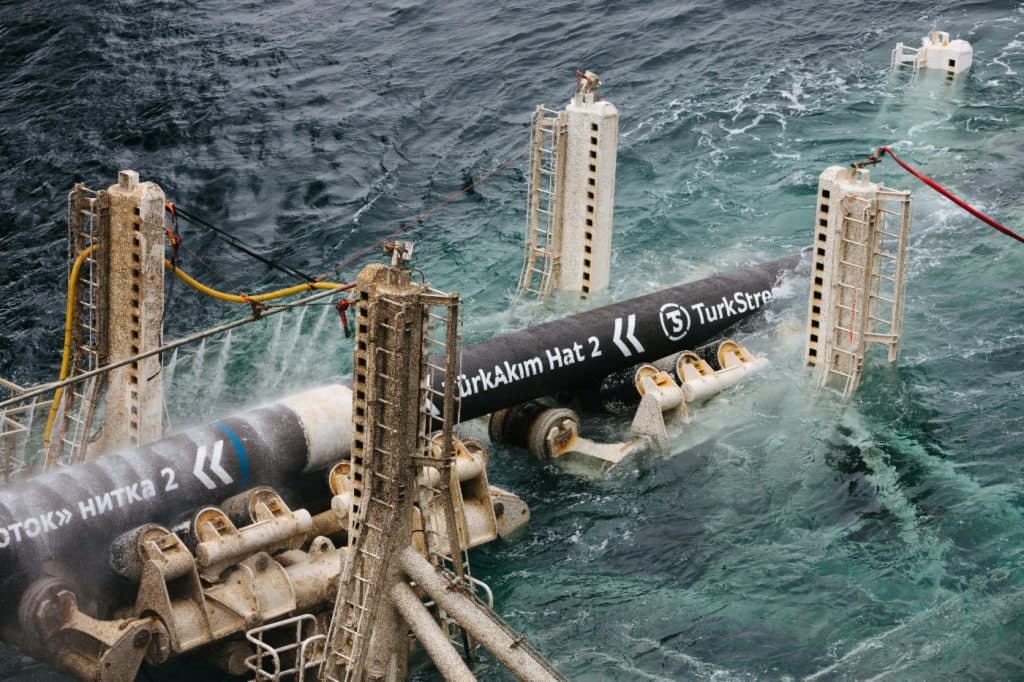
After Bulgaria recently introduced special fees for importing and transporting Russian natural gas through its territory, speculation began about their potential impact on the European gas market. The introduction of a relatively high tax immediately drew a reaction from Hungary and Serbia, which are supplied via this route. However, according to a source familiar with the situation, the new fees should be paid by Russia's Gazprom, since the countries have contracts setting the price for gas delivered to their borders.
Two weeks ago, the Bulgarian government introduced special fees of 20 leva (around 10 euros) per megawatt-hour for importing and transporting gas of Russian origin. The move drew strong criticism, particularly from Hungary and Serbia, which receive Russian gas via Bulgaria, where it arrives from Turkey through the TurkStream pipeline.
Government officials in Hungary and Serbia called the move hostile and contrary to European solidarity, and said it also threatened their energy security. According to the AP news agency, however, Bulgarian Prime Minister Nikolay Denkov said the fees should not lead to an increase in gas prices for countries along the transit route, but instead reduce the profits of Russia's Gazprom.
An unnamed source who is close to a trader buying Russian gas delivered via Bulgaria made a similar comment to the Montel news website.
"This is a problem for Russia," the source said, noting that Bulgaria's current government is strongly anti-Russian. "It wants to flex its muscles and say, 'Don't interfere in our affairs'," the source added, referring to speculation that Russia may have interfered in Bulgaria's most recent parliamentary election.
Hungary and Serbia's long-term contracts
According to the unnamed source, the long-term contracts signed by Hungary and Serbia are structured so that they pay a price for gas delivered to their borders. Russia's Gazprom therefore bears all the costs of transporting natural gas through Bulgaria and along the rest of the route.
According to Montel, Gazprom has signed several long-term contracts in the region. The largest, for 3.5 billion cubic metres of gas a year, was signed with MVM, a Hungarian state-owned company. Gazprom has several options if it wants to avoid paying the new fees.
"Russia could do various things. First, it could continue transporting the gas and not pay this tax," the source said, adding that Bulgaria would not be able to halt transit because of pressure from the EU.
Another option, according to the source, would be to change the gas's declared origin in Turkey. Russia could theoretically supply gas to Turkey, from where it would then be re-exported to Gazprom's customers as gas of Turkish origin.
"Russia can export gas via alternative routes, such as Ukraine or Poland, so that Bulgaria receives no income at all from gas transit, but Gazprom also does not want to finance Ukraine," the source commented."This is nothing unusual. This kind of regulatory risk has been factored into the TurkStream project from day one," the source added.
Translation disclaimer
This article is a machine translation of the Czech original and has not yet been fully reviewed. In case of any doubt, please refer to the Czech version.




