11 October 2026, 08:24
Loading...
Poland reports its gas storage facilities are 100% full

Lukáš Lepič
27 September 2025, 11:49
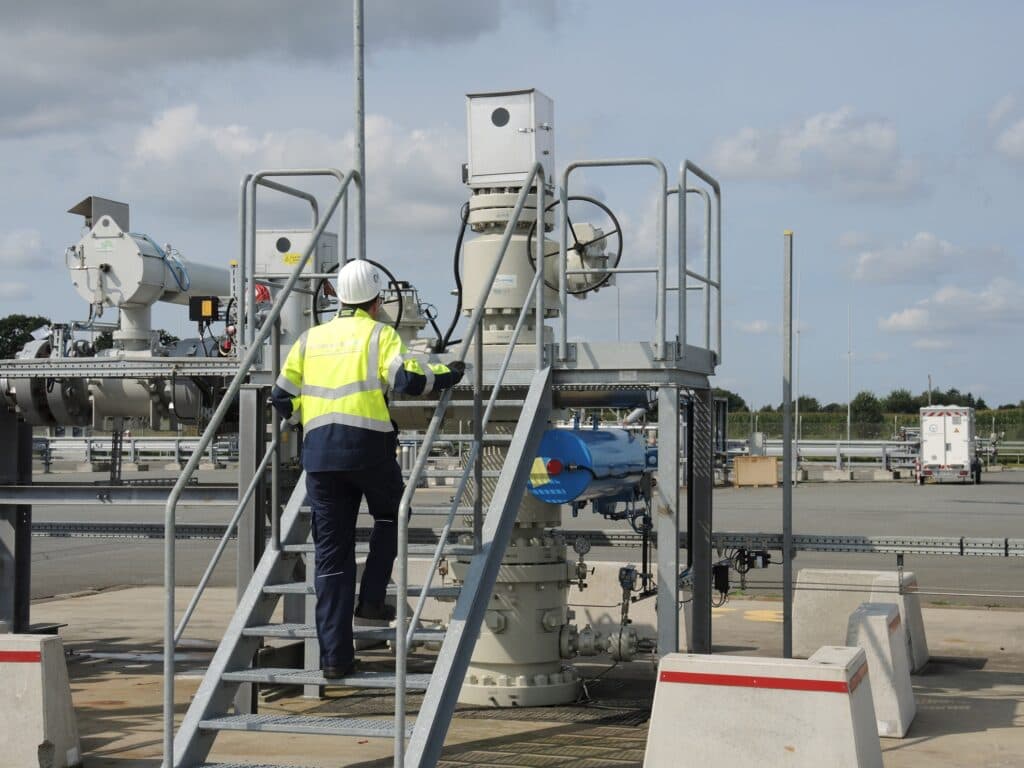
Poland announced that, as of September 24, 2025, its natural gas storage facilities were 100% full, which Energy Minister Miłosz Motyka said was the highest level among EU member states. The minister said full storage facilities strengthen the country's energy security and provide "real protection against crises".
According to analysts, Poland's success cannot be separated from its import diversification and infrastructure strategies: Poland has an LNG terminal in Świnoujście with an import capacity of 5 billion m³ a year, which is to be expanded to 7.5 billion m³. Together with the Baltic Pipe and other interconnectors, this capacity helps reduce dependence on gas supplies from east to west. Despite the current situation, maintaining the 100% level until winter, when consumption rises significantly, will be a challenge.
Polish gas storage facilities, however, are nowhere near as large in capacity. They can hold a total of 36.2 TWh, less than the facilities in Czechia, which can hold 46.3 TWh. Nor are they anywhere near the largest "gas warehouses"—the capacities of Germany, Italy, France, the Netherlands and Austria together account for two thirds of total EU capacity.
In the context of Central European consumption, these full storage facilities mean that Poland has significant strategic room to balance supply fluctuations, but only for a limited time and with limited international reach.
In terms of total capacity, our western and southern neighbours are therefore more significant. According to data from the Swiss Federal Office of Energy, the average fill level of EU gas storage facilities this season is currently just below 80%.
Germany, which has the largest storage capacity in the EU, recently reported that its storage facilities were 75% full. The country is therefore effectively meeting EU requirements ahead of November 1, although the risk of a very cold winter remains. According to data from Gas Infrastructure Europe (GIE), it is common for EU countries to hold reserves at 70–80% in the period before winter.
Translation disclaimer
This article is a machine translation of the Czech original and has not yet been fully reviewed. In case of any doubt, please refer to the Czech version.
Sdílejte článek prostřednictvím:
You might also like

10 October 2026, 13:19

10 October 2026, 07:37

10 October 2026, 07:02