US could become a leader in electrolyser manufacturing

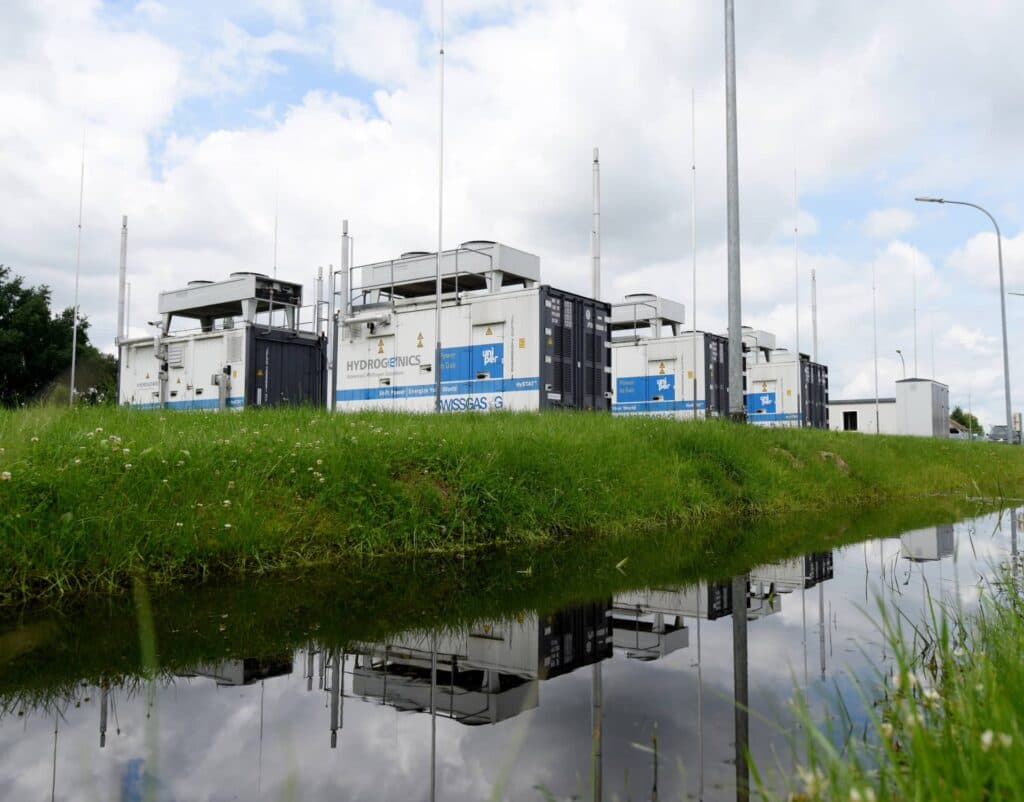
The United States could become a leader in hydrogen technologies. Conditions for developing the sector are more favourable overseas than, for example, in Europe.
Electrolysers, which use electricity to convert water into hydrogen, are a key technology for the hydrogen production sector. As reported by Euractiv, the United States is likely to create a more favourable environment for its development.
EU rules for hydrogen production will be stricter than those in the US. This could prove decisive for the EU electrolyser industry. Hydrogen is a central part of the EU’s green industrial policy, the so-called Net-Zero Industry Act.
The International Energy Agency expects US, Chinese and European manufacturers to dominate the global market by 2030. According to European lobbying group Hydrogen Europe, electrolysers made in Europe will rank among the best in the world. However, European electrolyser manufacturers warn that an unfavourable business environment in the EU could allow China and the US to capture the global market.
The business environment remains uncertain, among other reasons because three technologies are competing for dominance in the electrolyser market. For example, cheaper alkaline electrolysers produce hydrogen continuously, while proton-exchange membrane (PEM) electrolysers are more expensive but can adjust production flexibly, for instance in response to electricity availability. The third technology, solid oxide electrolysers, relies on high-temperature waste heat from industry to achieve efficiency.
China has focused its production on the cheaper alkaline technology, while Europe has opted for the more expensive but more flexible PEM type. PEM electrolyser manufacturers in the EU received a positive incentive when Brussels adopted rules for producing hydrogen from renewable electricity.
For hydrogen to be labelled renewable, the electrolyser must be powered by dedicated solar or wind farms. The link between electricity and hydrogen production will have to be established on a monthly basis, and then hourly from 2030. This means electrolysers must be flexible enough to take advantage of periods when production is possible, a rule that favours the PEM option.
While Europe leads in PEM electrolysers, the fate of the sector may be decided in Washington. Direct subsidies of up to 3 USD per kg of hydrogen help the commodity overcome a market barrier of 1 USD. While Europe has settled on strict hourly correlation rules to ensure electrolysers operate using newly installed renewable energy sources, the US is still considering which standard to adopt.
The US Treasury is expected to make a decision soon. If it opts for more lenient rules, cheaper but less flexible electrolysers, such as those made by Chinese companies, could benefit.
Translation disclaimer
This article is a machine translation of the Czech original and has not yet been fully reviewed. In case of any doubt, please refer to the Czech version.