23 October 2026, 14:38
Loading...
Brexit: Austria loses nuclear leverage over Britain
Jan Žižka
28 June 2016, 18:01
Will the British build new nuclear units after leaving the European Union? Put three analysts together and you will hear four different opinions. One thing is certain, however: nuclear energy divides the European Union into its supporters and staunch opponents. And the ability of countries such as Austria to curb nuclear development in the United Kingdom will disappear entirely after Brexit.
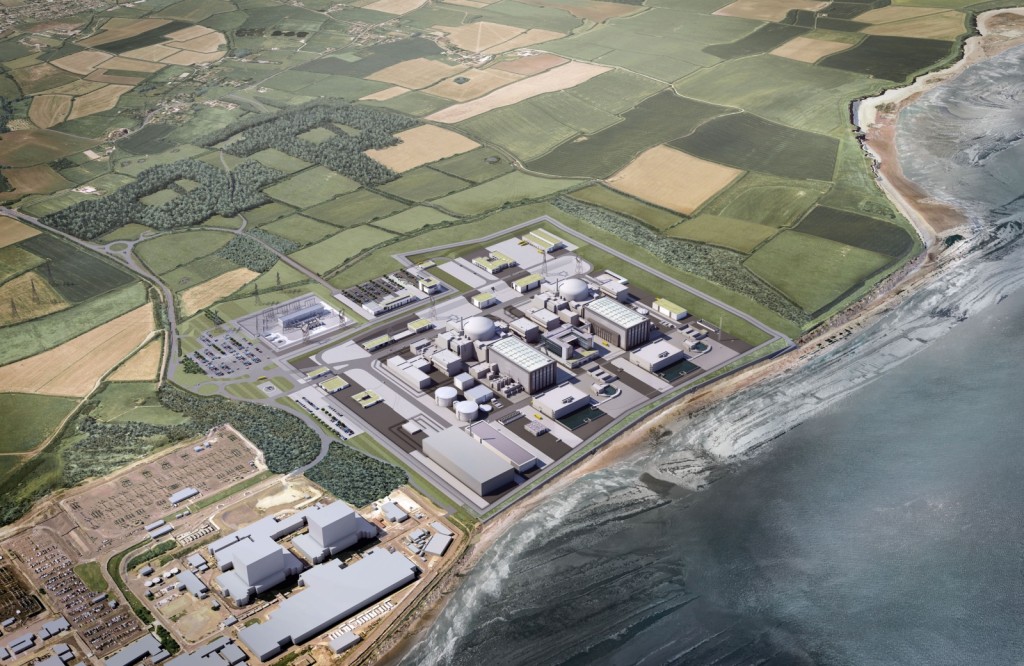
“Brexit completely eliminates the leverage that the European Union provides to anti-nuclear members such as Austria,” wrote Forbes contributor Rod Adams, who now sees nothing but good news for British nuclear power. Among other things, this would remove one of the obstacles facing the much-discussed project for new units at Hinkley Point C, which is to be built by France’s EDF together with Chinese partners.
Inspiration for Czechs
This may also be welcomed by those Czechs who somewhat paranoically understood the Austrian position to mean that Vienna’s attack on London had a hidden purpose and was in fact indirectly aimed at Temelín and Dukovany.
What exactly is at stake? Around a year ago, Austria challenged the financial model for Hinkley Point C before the European Court of Justice in Luxembourg. It considers it impermissible state aid. Above all, this concerns the guaranteed price for electricity from the new reactors – the so-called “Contract for Difference (CfD)”, which many in the Czech Republic described as a suitable opportunity for future Czech power plants as well.
From the perspective of its supporters, the CfD model has one major advantage: the future price is guaranteed not only to the plant operator, but also to the customer. Under certain circumstances, the customer could therefore make a profit. Critics, however, argue that given the high guaranteed price (at Hinkley Point it is 92.5 pounds per megawatt-hour), such a situation will never actually arise.
Brussels approved, Vienna did not
The entire model was assessed by the European Commission, which had signalled its doubts. In the end, however, Brussels gave its approval. It was Austria that subsequently challenged the Commission’s decision before the European court. Luxembourg later joined them.
Once the United Kingdom leaves the European Union, Austria’s ability to proceed in a similar way against other British nuclear projects will most likely be reduced to zero. However, it is very likely that Vienna will not be able to bring even its current fight against Hinkley Point to a successful conclusion.
As Kateřina Jandová of the Nedelka Kubáč advokáti law firm points out, the overall outcome will now be influenced by a number of factors – including how long Britain negotiates its withdrawal with the European Union (if, of course, this decision proves irreversible) and how quickly the European Court of Justice rules in the Hinkley Point case itself. It is quite possible that the court’s verdict will be delivered while Britain is still an EU member.
Enforcement problem
“The problem could arise later, with the enforceability of such a decision,” Jandová warns. After leaving, Britain might not consider itself bound by the European Court of Justice’s ruling. This could be the case even if London otherwise agreed on very close relations with the European Union.
Even if Britain were theoretically to continue adopting EU legislative standards in the future, it would probably no longer regard the Luxembourg-based court as the “interpreter of European law” with regard to its application in the United Kingdom. In any case, the binding nature and enforceability of EU court decisions will be one of the main challenges now facing EU and UK negotiators.
And since building a nuclear power plant takes many long years, the actual implementation of the “Contract for Difference” model at Hinkley Point would not occur until long after Brexit itself.
The construction of Hinkley Point’s new units itself will apparently be decided by purely British factors. If the country runs into financial difficulties after Brexit, a number of infrastructure projects may pay the price. In the case of power plants, however, the acute need for new capacity in the United Kingdom will certainly weigh on the other side of the scales.
The author works as a consultant and energy projects specialist for the HATcom agency.
Lead photo source: IAEA Imagebank
Translation disclaimer
This article is a machine translation of the Czech original and has not yet been fully reviewed. In case of any doubt, please refer to the Czech version.
Sdílejte článek prostřednictvím:
You might also like
23 October 2026, 11:01
23 October 2026, 06:34