
28 October 2026, 15:10
Loading...
Britain to invest heavily in nuclear sector jobs

Jiří Puchnar
30 March 2024, 07:51
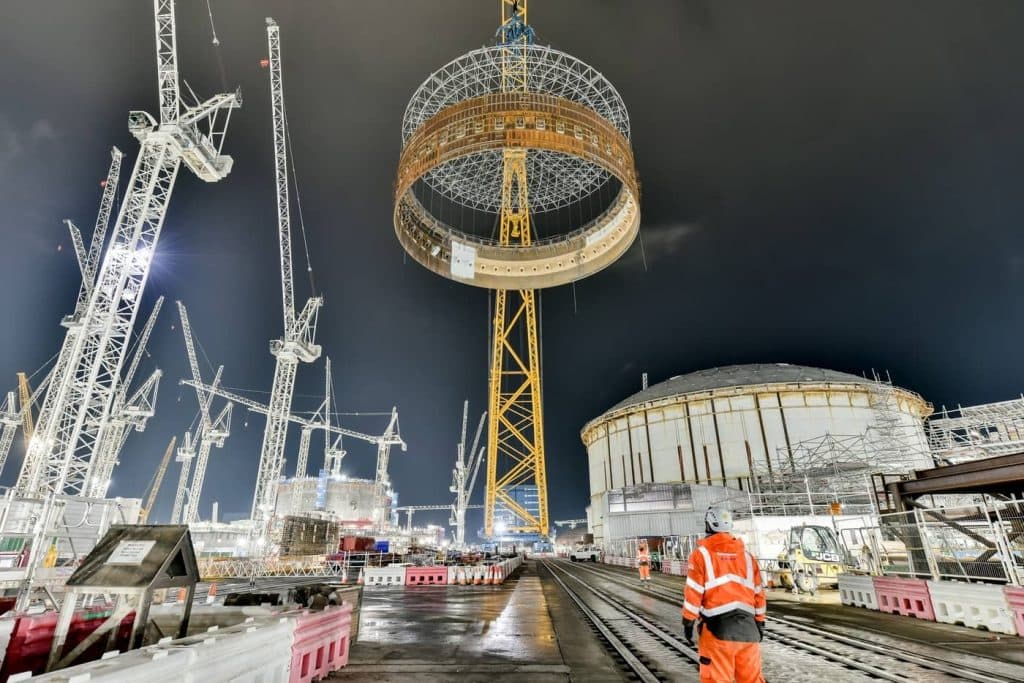
British Prime Minister Rishi Sunak announced a package of public and private investment aimed at supporting 40 000 new jobs in the defence and civil nuclear industries. The government said that, in cooperation with industry, including BAE Systems, Rolls-Royce, EDF and Babcock, it would invest at least 763 million GBP (22,5 billion Kč) by 2030 in skills development, jobs and education.
The investment will create more than 8 000 career opportunities, helping the industry fill 40 000 new jobs by the end of the decade. The funding will support plans to double the number of secondary-school and university graduates specialising in nuclear energy, while the number of scientists specialising in nuclear power will quadruple.

Interior layout of the Rolls-Royce SMR facility. Source: EA
"Domestic nuclear capabilities are vital to our national defence and energy security. Nuclear power supports military deterrence and provides cheaper, more reliable energy for British consumers. The nuclear industry is growing rapidly. Over the next decade, it will need 50% more highly skilled workers, and we need to train a new generation of British talent,"the government said.
Investment in Barrow and nuclear defence strategy
Sunak also announced the creation of a Barrow Transformation Fund, with the government providing 20 million GBP (about 590 million Kč) immediately and at least a further 20 million GBP a year over the next ten years to make Barrow "an even more attractive place to live, work and build a career in the nuclear sector".
The Barrow area in Cumbria, UK, is particularly notable for its long-standing involvement in building and maintaining nuclear submarines for the Royal Navy. The town of Barrow-in-Furness is in north-west England and is home to BAE Systems Submarines, where Vanguard-class nuclear submarines, which carry the UK's nuclear deterrent, and the newer Astute-class attack submarines are built.
Following this new investment, Defence Secretary Grant Shapps published a government document on the defence nuclear enterprise, which sets out for the first time the full range of activities needed to sustain and modernise the UK's naval nuclear fleet.
Plans for the UK energy sector
The UK energy strategy presented in April last year set a target of building eight new reactors and small modular reactors with a capacity of 24 GWe by 2050, which would meet around 25% of projected UK electricity consumption.
The UK currently generates around 15% of its electricity from nuclear power plants (with a combined installed capacity of 6,5 GW). The first new nuclear power plant in the UK in around 30 years is being built by EDF at the Hinkley Point C site. The two EPR-1600 reactors will provide 3,2 GWe, and a final investment decision on a similarly sized project at Sizewell C is expected soon.
Estimates suggest that the UK nuclear industry will need 123 000 people by 2030.
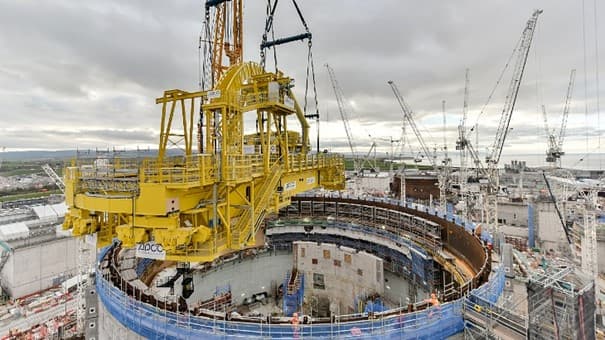
Positioning the gantry crane at Hinkley Point C Unit 1. Source: EDF
Investment of 350 million GBP from the government and more than 400 million GBP from industry will support private enterprise and create job opportunities for everyone, from specialist scientists and engineers, welders and electricians to project managers and Royal Navy submariners.
Industry leaders' responses
"EDF welcomes these joint commitments and looks forward to working with the government and industry to help provide excellent opportunities for people who choose to work in the nuclear sector," said Simone Rossi, CEO of EDF in the UK and a member of the Nuclear Skills Executive Council.
Rossi added that EDF has been at the heart of the UK's nuclear energy sector for more than 15 years and will welcome a further 1 000 employees into its UK nuclear workforce in 2024, for roles in operations, construction, technical support and many other exciting areas. Most will be secondary-school and university graduates, but the company will also recruit people with relevant skills from other sectors.
Tom Greatrex, chief executive of the Nuclear Industry Association, welcomed the new funding to support skills and jobs in nuclear energy, saying: "This is a very welcome investment that will help ensure we have enough people with the right qualifications to increase nuclear power capacity to the level needed to secure energy security. It is a great opportunity for government and industry to work together to attract people to an exciting and promising sector that will play a vital role in the UK's journey to net zero.
Translation disclaimer
This article is a machine translation of the Czech original and has not yet been fully reviewed. In case of any doubt, please refer to the Czech version.
Sdílejte článek prostřednictvím:
You might also like

28 October 2026, 13:08

28 October 2026, 11:10

28 October 2026, 09:08
