23 October 2026, 14:38
Loading...
Current state and future of nuclear energy in Czechia (part 2)
Vladimír Wagner
10 January 2018, 17:48
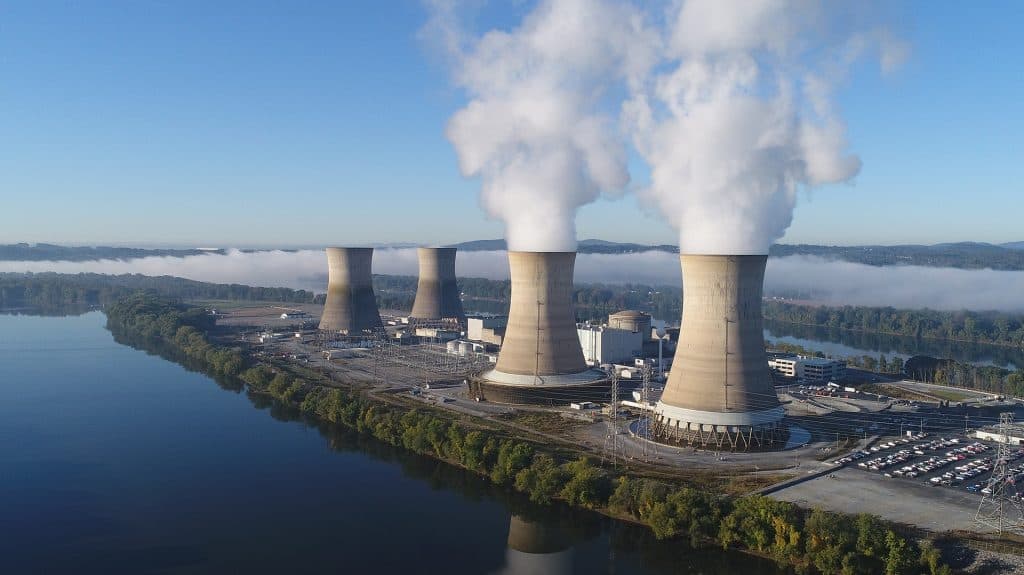
This is the second part of an article on the present and future of nuclear energy and its potential worldwide and in Czechia. The first part can be found here.
What conditions are necessary for the use of nuclear energy?
The development and use of nuclear energy are not suitable for all countries. An important condition is the presence of an educated and technologically advanced society. If a country decides to use nuclear energy, it is a long-term commitment. Nuclear units themselves have a lifespan which, for modern ones, reaches sixty years, and their decommissioning at the end of their operating life must also be taken into account, as must the potential recycling of spent fuel and the underground disposal of the remaining highly active nuclear waste. The volume of nuclear waste generated is relatively very small, so regardless of the intensity of nuclear energy use in a given country, one deep geological repository is in principle sufficient. Intensive use of nuclear energy therefore significantly reduces costs per unit of energy produced, not only for this reason.
A very important factor in the use of nuclear power plants is public acceptance and the stability of this support. It is a very long-term investment that is sensitive to the long-term political, educational and economic stability of society.
An important task in securing acceptance of nuclear energy is demonstrating that we can build a final underground nuclear waste repository. A significant turning point was therefore the construction permit received by Posiva in November 2015 for the construction of a permanent underground repository in Olkiluoto, Finland. The Finnish government, parliament and local authorities decided to build the permanent underground repository in 2001, and excavation work began in 2004. The Onkalo underground complex is being built in a granite formation around 5 km from the Olkiluoto nuclear power plant.
The KBS-3 method developed in Sweden will be used for disposal, under which nuclear waste is placed in boron-enriched cast-iron containers holding 12 fuel assemblies. These are placed in a copper casing, which is then inserted into bentonite filling a circular hole nine metres deep and two metres in diameter. These container beds are located in tunnels at a depth of around 500 m below the surface.
Three shafts have been built (one for personnel and two for ventilation), as well as an access tunnel to a depth of up to 455 m and test tunnels used for geological surveys and technology testing. The access tunnel has a gradient of 1:10, a width of 5.5 m and a height of 6.3 m. Actual construction of the repository has now begun. Completion of its first stage is expected in 2020, when the facility should receive an operating licence. Nuclear waste disposal should thus begin in 2023. Operation is currently expected to last around 100 years, after which the repository should be sealed. It is expected to hold waste from the Loviisa and Olkiluoto nuclear power plants. An agreement between Posiva and the Hanhikivi plant was not reached, so it currently plans to build a new repository.
Expected construction costs should be around CZK 27 billion, while the total amount including operation for the aforementioned hundred years should be around CZK 95 billion. It will be the first permanent repository for highly radioactive long-lived waste to enter operation. The main task is to show that there is a method for solving the nuclear waste issue. A number of countries using nuclear energy, including Czechia, want to draw on Finland's success and experience in gaining approval for and building a permanent repository.
Nuclear energy accidents
One of the main arguments of opponents of nuclear energy is the risk of an accident. It is clear that, like other technologies, nuclear energy has its risks. Radiation exposure or the release of radioactivity into the environment can be very dangerous, which is why extreme attention is devoted to eliminating this possibility. Safety requirements for nuclear facilities are also very high. On the other hand, there have been only three major accidents throughout the history of nuclear energy use that resulted in more substantial releases of radioactivity.
The 1979 reactor accident at the Three Mile Island plant resulted in only a very minor release of radioactive substances and had no impact on the surrounding environment or human health. Decontamination, disposal of the damaged core and removal of radioactive material from the plant were completed in 1990. Demolition of the building of the damaged second unit is being postponed until operation of the first unit ends, in order to benefit from the synergies associated with joint decommissioning.
The 1986 accident at Unit 4 of the Chernobyl nuclear power plant was the greatest disaster in nuclear energy. It was caused by a flagrant breach of safety rules by the shift carrying out an experiment involving turbine rundown. It was also contributed to by safety-inappropriate designs of certain RBMK reactor components and secrecy surrounding this model, which was developed from an originally military reactor.
Moreover, these units have no containment structure. The result was the worst event that can occur in nuclear energy. The molten core and parts of it reached open space. The resulting fire was tackled by firefighters who did not know the scale of the disaster. This was also why nearly 50 workers died as a result of radiation sickness.
Evacuation took place only at the time of the largest radioactive releases. At the same time, for economic and political reasons, it proved impossible to prevent radioactive iodine from entering the food chain. A further 14 deaths from thyroid cancer to date can be directly attributed to the accident. The total number of thyroid cancer cases that can predominantly be attributed to radiation exposure is now nearly 7,000. Fortunately, it can be treated relatively effectively. The only other health impact demonstrated by epidemiological studies was a slight increase in the likelihood of leukaemia among liquidators directly involved in dealing with the consequences of the accident.
Therefore, where estimates of the number of deaths exist, they use extrapolations of the relationship between the increased probability of illness, particularly cancer, and the received dose into the range of low and very low doses. Using and extrapolating this relationship from the well-known BEAR VII study, estimates for the affected population—liquidators, evacuees and residents of affected areas, numbering around 7 million—range from 6,000 to 20,000 cancer deaths for the affected generation. The normal number of cancer cases in a group of this size is around 1,700,000.
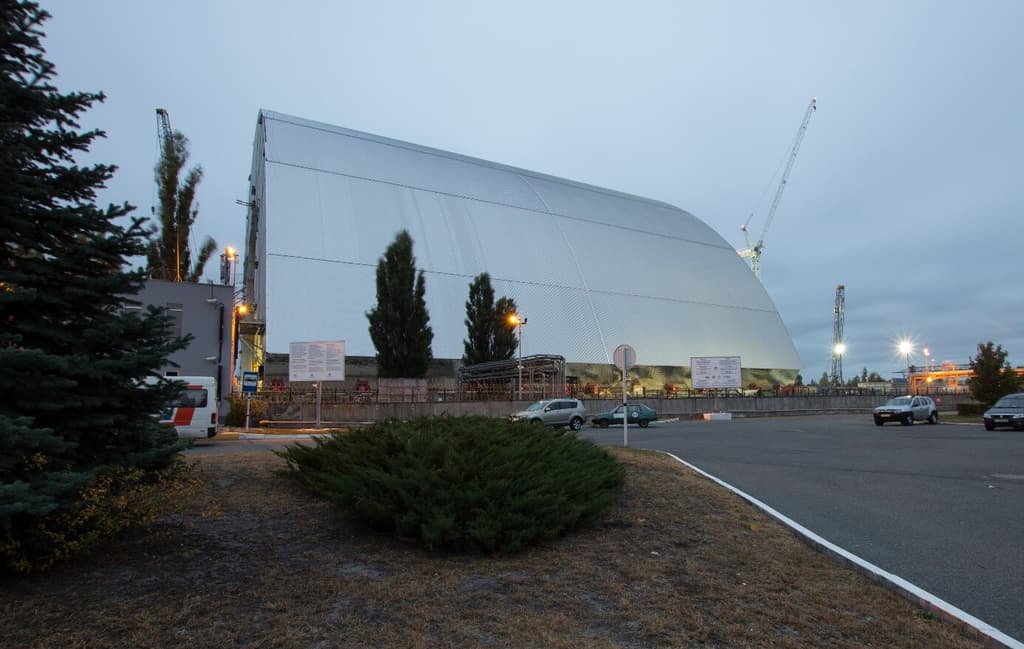
A key turning point in addressing the consequences of the accident came in 2016 and 2017. The new sarcophagus was completed, hermetically sealing the old sarcophagus and the destroyed unit. This eliminated the risk of radioactivity escaping from the damaged reactor. Previously closed areas can therefore be opened. The largest part will become a national park, which was declared in April 2016, on the thirtieth anniversary of the accident (in more detail here and here). This part of Ukraine was already very sparsely populated before the accident, and nature remained untouched. Following the departure of people as a result of the accident, nature developed without human intervention, and populations increased not only of large mammals such as bison, moose, Przewalski's horses, wolves and foxes. Environmentalists in particular advocate continuing restrictions on access to this part of the evacuated zone. Beautiful unspoilt nature will be attractive not only to biologists but also to tourists. An industrial zone is being built in a smaller area near the power plant. A dry interim storage facility for spent fuel from Ukrainian nuclear power plants is currently being completed there. Work has also begun on the first part of a large photovoltaic power plant, with capacity expected to be on the order of several gigawatts. It will use the existing transmission lines that carried electricity from the nuclear units. Other areas will contain memorials to this industrial disaster and its victims. These will most likely include part of the city of Pripyat and some plant buildings. The dismantling of the old sarcophagus and, above all, the destroyed reactor itself will take decades, but revitalisation of the affected areas is already getting under way.
Human failings also contributed to the scale of the consequences of the accident at the Fukushima I nuclear power plant, but it was triggered by one of the largest natural disasters ever to affect humanity. The plant withstood the earthquake without consequences; it was the tsunami wave that caused the disaster. The plant accident had no direct victims, while the tsunami killed nearly 20,000 people in coastal areas. Although the release of radioactivity was substantial, it was limited by containment structures and occurred after evacuation of the surrounding areas had been completed. All necessary measures could be taken to prevent it entering the food chain and endangering residents. The health impacts of the accident will therefore be negligible, as confirmed by all epidemiological studies conducted. Apart from the most heavily contaminated areas in the immediate vicinity of the plant, affected and evacuated areas have already been sufficiently cleaned up and could be reopened for people to return. Most evacuated residents were thus able to return. Intensive decontamination of the aforementioned heavily contaminated areas is currently under way, and they should be reopened in 2021.
At the plant itself, the accident destroyed and melted the cores of three reactors. A hydrogen explosion, caused by hydrogen that entered it from the third unit, also destroyed the fourth unit, whose core was empty at the time. By 2017, it had already been possible to remove the fuel assemblies from the pool of the aforementioned fourth unit. Work to remove fuel from the pools of the first, second and third units is at an advanced stage. All are expected to be emptied by 2022. All accumulated contaminated water has been cleaned of all radionuclides except tritium. Heavy hydrogen cannot be chemically separated from water. Nearly 600,000 tonnes of water are now stored in welded tanks. Total available capacity is up to 900,000 tonnes.
Tritium is a natural component of the environment, formed through cosmic radiation interactions in the atmosphere. In principle, the tanks could therefore be discharged into the sea with sufficient dilution and without environmental impacts. However, this is very difficult for fishermen to accept, so tritium separation is being considered. This would be very costly, however. A final solution to the contaminated water issue is expected in the coming years. Endoscopes have already been used to look inside the containment structures of the three destroyed units, and cosmic muons established that the cores of all of them had largely melted. Robots have also entered them. The third was examined by an underwater robot, which managed to find remnants of solidified fuel melt. Their condition should be investigated in the coming years, but complete disposal of the remnants of molten fuel will take many decades. A detailed analysis of the Fukushima I accident, its consequences and remediation can be found in the book Fukushima I afterwards, in a series of articles on OSEL (the final part is here) and in a lecture.
It is clear that the social and economic impacts of the Chernobyl and Fukushima accidents were substantial and drastically affected the lives of many people. Almost everyone knows about the three accidents described, whereas almost nobody remembers the many dam failures that caused far more victims. This applies even more to mining disasters or oil and gas pipeline explosions. Real statistics comparing casualties and damage per unit of output for individual energy sources show that nuclear power is among the safest. Social and economic collapses caused by energy shortages or high energy prices have far greater consequences and claim more victims. It must also be recalled that the safety of operating and newly built units has increased dramatically, based on experience from the three accidents mentioned. Generation III+ reactors in particular are therefore very safe, with an extremely low risk of an accident.
Current state of nuclear energy
The United States currently has the largest number of nuclear power reactors, 99 in total. However, it generates only around 20 % of its electricity from nuclear power. France ranks second, with 58 reactors, but obtains more than 70 % of its electricity from them. Belgium, Hungary, Slovakia and Ukraine also currently produce around 50 % or more of their electricity from nuclear power. In Europe, nuclear units supply around a quarter of electricity.
While the total capacity of nuclear power plants and nuclear electricity generation grew rapidly in the 1970s and 1980s, growth slowed by the end of the 1980s and stagnation has prevailed since the end of the 1990s. A large share of generation growth has come from improvements in the performance of existing units. Electricity generation peaked in 2006 at 2,658 TWh. There was a decline in 2011 and 2012 caused by the shutdown of Japanese units after Fukushima and the rapid closure of some German reactors. This decline was partly offset by the completion of new units in China. Some Japanese reactors have also begun returning to operation over the past two years. If the remaining Japanese units started operating as well, the aforementioned peak of more than ten years ago would already have been exceeded. It can therefore be expected that global nuclear energy will surpass this output in the next few years.
While a revival in nuclear construction is slowly getting under way in China, India, Russia and several other countries, stagnation prevails in Europe and America. Five units entered service in 2014, four of them in China; ten units in 2015, eight of them in China; and ten units again in 2017, five of them Chinese.
Only a few units are being built in Europe. In addition to the aforementioned EPR reactors in Finland and France, there are two VVER-440 units at Mochovce in Slovakia. However, these projects have experienced a number of problems and delays. It is becoming clear that Europe is losing the ability to implement such projects efficiently. Construction sites are being prepared at Paks in Hungary, Hanhikivi in Finland and Hinkley Point C in the UK, which will show the state of Europe's ability to deliver nuclear units. Actual construction at Paks will begin in January 2018. Some further projects, including in Czechia, are under consideration. At present, however, the main concern is caring for Europe's ageing nuclear power plant fleet. The original reactor licences were mostly for thirty years. It is becoming clear, however, that with appropriate care and upgrades they can be safely operated for forty, fifty or even sixty years.
China and South Korea are showing that they can deliver nuclear unit construction serially within six or even five years. Russia is approaching this state as well. At the same time, companies from these countries offer similarly efficient construction abroad.
Not only Germany has demonstrated how strongly nuclear energy is influenced by politics and ideology. German nuclear reactors were highly successful, efficient and safe. This also applied to the companies that built them. Nevertheless, a political decision was made in Germany to end the use of nuclear power. A similar situation currently threatens South Korea. The newly elected South Korean president decided to phase out nuclear power in the country. Preparations for construction of the Sin Hanul 3 and 4 units were subsequently suspended. Preparations for the already planned shutdown of South Korea's oldest nuclear reactor, Kori 1, were also accelerated, and it was shut down on 19 June 2017. The continuation of construction of the Sin Kori 5 and 6 units is also highly uncertain. The country's new leadership also wants to reduce coal use and rely primarily on imported gas and renewable sources. However, conditions for these are considerably limited there, so it remains an open question what effect this new energy policy will have on this industrial export-oriented country without its own energy resources.
What about fusion?
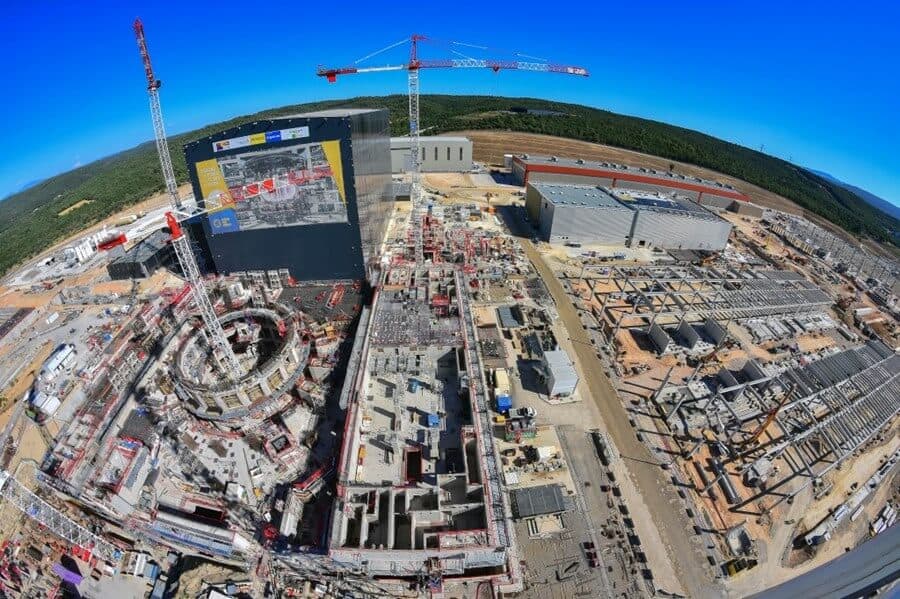
The path to energy use of fusion remains long. The ITER facility being built at Cadarache in France should demonstrate the possibility of releasing multiples of the energy needed to heat plasma. However, it will not yet be a power plant. It is a tokamak that can use a powerful magnetic field to contain extremely hot plasma and allow intensive fusion of the heavy hydrogen isotopes deuterium and tritium. Long-term plasma confinement, its properties and the fusion process will be studied there. An important task is also testing chamber materials, diagnostic equipment and the reactions taking place. It is the largest scientific project, and current cost estimates are around EUR 20 billion. The first plasma is expected to be generated in the facility in 2025, while fusion experiments will probably not start until after 2030.
The first demonstration power plant will be the DEMO facility, whose design will draw on experience gained from operating the ITER tokamak. It will also demonstrate the production of fuel, namely radioactive tritium. This will be produced in the blanket around the fusion chamber, which will be filled with lithium. The reaction of a neutron with this nucleus produces tritium. DEMO will also have a turbine and generate electricity. However, sufficient experience from work on the ITER tokamak must be gained before the project begins. DEMO construction cannot therefore be expected to start before 2030, and most likely not until the late 2030s.
Specific projects for commercial fusion power plants will only be prepared on the basis of the DEMO tokamak. It is therefore clear that they will not enter commercial power generation until the second half of this century at the earliest. In any event, they will be large units with capacity on the order of a thousand megawatts.
There are numerous synergies between fission and fusion energy. Fusion reactors also generate very intense neutron fields, and data on neutron interactions with a range of structural materials, as well as the development of materials resistant to radiation and extreme temperatures, are very important for them. The companies that currently supply components for fission reactors will also participate in constructing fusion power plants. It is thus clear that countries with developed fission-based nuclear energy will have an advantage and suitable conditions for developing fusion energy.
What about the Czech Republic?
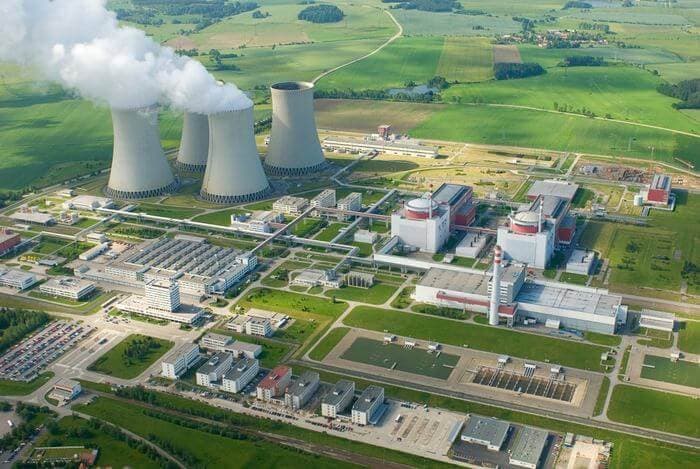
The Czech Republic has a very long and successful tradition in the development and use of nuclear energy. It has a sufficient educational and technical base, which was created in post-war Czechoslovakia. It has the necessary research base concentrated mainly at the site in Řež, where there are two research reactors and accelerators with installed neutron sources. The key organisations there are ÚJV a.s., Centrum výzkumu Řež s.r.o. and the Institute of Nuclear Physics of the Czech Academy of Sciences. The Institute of Plasma Physics of the Czech Academy of Sciences operates the large COMPASS research tokamak, which is of the same type as ITER. University education is mainly associated with the Faculty of Nuclear Sciences and Physical Engineering at the Czech Technical University in Prague, as well as other technical universities. The aforementioned faculty has the VR-1 Sparrow research reactor and the Golem tokamak. A number of industrial companies are involved in manufacturing components for nuclear technologies. To name just a few: ŠKODA Nuclear Machinery, MODŘANY power a.s., ŠKODA Praha, Vítkovice, a.s. and many others. It should be recalled, however, that some of these companies have experienced fairly serious problems in recent years.
The first Czechoslovak nuclear power plant was the A-1 demonstration heavy-water reactor cooled by carbon dioxide at Jaslovské Bohunice in Slovakia. Four Russian VVER-440 pressurised-water units were subsequently built there between 1980 and 1985. There are currently two nuclear power plants in Czechia: Dukovany has four VVER-440 reactors and Temelín has two VVER-1000 reactors. Gradual upgrades at both plants have increased the capacity of individual units. The units at Dukovany have gross capacity of 510 MWe, or 2,040 MWe in total, while those at Temelín have 1,055 MWe, or 2,110 MWe in total. Total nuclear capacity is therefore 4,150 MWe. Nuclear power supplies around 35 % of electricity generated, although the exact figure depends on the specific situation in a given year.
Fuel for these nuclear units is currently purchased from Russian company TVEL, although Westinghouse fuel for VVER-1000 units has also been tested. The Swedish branch of this company can now also manufacture fuel assemblies for VVER-440 reactors. Diversification of fuel suppliers is thus ensured. In addition, the volume and weight of the required fuel assemblies are so small that transporting them from anywhere is not a problem, while fuel stocks can be stored for many years—in principle, for the entire operating life of a power plant.
Dry interim storage facilities for spent fuel stored in Castor-type containers can accommodate volumes corresponding to the entire potential operating life of the power plants. A site for a permanent spent-fuel repository is still being selected. Spent fuel is expected to be reprocessed and used either in conventional reactors in the form of MOX fuel or in advanced future Generation IV nuclear reactors. In any case, it will take many decades before nuclear waste needs to be placed in a permanent underground repository.
Which reactors, where and how should they be built?
The Czech Republic has limited options on the path to low-emission energy. Nuclear sources form its dominant part and have the greatest potential. Dukovany has already completed half of its operating life, and conditions need to be created for its replacement. The current assumption is that it will operate until around 2035. Preparing the construction of new units is time-consuming, and the time required to meet all formal conditions for assessment and approval of a project cannot be estimated precisely. If new units are to be available before Dukovany is closed, actual preparations for construction need to begin as soon as possible.
The best-prepared conditions are for construction of two units at Temelín. These units were planned there from the outset and everything is ready for them. However, construction will most likely begin with one unit at Dukovany and one at Temelín. The reason is that replacement of the original units at the older plant needs to start.
Timely preparation requires two important decisions. The first concerns the financing method and the second the selection of units to be built. The decision on which reactor will be built is subject to several basic requirements. It must be a Generation III reactor. It is important for the reactor to already be in operation somewhere and for there to be positive experience with its construction. The extent to which Czech companies can participate in building the selected reactor model is certainly also an important parameter.
Let us consider what can be said about this selection based on the previous overview of the current state of nuclear energy. As mentioned, only three third-generation reactors are currently in operation. The Japanese ABWR reactor is a boiling-water type, which has not yet been used here. At the same time, all of these reactors are shut down in Japan. The South Korean APR-1400 unit has capacity of 1,400 MWe, which is too high for our purposes, especially at the Dukovany site. In the coming years, units will be in operation in South Korea and abroad, which is very positive. On the other hand, there is a question of how to view the purchase of units from a country that has decided to move away from nuclear energy and will not build further such units domestically.
This leaves the Russian VVER-1200 reactor, which will operate both in Russia and abroad in the coming years. The company offering it builds reactors continuously and relatively successfully. We have very good experience with VVER reactors, and a number of Czech companies participate in manufacturing their components and in constructing these power plants. These reactors will soon be built in neighbouring Hungary and also in Finland. Czech companies should participate in these projects as well, and we will be able to monitor their construction.
Other Generation III+ reactors should also enter operation in the near future. These include the AP1000 reactor. However, Westinghouse and Toshiba have major financial problems, and it is uncertain whether they will embark on building further such reactors at all. There are also a number of negative experiences from construction of these units in the United States. Although this is mainly due to the inability of US construction and engineering companies, which lost continuity and experience during the quarter-century hiatus in nuclear unit construction. China might decide to offer these units, where four will soon be commissioned, but this is not very likely. China may focus on offering its Hualong One model. However, this is still several years from completion.
EPR units are, like the APR-1400, too large, and negative experience from construction in Finland and France also disqualifies them to a considerable extent. It is true that they are highly likely to be operating in three countries after 2018, but they are still not particularly suitable for our purposes.
As can be seen, only one candidate remains for a potential tender for new reactors here that has no fundamental problems: the Russian VVER-1200 reactor. However, whatever the outcome of a future selection process, it is clear that one of the key factors for successful nuclear unit construction in a given country is the capability of the construction and engineering companies that are the main contractors. This shows what needs to be supported here in any case. Czech scientific institutions must participate in research into fission and fusion, while Czech companies must participate as intensively as possible in supplying components and independently building nuclear units, both in Europe and worldwide. This has been successful so far. They must retain this capability.
Russian, Korean and Chinese companies currently show that units can be built in as little as six years. However, experience in Europe and the United States has so far been different. Moreover, bureaucratic obstacles to construction of any larger energy source have increased dramatically in Europe. This situation is understandably most demanding in the case of nuclear units. Preparation before construction begins therefore takes years. If we are to meet the targets in the updated State Energy Policy—namely to prepare in time for replacement of the Dukovany units, whose operating life should end around 2035, and to replace at least some coal-fired units with nuclear power—it is necessary to decide as quickly as possible how to implement reactor construction at Dukovany and Temelín and to proceed with actual construction of the first units.
Note
This article is the second in a series that will examine the possibilities of individual energy sources in Czechia and aims to initiate discussion on the future development of the Czech electricity sector, its pitfalls and opportunities. This is particularly important given that several years have passed since the last update of the energy policy and not much has actually been done in the Czech energy sector. At the same time, a number of risks are emerging, so it is very important to gain an overview of energy developments and the state of the sector worldwide and in Czechia. The first part, devoted to wind energy, is available here (part 1) and here (part 2).
The article was originally published on OSEL.CZ
Translation disclaimer
This article is a machine translation of the Czech original and has not yet been fully reviewed. In case of any doubt, please refer to the Czech version.
Sdílejte článek prostřednictvím:
You might also like
23 October 2026, 11:01

23 October 2026, 06:34