10 October 2026, 07:37
Loading...
EDF launches international advisory board for nuclear project financing
Veronika Jurcová
13 March 2026, 06:00
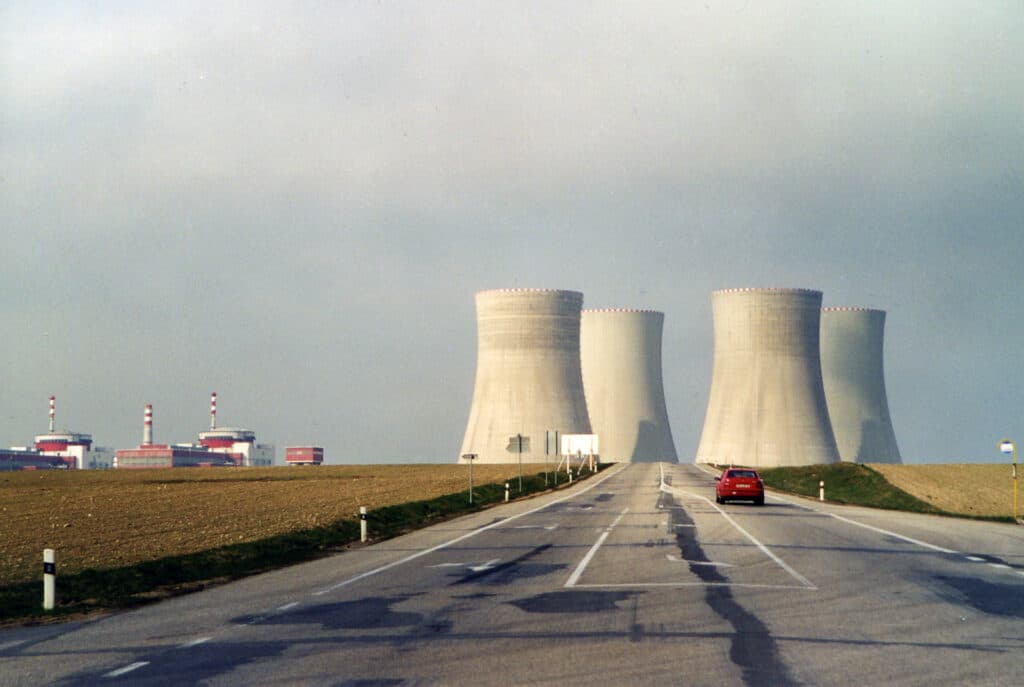
French energy group EDF has set up a new advisory board to help find financing models for the construction of nuclear power plants. The initiative comes as a number of countries plan to expand nuclear power while also seeking ways to finance billion-euro investments in large reactors and smaller modular units, EDF said in its press release.
French state-owned energy company EDF is establishing an international advisory board focused on financing new nuclear projects. Its aim is to bring together the energy and finance sectors and develop models that will make it easier to invest in the construction of nuclear power plants around the world.
The new body, called FINABe (Financing and Investing in Nuclear – Advisory Board EDF), was unveiled at the Nuclear Energy Summit in Paris. The board brings together representatives of major financial institutions, including banks such as ABN AMRO, BNP Paribas, Royal Bank of Canada and HSBC, as well as export and investment institutions.
EDF operates the world's largest fleet of nuclear power plants and is a key player in the construction of new reactors. The company is responding to growing interest among governments in nuclear power, which can help ensure reliable electricity supplies while also reducing greenhouse gas emissions.
Global nuclear capacity set to surge
According to scenarios from the International Energy Agency, global installed nuclear capacity could rise from around 400 gigawatts today to 600–1,000 gigawatts over the next two to three decades. Such growth would require massive investment from governments, banks and private investors, and a similar debate is under way in Europe.
Europe's energy sector will need massive investment in nuclear power plants in the coming decades and is looking for ways to secure the necessary financing. According to a European Commission study published in June last year, the European Union will have to invest around €241 billion in nuclear power by 2050, of which about €205 billion will go towards building new reactors and the remainder towards extending the operating lives of existing plants. The Commission also noted that public and private sources of financing will be crucial, along with instruments such as government guarantees, contracts for difference (CfDs), European Investment Bank loans and export financing. Finding similar financing models is also the aim of the new FINABe advisory board.
The new advisory board aims to help address this challenge. Its task will be to identify financial markets' expectations, share experience in financing major energy projects and gradually develop robust financing mechanisms for new nuclear capacity.
Board to focus on small and large reactors
According to EDF, an important part of the board's work will also be to seek financing models for small modular reactors (SMRs), which are expected to complement traditional large nuclear units in the future. These technologies promise lower investment costs and more flexible deployment, but they do not yet have proven financing models.
“For many countries considering new nuclear programmes, securing credible financing solutions is now just as important as choosing the right technology,” said EDF Chief Financial Officer Claude Laruelle. “Through FINABe, we want to draw on our experience and work with leading financial institutions to create robust financing frameworks that will support the development of new nuclear capacity.”
EDF says it can draw on its experience in structuring projects and building large, technologically complex energy facilities. The company is also involved in nuclear programmes in France, the United Kingdom and other countries, and supplies technology to the nuclear industry through its subsidiaries Framatome and Arabelle Solutions.
The creation of the new advisory board reflects a broader trend towards a nuclear renaissance in the strategies of many countries seeking a combination of reliable electricity sources and low-emission technologies. Experts say access to capital will be one of the key factors determining the pace of new nuclear power plant construction in the coming decades.
Translation disclaimer
This article is a machine translation of the Czech original and has not yet been fully reviewed. In case of any doubt, please refer to the Czech version.
Sdílejte článek prostřednictvím:
You might also like

10 October 2026, 07:02


9 October 2026, 13:47