EIB invests up to 40 million euros in SMRs. Its first support for the technology

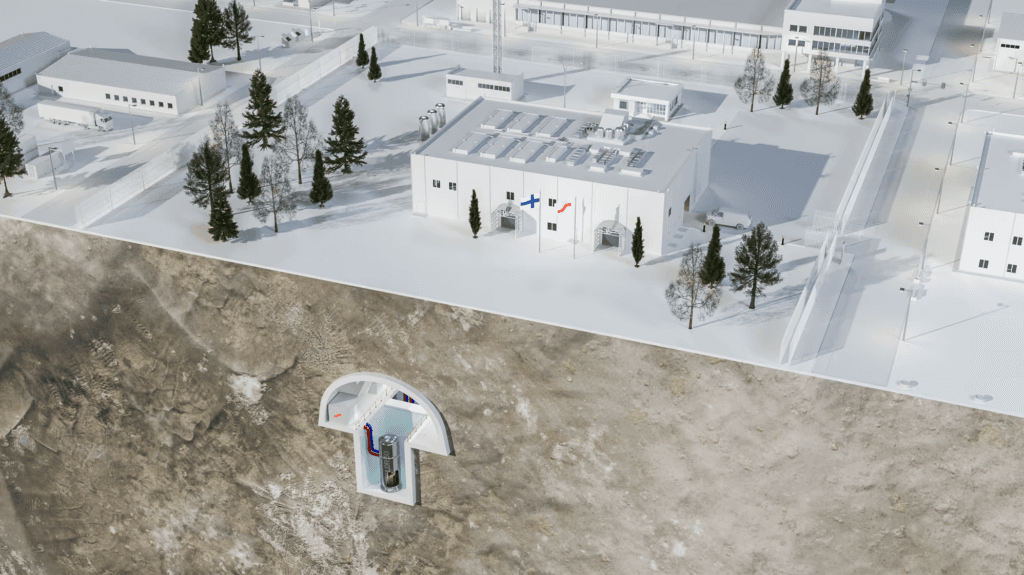
On 15 September, the European Investment Bank announced that it will provide Finnish company Steady Energy with up to 40 million euros to develop its LDR-50 district heating reactor. This is the EIB’s first investment in small modular reactor technology and is also part of wider financing linked to the company’s planned listing on Nasdaq First North in Finland.
For Steady Energy, the financing will support development, testing and licensing from 2026 to 2028. For the European nuclear industry, it marks a significant shift in the approach of an institution that has so far offered only limited support to new nuclear technologies. The scale of the funding is not the only significant aspect: its form also matters, as does the fact that the project is aimed at supplying heat rather than electricity.
Behind the announcement is a link between public financing and capital markets. This may offer a clue as to how Europe will support the first small modular reactor (SMR) projects before they become commercial power plants.
A new step by the EIB into nuclear financing
The EIB said its investment in Steady Energy is its first support for SMR technology. In the past, the bank generally steered clear of new nuclear projects and focused mainly on safety measures, for example those related to Chernobyl. In recent years, however, it has provided a loan for the refurbishment of a Romanian reactor and the expansion of a French uranium enrichment plant.
The bank will provide up to 40 million euros in the form of an unsecured convertible loan. This is not a conventional loan secured against the company’s assets. The EIB will have the option to convert its investment into shares in the future, subject to the conversion conditions being met.
The financing is backed by the InvestEU programme and is part of a wider package involving institutional, strategic and retail investors. The EIB’s announcement also states that Steady Energy and Finnish investment company 3North Partners are preparing to combine and intend to list the resulting company on the Nasdaq First North Growth Market Finland. For an early-stage technology company, a public institution is therefore not its only source of capital, but an important partner on its path to market.
The EIB places its investment within the context of the European Commission’s strategy, which envisages the first European SMRs entering service in the early 2030s. The support is therefore arriving at a stage when projects are only just moving from development to licensing and the preparation of specific deployments. This is a capital-intensive period, when the technology does not yet have the operating track record of a commercial reactor on which investors can rely.
A reactor designed for district heating
The LDR-50 is a small modular reactor with a thermal output of 50 MW, designed to supply heat at a temperature of around 150 °C rather than generate electricity. The company expects it to be used in district heating systems, as well as for industrial steam production and in desalination projects.
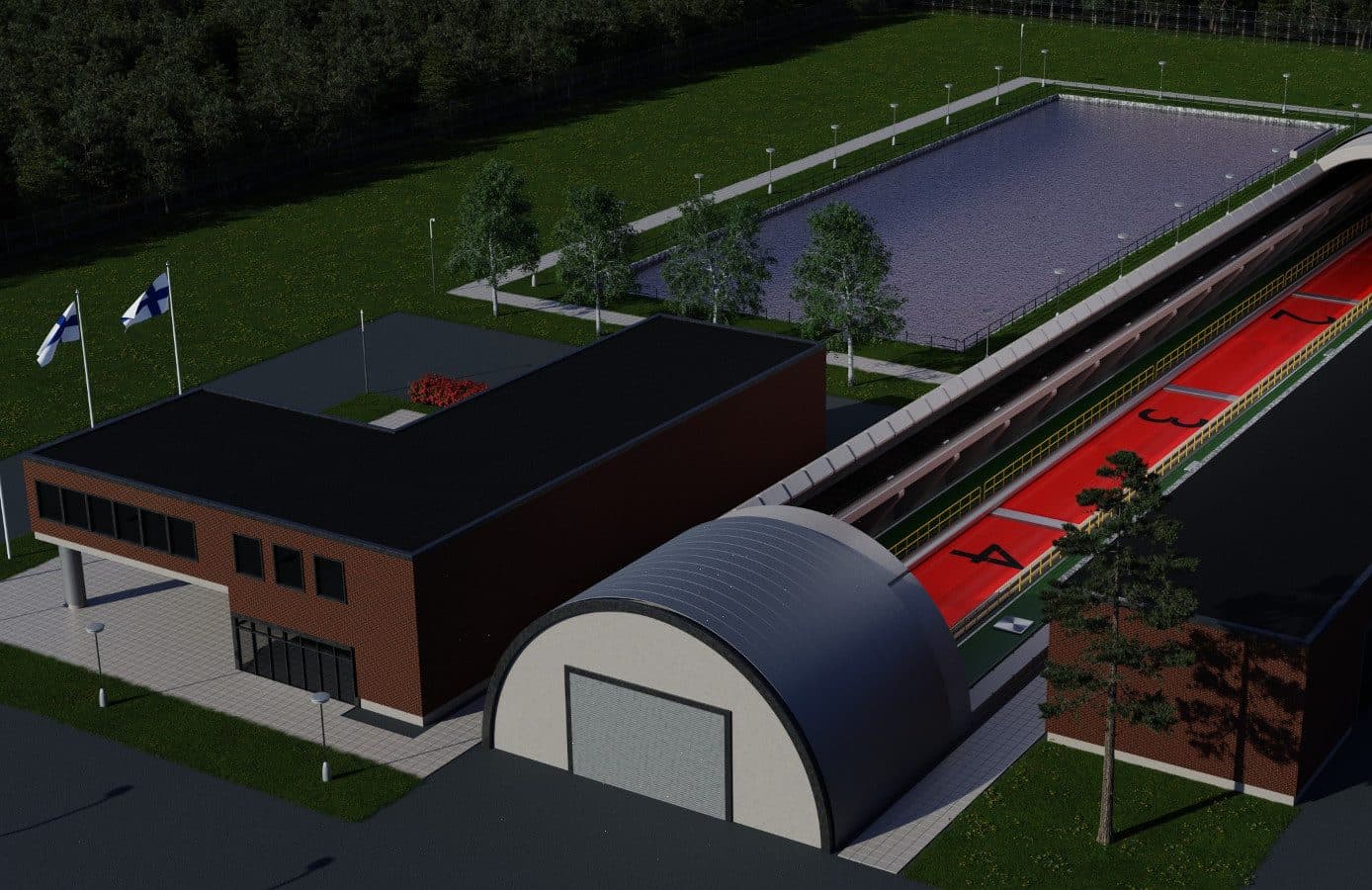
Steady Energy was established as a spin-off from Finland’s VTT Technical Research Centre in 2023. The company says it has agreements in place in Finland for 15 reactors and wants to begin construction of its first commercial unit in 2029. In Helsinki, the company is building a non-nuclear pilot facility to test the systems and support licensing preparations.
Commission expects SMRs to develop after 2030
In its SMR strategy, the Commission stresses the need for coordination between countries, industry, regulators and investors so that projects do not develop in isolated national frameworks. The document also states that installed SMR capacity in the EU could reach 17 to 53 GW by 2050, with reactors expected to support low-carbon heat supplies and industrial uses as well as electricity generation.
European support for a technology designed for district heating broadens the debate on the use of nuclear energy beyond electricity generation and may also be relevant to discussions about the future decarbonisation of heat.
The EIB’s investment alone, however, does not confirm that the design will reach commercial operation. The project’s success will also depend on the outcome of licensing, its ability to secure follow-on capital, and progress from the pilot facility to commercial construction.
Translation disclaimer
This article is a machine translation of the Czech original and has not yet been fully reviewed. In case of any doubt, please refer to the Czech version.