
28 October 2026, 15:10
Loading...
European nuclear project financing is too risky, according to the EIB

Marek Kršák
10 April 2024, 07:16
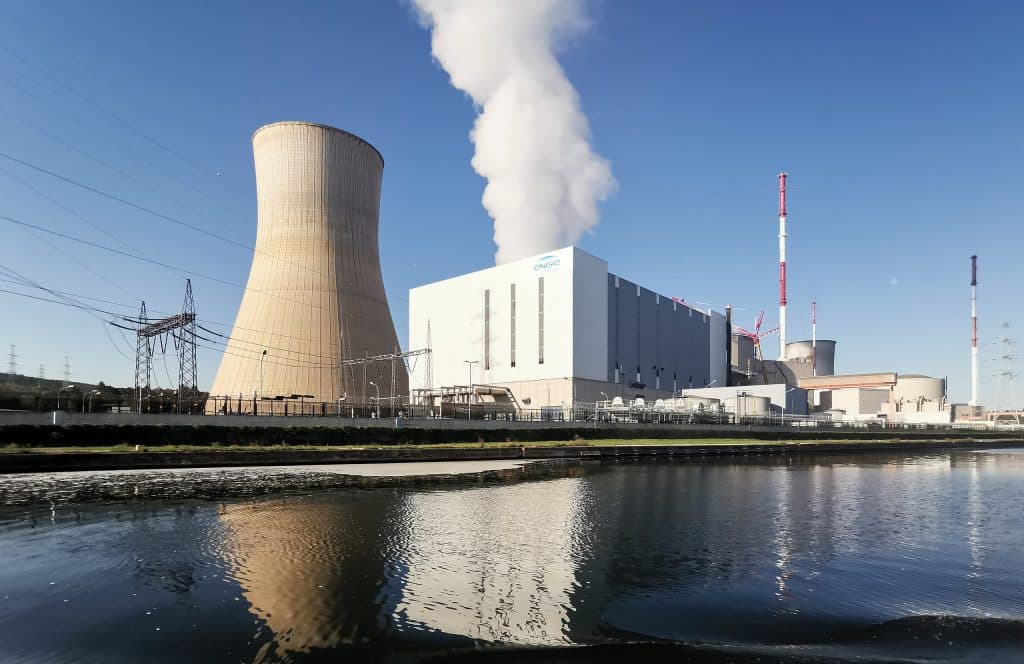
Financing European nuclear projects is becoming more complicated. The European Investment Bank (EIB) recently dealt the nuclear industry a major blow. It happened at the international nuclear energy summit in Brussels. Euractiv reports. For a while, it looked as though the EIB would also oversee financing for this type of project, but it ultimately confirmed that investment in renewable energy will remain its top priority through 2030.
What is currently the biggest challenge to using nuclear energy in the context of climate neutrality? According to European Commission President Ursula von der Leyen, it is securing new and stable investment. She made the comment at a recent nuclear energy summit.
Her remarks prompted the preparation of a major international conference, attended by around 40 official delegations, including those from China, India and the United States, as well as more than 300 leading industry representatives. They all came primarily for one reason: to call for greater certainty around nuclear energy financing.
Their joint declaration therefore included the following sentence:
"We call for greater integration of nuclear energy into the environmental, social and governance (ESG) policies of the international financial system."
To achieve this goal, however, support will be needed not only from the EIB but also from other global multilateral banks, including the World Bank and the Asian Infrastructure Investment Bank.
Renewables come first
The EIB plans to invest 1 trillion euros in climate and environmental projects between 2021 and 2025. Nuclear projects within the EU are theoretically eligible for EIB financing, as demonstrated by the fact that eight nuclear projects, worth more than 1 billion euros in total, have received financing since 2000. The main obstacle is the high level of risk involved in financing nuclear projects.
In 2021, the EIB disbursed more than 10 billion euros for renewable energy investments. According to Thomas Östros, the EIB's vice-president, this trend will continue at a similar pace until at least 2030.
Hope remains
According to the EIB's new president, Nadia Calviño, financing nuclear projects is not ruled out in principle. At the same time, the European Commission, which is responsible for providing an opinion on any EIB financing, appears more supportive of nuclear projects than ever, particularly small modular reactors.
Pressure on the EIB's leadership has been mounting since the French Nuclear Alliance called in early March for European financing to be opened up to nuclear energy. Twelve EU countries echoed the call at the nuclear energy summit.
Since EIB investment decisions require the approval of all EU member states, countries planning to develop nuclear energy have little choice but to urge member states opposed to building new nuclear reactors not to complicate access to external financing. However, according to information published by Euractiv, EIB investment projects for the construction of small modular reactors should see the light of day soon.
Translation disclaimer
This article is a machine translation of the Czech original and has not yet been fully reviewed. In case of any doubt, please refer to the Czech version.
Sdílejte článek prostřednictvím:
You might also like

28 October 2026, 13:08

28 October 2026, 11:10

28 October 2026, 09:08
