31 October 2026, 12:55
Loading...
Five companies express interest in expanding Bulgaria's Kozloduy nuclear power plant

Jiří Puchnar
8 February 2024, 14:22
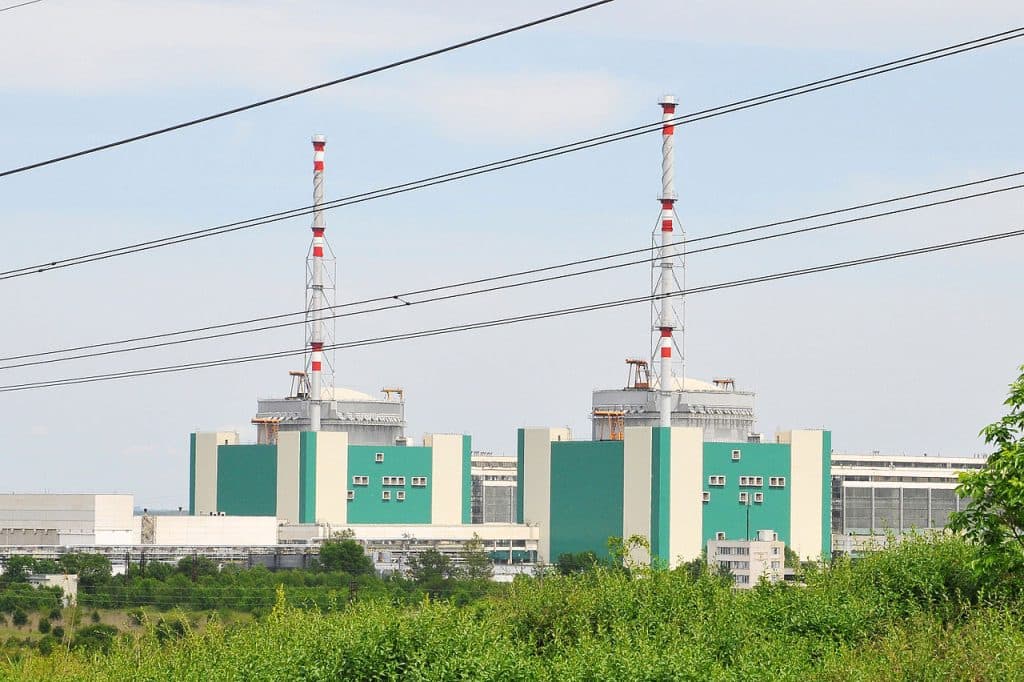
A new chapter in nuclear energy is beginning to take shape in Bulgaria, with plans to build two reactor units at the Kozloduy nuclear power plant. Five companies have expressed interest in the ambitious project, pointing to strong competition in the region. The initiative comes as Bulgaria looks for ways to diversify its energy sources and strengthen its energy security.
The ongoing process to select a contractor for the project places great emphasis on applicants’ qualifications and experience. The criteria include not only technical experience with nuclear projects, but also financial stability and experience with key technologies. Applicants must demonstrate that they have successfully commissioned at least two new nuclear units in the past 15 years, and that their turnover and profit in the 2018-2022 period were at least USD 6 billion (approximately CZK 140 billion). One notable aspect is the exclusion of candidates from the Russian Federation, reflecting the geopolitical and security considerations involved in the selection process.
According to Deputy Energy Minister Nikolay Nikolov, Bulgaria is seeking to build two new Westinghouse AP1000 units. In December 2023, he told the Bulgarian News Agency BTA that the goal was to achieve a price of approximately EUR 6 billion (around CZK 150 billion) per unit.
History and future of the Kozloduy nuclear power plant
The original four Bulgarian VVER-440, V-230 units, commissioned between 1974-1982, were permanently shut down between 2002-2006 as “unupgradable.” They are the same type of reactors as the V1 units at the Jaslovské Bohunice nuclear power plant, which operated until 2006 and 2008, respectively, and were subsequently required to be permanently shut down as a condition of Slovakia’s accession to the European Union. The main reason was the absence of both a containment structure and a pressure suppression tower—safety features that help prevent radioactive substances from escaping into the area around a plant in an accident involving a breach of the primary circuit. Decommissioning of the retired V1 units has been underway since 2012.
Kozloduy units 5 and 6, which are equipped with more modern VVER-1000 reactors, were commissioned in 1987 and 1991. Following extensions to their originally planned operating lives, Bulgaria expects them to operate until 2047 and 2051, respectively.
Bulgaria's partnership with Westinghouse
The new Bulgarian units are to use Westinghouse AP1000 technology, which will provide higher installed capacity and improve safety and operating standards. The country aims to complete the first of the new units by 2033, which would be a significant step towards strengthening Bulgaria's energy infrastructure.
The decision to build two units was made by the Council of Ministers in October 2023. The two new reactors are expected to provide a combined installed capacity of 2300 MWe. The Bulgarian government has also stated that units 5 and 6 will need to be replaced with new units by 2050.

Design of the AP1000 plant by Westinghouse. Source: Westinghouse
Westinghouse will be responsible for the Design Authority for the AP1000 reactors, as well as overall project coordination. Westinghouse will delegate responsibility for individual plant systems and buildings to its subcontractors. The process to select a construction contractor is now underway.
Translation disclaimer
This article is a machine translation of the Czech original and has not yet been fully reviewed. In case of any doubt, please refer to the Czech version.
Sdílejte článek prostřednictvím:
You might also like
31 October 2026, 08:21
30 October 2026, 20:16
30 October 2026, 12:33