Group of EU countries, including Czechia, calls on Brussels to support small modular reactors

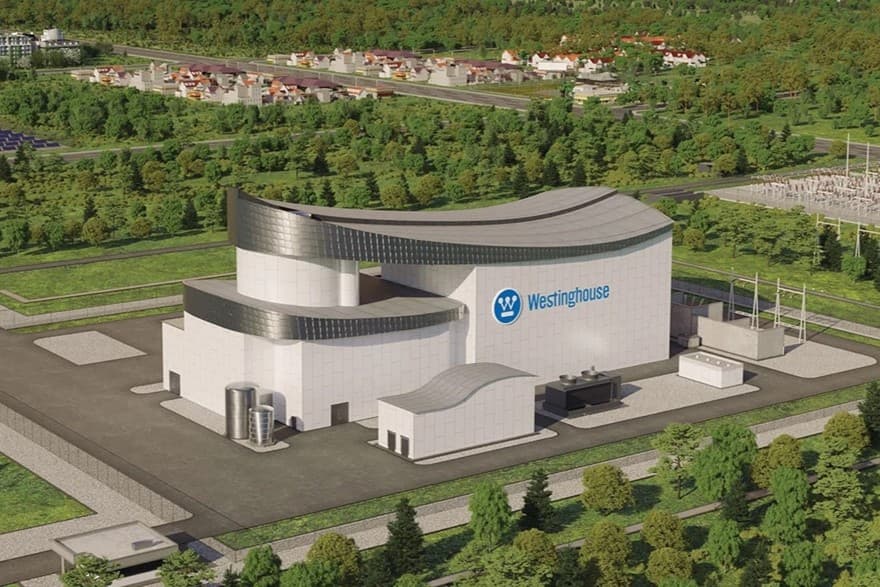
A group of 12 European Union countries, including France, Czechia and Slovakia, has called on the European Commission to support the development of small modular nuclear reactors (SMRs). In a letter published today by the French website Contexte, they ask the EU executive to create an „industrial alliance“ to facilitate the development of SMR technologies. Representatives of EU countries are expected to discuss the proposal at the European Nuclear Energy Forum next week in Bratislava.
„While several member states have included SMRs in their energy strategies, sending a positive signal to the market and suppliers, support from the European Commission must ensure that these innovative projects benefit from current and future EU legislation,“ says the letter, signed on behalf of Czechia by Industry Minister Jozef Síkela.
In addition to the three countries mentioned above, the signatories are Bulgaria, Croatia, Finland, Hungary, Poland, the Netherlands, Romania, Slovenia and Sweden.
These countries have long sought to incorporate support for nuclear energy into EU rules. Germany, Austria and Luxembourg oppose this, as they do not consider nuclear power a permanently safe energy source. After Russia’s invasion of Ukraine began, the European Commission started to lean towards the view that some countries could not do without support for nuclear energy, as it sought to free the EU from dependence on Russian fossil fuels. Brussels has already indicated that it is open to public support for new nuclear technologies, including small modular reactors.
The ministers said in the letter that they appreciate the Commission’s efforts to date, but would like to see a clear step in the form of an alliance to support the development of „a European value chain for various SMR technologies“.
The document notes that countries supporting nuclear energy estimated this year that it could supply up to 150 gigawatts of electricity to the European grid by 2050. That is half as much again as today.
Translation disclaimer
This article is a machine translation of the Czech original and has not yet been fully reviewed. In case of any doubt, please refer to the Czech version.




