
28 October 2026, 15:10
Loading...
IAEA reviews safety of 60-year operating life of Japan's Mihama 3 reactor

Jiří Salavec
5 May 2024, 07:58
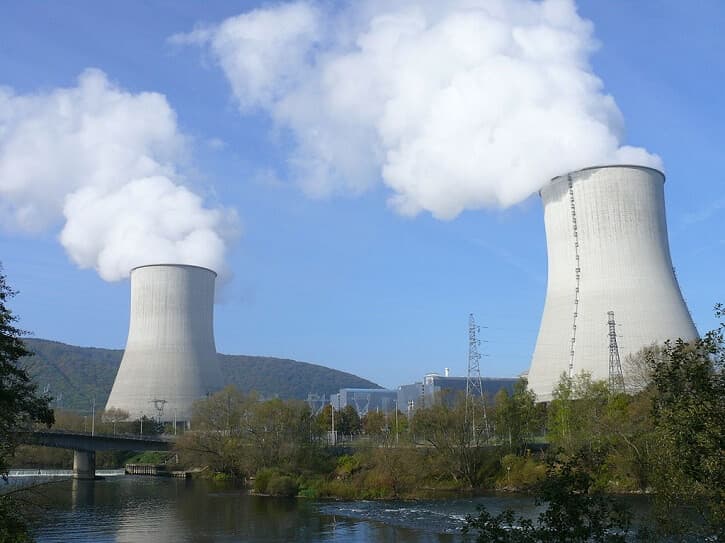
Representatives of the International Atomic Energy Agency (IAEA) have completed their mission at Japan’s Mihama nuclear power plant. They examined the long-term operational safety of Unit 3. The plant’s operator, KEPCO, has been granted permission to extend the operating life of the unit, commissioned in 1976, by a further 20 years. Mihama 3 resumed generating electricity in 2021 after a decade-long shutdown following the accident at Japan’s Fukushima nuclear power plant.
The International Atomic Energy Agency (IAEA) announced the successful completion of its mission at Japan’s Mihama nuclear power plant. As part of the SALTO (Safety Aspects of Long Term Operation) mission, an IAEA team of experts examined the safety of long-term operation at Unit 3, a 780 MW (net) pressurised water reactor (PWR).
“As a pioneer in Japan’s nuclear power industry, we intend to improve the country’s nuclear power plants and contribute to maintaining and developing nuclear power generation in the country. We hope to make efforts to achieve higher standards, drawing on the knowledge gained from the review and with the support of IAEA members. I would like to once again express my gratitude for the dedicated support provided by the IAEA team during the review,” said Kazutaka Tsuru, general manager of Mihama nuclear power plant.
During the 10-day mission, the team examined the plant’s readiness, organisation and programmes for safe long-term operation, and their compliance with IAEA standards. The mission was led by an 11-member team comprising experts from the Czech Republic, France, Sweden, the United Kingdom and the United States, as well as three observers from Finland and the Republic of Korea and two IAEA staff members.
“The team found that KEPCO is implementing measures for safe long-term operation in a timely manner, and that plant staff are professional, open and receptive to suggestions for improvement. Some activities related to ageing management and long-term operation already meet IAEA safety standards,” said IAEA team leader Martin Marchena.
The recommendations issued by the IAEA include the following:
- Further development and implementation of the long-term operation programme.
- Development and completion of the ageing management process for mechanical, electrical, instrumentation and control components, and civil structures.
- Improvement of the programme for confirming component resistance to harsh conditions (the so-called equipment qualification programme).
A reactor shut down for a decade
Mihama nuclear power plant had three units that entered service in the 1970s. The first two stopped generating electricity in 2015 after their operator decided not to invest in the upgrades needed for continued operation. The third unit underwent upgrades costing around 1.5 billion dollars (just under CZK 35 billion) and received permission from Japan’s regulator in 2016 to operate beyond the 40-year mark (its original operating life).
Mihama 3 began commercial operation in 1976 and is now licensed to generate electricity until 2036. Unit 3 was out of operation between 2011, when a devastating tsunami struck Japan and caused the accident at Fukushima nuclear power plant, and 2021. It also became the first Japanese unit to generate electricity more than 40 years after entering service. At the turn of 2021 and 2022, the unit did not generate electricity while anti-terrorism measures were being implemented.
Translation disclaimer
This article is a machine translation of the Czech original and has not yet been fully reviewed. In case of any doubt, please refer to the Czech version.
Sdílejte článek prostřednictvím:
You might also like

28 October 2026, 13:08

28 October 2026, 11:10

28 October 2026, 09:08
