13 September 2026, 08:47
Loading...
Interest in Czech nuclear studies rises: SMRs and new units attract students

oEnergetice.cz, ČTK
10 September 2026, 18:23
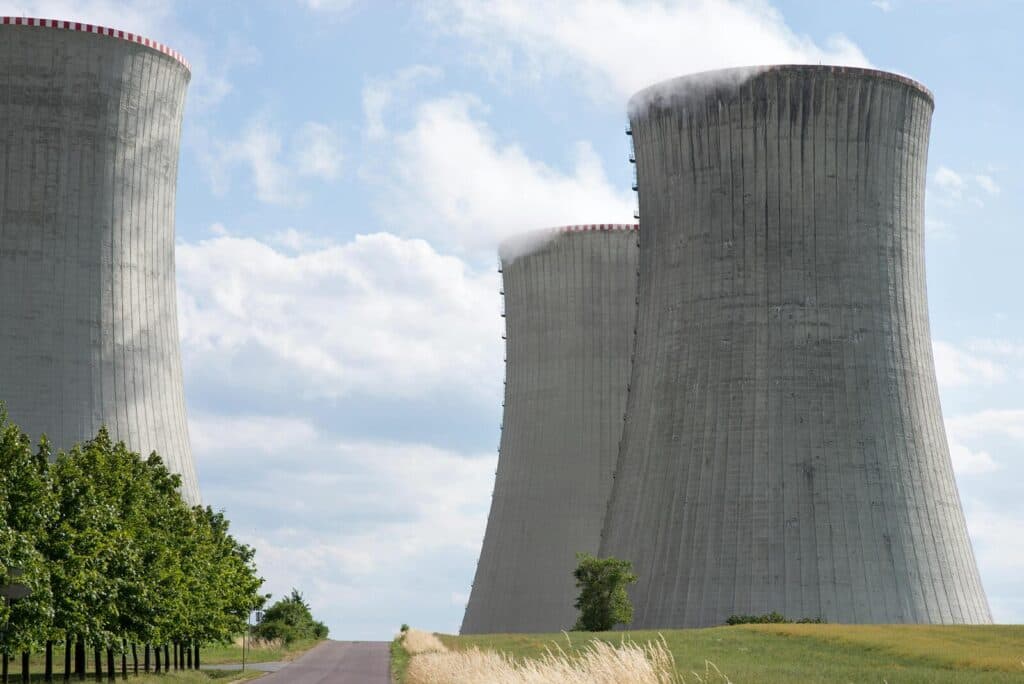
Planned construction of new nuclear units at the Dukovany and Temelín power plants, as well as small modular reactors (SMRs) in Czechia, is increasing students’ interest in the field. This has already been reflected, albeit by only a few students, in enrolment in master’s programmes focused on nuclear energy. Dozens of engineers are currently studying at the Czech Technical University’s Faculties of Mechanical Engineering and Nuclear Sciences and Physical Engineering, Brno University of Technology, the University of West Bohemia (ZČU) and VŠB – Technical University of Ostrava, but Czechia would need hundreds to thousands of them. Jan Zdebor, who teaches in Plzeň and Prague and is the guarantor of the international Nuclear Days conference, told ČTK.
"Everything possible is being done to systematically support nuclear education – some measures at universities, some already at secondary schools, and at the level of the state and major employers such as ČEZ," he said.
According to Zdebor, CENEN, an association founded 21 years ago whose members include educational, research and industrial institutions in nuclear engineering and energy in Czechia, is undergoing a revival, mainly thanks to universities. It is a branch of the European ENEN network. "A functioning CENEN is needed for the renaissance of nuclear energy in Czechia," he said.
According to Zdebor, to awaken interest in the field it is important to convince not only children but also their parents. "That it is good from every possible perspective, not only in terms of good employment with the prospect of high-quality career development, good pay and interesting work, but also that it is a socially valued field. And that has not been the case here for years. In the post-1989 era it was suppressed and humanities were preferred. "Now we may have plenty of philosophers, but technical fields have been pushed onto the sidelines of disinterest, and that is wrong," Zdebor said. In his view, a technical engineer can become a very good businessman, teacher or economist, but the reverse – from a philosopher or political scientist – is not possible.
The topics of Nuclear Days in Plzeň included Europe’s energy self-sufficiency, the nuclear renaissance, modular reactors and training specialists. All participants agreed that nuclear energy has the potential to become the backbone of European energy sovereignty and a driver of industry. It is also a priority for the Czech government. However, the Ministry of Industry and Trade has repeatedly warned of a future critical shortage of workers for nuclear power plants and their suppliers. Thousands of specialists, currently lacking in Czechia, will be needed to complete the new Dukovany units and for the future expansion of Temelín. Technical universities are preparing intensively for this.
ZČU trains energy experts at three faculties – mechanical engineering, electrical engineering and applied sciences. Since 1963, engineers specialising in the construction of nuclear power equipment have graduated from its Faculty of Mechanical Engineering. They have excellent job prospects, as they can work either at a manufacturing company, such as Plzeň-based Škoda JS, at a power plant or in public administration, Zdebor said.
"We currently offer Nuclear Engineering Management. Thanks to cooperation with the International Atomic Energy Agency, we have undergone a kind of review and meet the requirements for a comprehensive engineer who will be able to work actively in various areas at a nuclear power plant," said Jana Jiřičková, a nuclear energy teaching specialist from ZČU’s Faculty of Electrical Engineering.
Graduates will understand technology, management and legislation. According to her, half of students have secured jobs even before receiving their diplomas. ZČU also offers retraining programmes in the field.
Translation disclaimer
This article is a machine translation of the Czech original and has not yet been fully reviewed. In case of any doubt, please refer to the Czech version.
Sdílejte článek prostřednictvím:
You might also like
12 September 2026, 12:58
12 September 2026, 07:53

11 September 2026, 10:30
10 September 2026, 18:23