Japan to begin releasing radioactive water from Fukushima into the ocean on Thursday

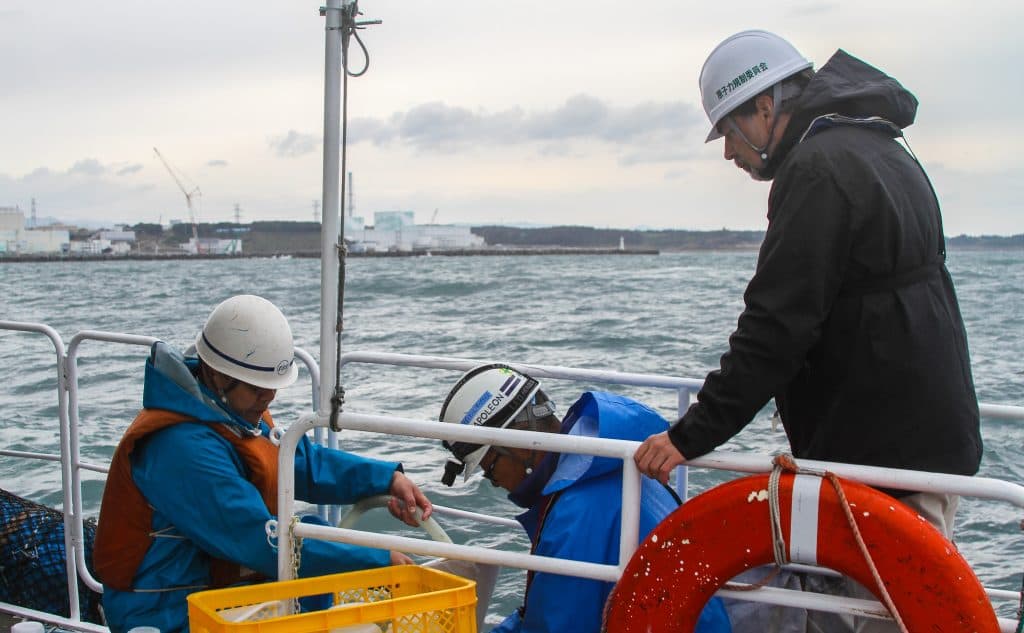
Japan will begin releasing treated and diluted radioactive water from the heavily damaged Fukushima nuclear power plant into the Pacific Ocean on Thursday. Japanese Prime Minister Fumio Kishida announced the move today after meeting with members of his cabinet, according to the AP and Reuters news agencies. Tokyo’s plan has been strongly criticized by China and is also opposed by many local residents and fishermen.
More than 1.3 million tonnes of contaminated water used to cool the reactor cores, which melted during the powerful earthquake and tsunami in 2011, will be gradually released from around a thousand tanks at the plant. Space for storing the water is running out. The Japanese government approved the plan two years ago as a key step towards the final decommissioning of the Fukushima plant.
Japan treats the water using a filtration system that removes most hazardous materials, except tritium – a hydrogen isotope that is difficult to separate. Scientists say tritium is harmful to the human body only at high concentrations, which is essentially not a risk at Fukushima after dilution and with the gradual, long-term release of the water.
The water will be diluted with seawater at a coastal facility, from where it will flow further out to sea through a one-kilometre tunnel. The entire release process will take several decades. According to the AP, TEPCO, the company that operates the Fukushima plant, plans to release 7,800 tonnes of water in the first 17 days. By the end of March next year, 31,200 tonnes of water should have been released, emptying just ten tanks. The pace will then pick up, the AP reports.
„I urged TEPCO to prepare quickly for the release of the water… I expect the release to begin on August 24, weather permitting,“ Prime Minister Kishida said today.
In July, the International Atomic Energy Agency (IAEA) gave its approval to Tokyo’s plan to release radioactive water from the plant, saying the approach is in line with international standards and will have a „negligible radiological impact on people and the environment“.
Many local residents and fishermen oppose the plan, fearing that customers will stop buying fish caught in the area. Neighbouring countries are also concerned.
Hong Kong Chief Executive John Lee said today, in response to the Japanese government’s announcement, that he was resolutely opposed to the plan to release radioactive water from the Fukushima plant. Hong Kong will immediately introduce inspections of seafood imports from Japan, he said.
According to Reuters, Hong Kong is Japan’s second-largest market for agricultural and fishery products after China. China, the strongest critic of Japan’s plan to release water from Fukushima, announced last month a ban on food imports from around a fifth of Japan’s prefectures. It strictly inspects food imported from other parts of the island country.
South Korea said today that it had no scientific or technical concerns about Tokyo’s plan, though that does not necessarily mean it supports it.
Translation disclaimer
This article is a machine translation of the Czech original and has not yet been fully reviewed. In case of any doubt, please refer to the Czech version.




