23 October 2026, 14:38
Loading...
Nuclear fuel production: Russians join forces with Americans
Jan Žižka
24 May 2016, 17:23
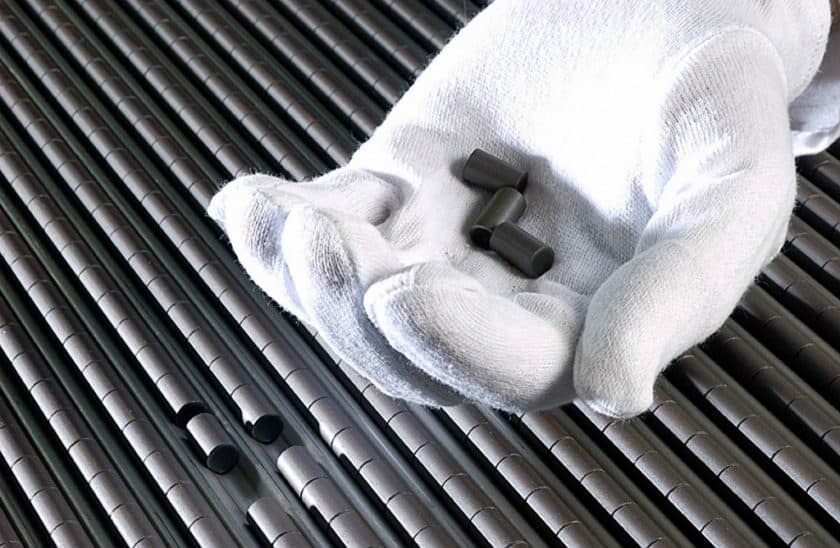
Nuclear power need not be a “parody of the Cold War”. Americans and Russians – hitherto regarded primarily as major rivals in the sector – have entered into a strategic alliance to produce nuclear fuel in the United States. Leading Japanese companies are also involved.
The agreement was negotiated by representatives of two leading global fuel suppliers – North Carolina-based Global Nuclear Fuel – Americas and Russia’s Tvel. The two sides will cooperate on licensing, manufacturing and selling fuel in the US based on the Russian TVS-Kvadrat design.
The Russians developed this fuel for Western-type pressurised water reactors (PWRs). It is currently being tested at Sweden’s Ringhals nuclear power plant.
Production of TVS-Kvadrat fuel directly in Wilmington, North Carolina, is intended to help diversify supplies for US power plants. The United States has the largest number of nuclear reactors in the world (just under 100), and its nuclear fuel market is therefore relatively large – total volumes amount to billions of dollars annually. From a technical perspective, TVS-Kvadrat fuel could be used in more than a third of reactors.
A new segment for Tvel and GNF
Until now, Tvel has been known primarily as a fuel supplier for Russian-designed VVER reactors. In this segment, its main (and so far only) competitor is another US company, Westinghouse. Tvel and Westinghouse will compete in the tender to supply fuel to the Czech Temelín nuclear power plant after 2020.
Czech Industry and Trade Minister Jan Mládek has on several occasions spoken in the past about the risk that rivalry between Americans and Russians in nuclear power could resemble a “parody of the Cold War”.
Global Nuclear Fuel (GNF) has so far focused mainly on fuel for a completely different type of reactor than those known in Czechia – so-called boiling water reactors. GNF is a joint venture between US company GE and Japanese companies Hitachi and Toshiba. In addition to the United States, it also operates in Japan.
From the perspective of Russia’s Tvel, this is undoubtedly a “spicy” matter – Toshiba, now effectively a new partner thanks to the agreement with GNF, is also the majority owner of its rival Westinghouse.
GE, together with Hitachi, is also a leading global manufacturer of boiling water reactors themselves. Toshiba also makes them. Recently, however, GE Hitachi has also entered the segment of services for pressurised water reactors (PWRs) – specifically at the R.E. Ginna power plant in New York State.
In PWR fuel, the Russians and Americans are jointly entering a market that has so far been dominated by two companies – the aforementioned Westinghouse and France’s Areva.
Division of roles
As for the division of roles in the new US-Russian alliance, GNF-Americas will be responsible for managing the joint project in the United States, handling licensing issues, fuel quality assurance and engineering services. The aim is for the US regulator, the NRC (Nuclear Regulatory Commission), to approve commercial fuel deliveries. The NRC has a reputation as an exceptionally competent regulator, and its position may also be significant for fuel licensing in other countries.
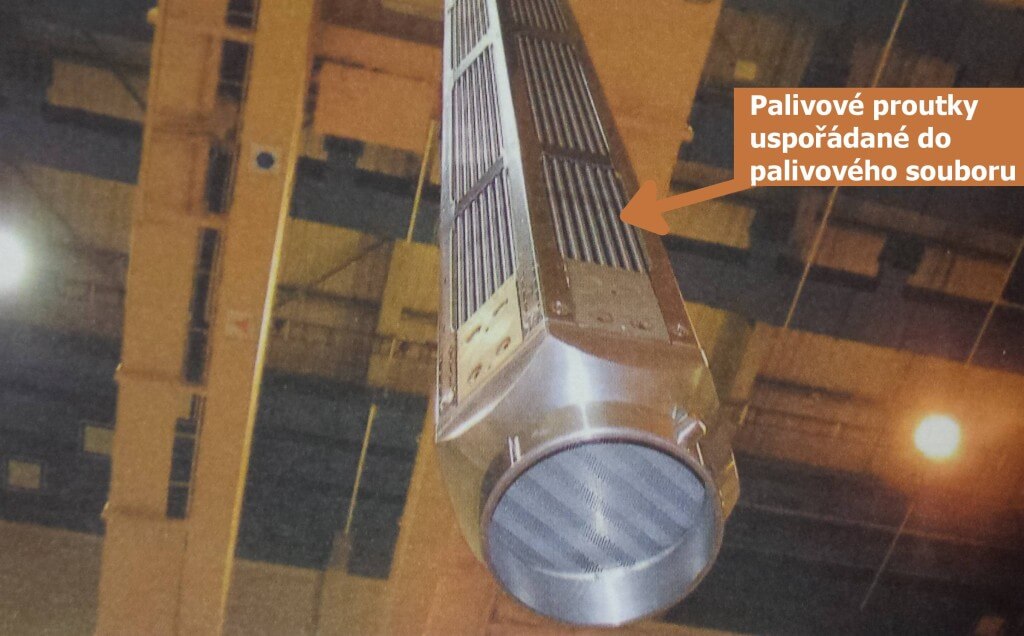
For its part, Russia’s Tvel will provide know-how on the design of TVS-Kvadrat fuel, which is unique in its construction. According to Tvel, this design, which differs from Western fuel, is precisely what guarantees genuine diversification. Tvel will also be responsible for “technical support” in the alliance with GNF and will manufacture the first fuel assemblies for testing in the US at its plants. Production will then gradually move to Wilmington in the United States.
The author works as a consultant and energy projects specialist at HATcom.
Source of the lead photograph: Nuclear Regulatory Commission
Translation disclaimer
This article is a machine translation of the Czech original and has not yet been fully reviewed. In case of any doubt, please refer to the Czech version.
Sdílejte článek prostřednictvím:
You might also like

23 October 2026, 11:01

23 October 2026, 06:34