11 October 2026, 08:24
Loading...
Sizewell C nuclear power plant to be financed using a new model

Marek Kršák
24 July 2025, 13:13
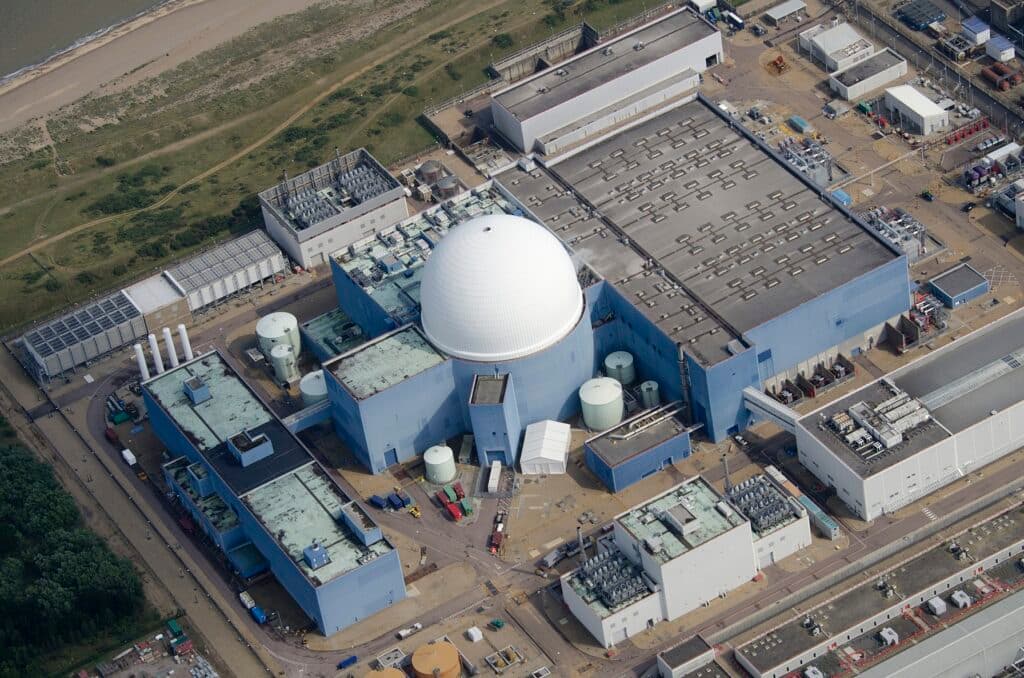
The British government has confirmed that it will acquire a majority stake in the construction of the Sizewell C nuclear power plant. This will make it the project's largest shareholder. Canada's La Caisse investment fund will be the second-largest shareholder. This is a major investment, as no new nuclear power plant has opened in the United Kingdom since 1995, and all existing nuclear power plants, with the exception of Sizewell B, are likely to be gradually shut down by the beginning of 2030. The total project is estimated to be worth approximately 45 billion euros.
According to the latest information, the British nuclear power plant recently received its final financing decision. The Sizewell C project will comprise two EPR reactors with a capacity of 3.2 GW, enough to supply six million households for at least 60 years. Its design will be similar to that of Hinkley Point C, but the aim is to reduce costs and speed up construction by drawing on previous experience.
The next phase will begin with a series of all necessary procedures, including finalising Sizewell C's economic licence. This will be followed by the minister's final decision, after which revenue generation will officially begin and the transaction will be completed. Centrica expects revenue generation to begin in the fourth quarter of 2025.
Centrica also said that its investment includes a preliminary agreement to purchase some of the electricity for 20 years and to provide market services for additional volumes. Once operational, the power plant could deliver annual savings of up to 2 billion pounds. Estimated capital costs are 45 billion euros (38 billion pounds in 2024 prices), representing a 20% saving compared with Hinkley Point C.
Financing through the regulated asset base model
A new approach to financing nuclear power plant construction is noteworthy. The investment decision allows the project to be financed using the Regulated Asset Base (RAB) model. Under this model, consumers contribute to costs during construction, unlike under the so-called Contract for Difference (CfD), which allows revenue only once the power plant is operational.
The main advantages of RAB financing include lower interest rates, a more attractive and predictable environment for investors, and lower overall costs for the state and consumers. One drawback is that the public bears some of the financing risk, meaning consumers pay for the project before they can benefit from it.
RAB financing is therefore ideal for large, capital-intensive projects with long construction periods, such as nuclear power plants. CfD is a proven model better suited to projects with shorter construction periods and lower risk, such as renewable energy projects.
"The project will cost consumers an average of 1 pound a month during construction," said Julia Pyke, the project's co-managing director.
Nigel Cann, Sizewell C's other co-managing director, added that the project faces the usual infrastructure risks, but the supply chain has an incentive to keep costs down, or investors will lose their returns.
The United Kingdom's Nuclear Industry Association also welcomed the construction decision, saying that Sizewell C is the largest and greenest project in the country's history. It is expected to strengthen energy security, support industrial areas, create thousands of jobs and reduce dependence on gas imports. It is also Britain's first true replica of a nuclear power plant—a key step towards faster and cheaper construction in the future.
Translation disclaimer
This article is a machine translation of the Czech original and has not yet been fully reviewed. In case of any doubt, please refer to the Czech version.
Sdílejte článek prostřednictvím:
You might also like

10 October 2026, 13:19

10 October 2026, 07:37

10 October 2026, 07:02