
17 October 2026, 13:09
Loading...
Slovenia presses ahead with preparations for new nuclear unit

Jiří Salavec
5 March 2026, 11:57
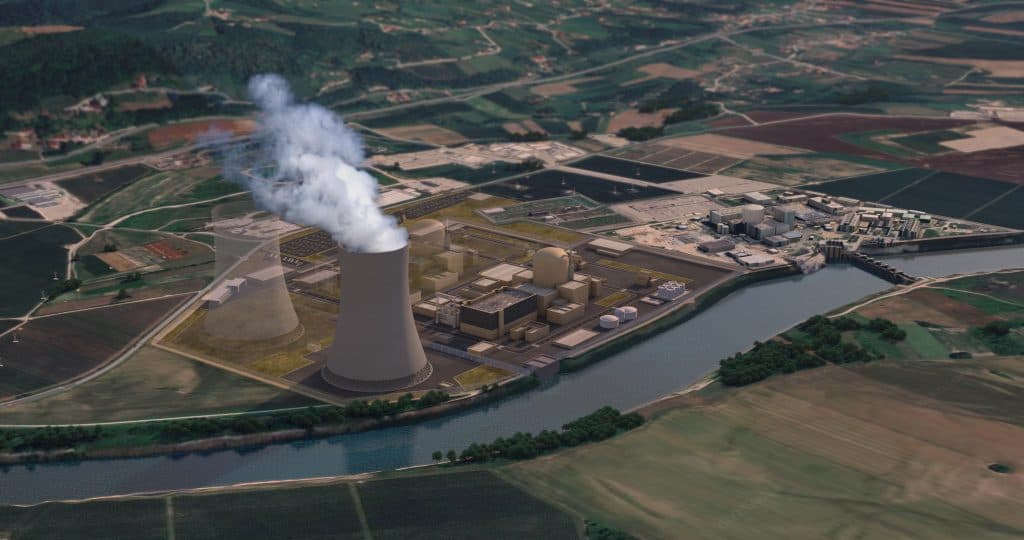
The Slovenian project for a second nuclear unit has reached further milestones. The government has approved the preparation of a spatial plan for the new development, while an expert working group has presented a possible financing model for the project. Slovenia plans to build a conventional unit with a capacity of 1000–1650 MW, at an expected cost of between EUR 9 billion and EUR 16 billion. Before deciding whether to build it, the Slovenian government will involve the public through a referendum, which was due to take place in 2025 but has been postponed to the turn of 2027 and 2028. The new unit could enter commercial operation in the early 2040s.
The Slovenian government announced that it had approved further steps in preparing for construction of a new nuclear unit in the country. Specifically, it will begin preparing a national spatial plan for the Krško 2 power plant. The public had an opportunity to comment on the proposal to begin spatial planning from July to October last year. The new-unit project is currently managed by energy company GEN Energia, which operates Slovenia’s first nuclear unit. The government expects to approve the spatial plan in autumn 2028.
“We have thereby formally launched a process that is a step towards concrete solutions for a new nuclear power plant unit,” Slovenian Prime Minister Robert Golob said.
An expert group preparing for the new unit has also presented a possible financing model for the project. It proposes establishing a new company wholly owned by the state, which would use a state loan followed by a Contract for Difference (CfD) model. Under EU rules, the state support model will need to be approved by the European Commission.
“This approach combines the benefits of low-cost financing based on the state’s creditworthiness with the flexibility and diversification of capital sources in the later stages of the project. The model makes it possible to safeguard the stability of public finances while gradually involving a potential investor base and using green financial instruments in line with the European taxonomy,” said Marjan Divjak, Director General of the Treasury Directorate at the Ministry of Finance.
The expected project costs range from EUR 9.6 billion to EUR 15.4 billion (approximately CZK 234 billion to CZK 375 billion), depending on the final installed capacity of the new unit. This is expected to be between 1000 and 1650 MW, depending on the supplier and reactor type selected.
Including financing costs, the total cost of the nuclear unit is expected to reach EUR 15 billion to EUR 22 billion (approximately CZK 366 billion to CZK 536 billion). GEN Energia expects generation costs of EUR 60–68/MWh, with electricity generation becoming profitable at a sale price of EUR 75/MWh.
Referendum postponed
The public will also have a say on the construction of Slovenia’s second nuclear unit. The country originally planned to hold a referendum as early as 2025, but the government postponed it due to uncertainties surrounding the project.
“We will decide on (the construction) in a referendum expected at the end of 2027 or the beginning of 2028, when we will have all the information available. We will know where the unit will be located, under what conditions it will be built, who the supplier will be and what its final price will be,” Golob added.
Slovenia currently operates one nuclear unit at the Krško power plant, jointly with neighbouring Croatia. The unit has an installed capacity of 696 MW (net) and accounts for around 35% of Slovenia’s electricity generation. It is expected to remain in operation until 2043. Current estimates put the new nuclear unit’s commercial start-up at the turn of 2040 and 2041.
Translation disclaimer
This article is a machine translation of the Czech original and has not yet been fully reviewed. In case of any doubt, please refer to the Czech version.
Sdílejte článek prostřednictvím:
You might also like




16 October 2026, 10:16