Sweden plans massive expansion of nuclear power

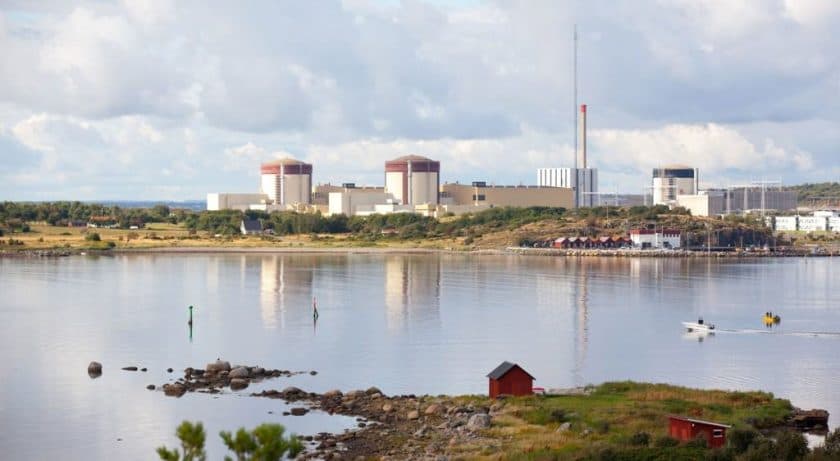
The Swedish government has presented a plan to develop nuclear power in the country, including the construction of new nuclear units. At least two large reactors are expected to be built by 2035, and a carbon-free energy scenario envisages up to ten reactors by 2045.
In October last year, Sweden’s ruling right-wing coalition adopted a positive stance on nuclear power. The Christian Democrats, Liberals, Moderates and Sweden Democrats published a coalition agreement on their joint policies, known as the Tidö Agreement. In the energy sector, the agreement states that the goal of energy policy is a "shift in strategy from 100% renewable to 100% fossil-free". The Tidö Agreement anticipates that the country’s electricity consumption will reach at least 300 TWh in 2045, double its current level.
Government support for building large and small nuclear reactors
The agreement also states that legislative changes are needed to create the conditions for building and operating small modular reactors (SMRs) in Sweden. The permitting process for nuclear power plants also needs to be shortened.
In January this year, Prime Minister Ulf Kristersson and Minister for Climate and the Environment Romina Pourmokhtari presented a formal proposal to amend Sweden’s nuclear energy legislation. The aim is to repeal the current law limiting the number of reactors in operation and allow reactors to be built at new sites. The proposed legislative changes were open for public consultation for three months. On 28 September, the government made its final decision to submit the bill to parliament. The changes are due to come into force on 1 January 2024.
"New nuclear power sources are essential for a stable and reliable energy mix, for consumers and businesses alike. It is therefore natural that the state will have to play a major financial role in the expansion of the energy system. Recent years have shown how costly it is not to build nuclear power," Finance Minister Elisabeth Svantesson said.
Key aspects of Sweden’s nuclear power expansion plan
The first step in developing nuclear power in Sweden is a call to appoint a nuclear energy coordinator, whose task will be to support efforts to remove barriers and promote new nuclear power sources. The coordinator will also identify the need for further measures. An important part of the coordinator’s role will be to bring together all relevant stakeholders to define a clear direction for effective expansion.
The second step is to clarify the state’s financial responsibilities through a risk-sharing model. The government has previously proposed state-backed loan guarantees of SEK 400 billion for nuclear power sources (approximately CZK 858 billion). However, these guarantees alone are unlikely to be sufficient to stimulate new construction. To improve conditions and create further incentives for investment in nuclear power, an expanded risk-sharing and financing model involving the state must be designed.
The third step is a new policy that will enable new nuclear power sources with a total capacity of at least 2500 MWe to be commissioned by 2035 at the latest.
The fourth step is to pave the way for a "massive expansion of new nuclear power by 2045". "Given the long-term transformation of the energy system to make it fossil-free by 2045, expansion on a scale equivalent, for example, to ten new large reactors will be necessary," the government said.
The exact number and type of reactors "will depend on several factors, including the needs and pace of development of the energy system, technological progress, and the locations of new electricity generation and consumption," the government added.
Translation disclaimer
This article is a machine translation of the Czech original and has not yet been fully reviewed. In case of any doubt, please refer to the Czech version.




