Swiss legislative proposal puts new nuclear power plants back on the table

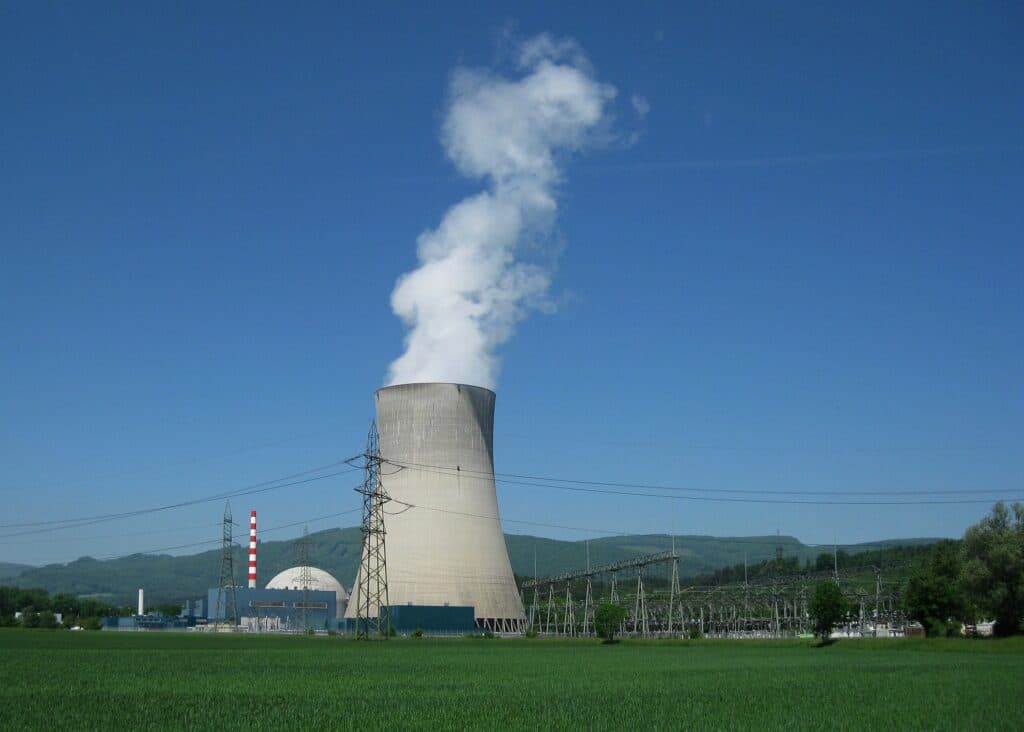
The Swiss Federal Council has presented a draft amendment to the Nuclear Energy Act in response to an initiative calling for changes to responsibility for the country’s electricity supply and for all climate-neutral power plants to be permitted. This could remove provisions from the law that effectively ban the construction of new nuclear reactors. Switzerland introduced a ban on building new nuclear power plants in 2018. Three nuclear power plants are currently in operation in the country, together accounting for around a third of its energy mix.
The Swiss Federal Council published its proposal to update the law banning the construction of new nuclear facilities in the country. The proposal responds to the Swiss popular initiative “Stop the Blackout.” In addition to technological neutrality, however, the initiative calls for fundamental changes to responsibility for electricity supply.
“The Stop the Blackout initiative seeks to enshrine in the federal constitution that electricity supplies must be guaranteed at all times and that the federal government must define the responsibilities required to achieve this. However, this would represent a fundamental departure from the current division of tasks and responsibilities for energy supply between municipalities, cantons and the federal government,” the Federal Council said in explaining its opposition to this demand.
The Federal Council wants to address the initiative’s call for openness to all climate-friendly forms of electricity generation in the Nuclear Energy Act, rather than in the constitution itself. Although this is a counterproposal from a legislative perspective, it shares some of the same aims. Lawmakers now have until August next year to decide on both proposals.
“The counterproposal is not intended to permit the construction of new nuclear power plants, as there are currently no specific projects. Financing, project-specific issues and changes to approval procedures are therefore not covered by our proposal,” the Federal Council added.
The Federal Council received mixed feedback during the public consultation on the proposal. While business organisations and some political parties welcome it, environmental organisations and most representatives of the cantons oppose it and call for strategic and technical analyses to be carried out.
The future of nuclear power in Switzerland
Switzerland currently operates four nuclear reactors at three power plants. These include the world’s oldest commercially operated nuclear reactor, Beznau 1, which began operation in 1969. Nuclear power accounts for around a third of the country’s electricity generation.
The Swiss voted to phase out nuclear power in a 2017 referendum, largely amid anti-nuclear sentiment following the 2011 accident at Japan’s Fukushima power plant. A ban on building new facilities was enacted in 2018, but no shutdown date was ever set for those already in operation. In recent years, operators of nuclear facilities have instead been investing in technologies that will allow them to operate beyond the 60-year lifetime threshold.
A survey from February 2022 (shortly before the start of the war in Ukraine) showed that residents were evenly divided in their views on nuclear power. Even then, an overwhelming majority of respondents stressed the importance of energy self-sufficiency, while climate targets mattered to almost half. Alongside rising electricity consumption, a combination of renewables and a new nuclear power plant could be an acceptable solution.
Translation disclaimer
This article is a machine translation of the Czech original and has not yet been fully reviewed. In case of any doubt, please refer to the Czech version.




