Uranium prices rise as interest in nuclear power grows. They have nearly doubled

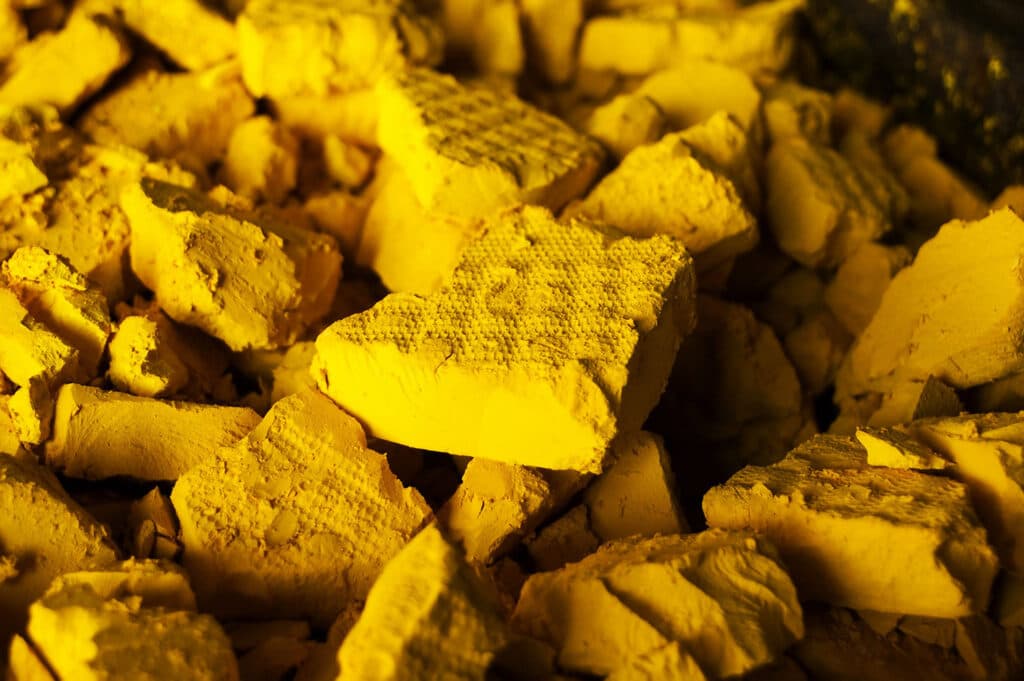
Growing global interest in nuclear energy has driven uranium prices higher in recent months. Hedge funds have taken notice of the trend, increasing their exposure to shares in uranium companies. Portfolio managers at selected funds say the positive outlook for uranium prices could lead to significant share price gains and the reopening of mines.
Spot uranium prices were around 110 USD per kilogram in March this year, while in October they were heading towards 154 USD per kilogram. Prices have almost doubled in recent years. Before 2022, a kilogram sold for around 66 USD. This trend has sparked renewed investor interest in uranium mining and processing. Some analysts say it could lead to the reopening of selected mines.
Demand for uranium is currently being driven by positive forecasts for nuclear energy. The International Energy Agency estimates that global nuclear capacity must double by mid-century compared with 2020 in order to meet climate targets. Optimistic forecasts are currently being supported in particular by demand for nuclear reactors in Asia.
Interest in nuclear energy, and therefore uranium, has also grown in Europe as countries seek to move away from Russian gas. However, in addition to gas, Russia currently holds around 8% of the world's recoverable conventional uranium resources. Western countries are therefore exploring alternative suppliers.
“To balance supply and demand in this market, we need new assets to come online,” Arthur Hyde, portfolio manager at Segra Capital, told Bloomberg. “If you are going to isolate the US, Europe and Canada from the global fuel cycle, which is heavily dependent on Russia and China, the best way to do that is to build new mines, new conversion capacity, new enrichment capacity,” Hyde added.
New capacity, alternative suppliers, and efficiency gains
Uranium goes through several stages of processing before it is ready to be used as fuel in nuclear power plants. After mining and milling, uranium ore is converted into uranium hexafluoride gas, which is then enriched and used to produce fuel rods. These are then loaded into reactors. The entire process, known as the nuclear fuel cycle, can take years. Supply chains are also often spread across multiple countries.
It is estimated that each additional gigawatt of nuclear capacity installed will typically require around 300–450 tonnes of uranium for the initial fuel load. Around 60 new reactors are currently under construction in 15 countries, which will increase demand for the commodity. On the other hand, most of these reactors are being built in China, India and Russia, so it is unclear how much capacity will actually be developed outside established supply chains.
Forecasts of growing fuel demand may also be tempered by efficiency improvements at existing and new plants. Efficiency gains mainly affect the scale of demand over the long term. In the 20 years from 1970 to 1990, technical improvements reduced uranium demand per kWh of electricity generated in Europe by 25%. However, these innovations do not change the fact that Europe will probably seek to reduce its dependence on imports from Russia.
Speculative bubble or long-term trend?
Uranium prices also surged on the market during this millennium, between 2005 and 2010. One possible cause often cited today for the unprecedented rise is the flooding of the Cigar Lake mine in Saskatchewan, which has the world's largest undeveloped deposits of high-grade uranium ore. This raised concerns about uranium supplies in the short term.

In addition to these events, the market probably also reacted to optimistic forecasts at the time about the long-term development of nuclear energy. Speculation was further fuelled by rising expectations surrounding the nuclear programmes of India and China.
Ultimately, however, the bubble had little impact on nuclear power generation, because most plants have long-term contracts for uranium supplies and the price of natural uranium makes up only a small share of their operating costs. The sharp drop in prices after mid-2007, however, caused many new companies focused on exploration and mining to go bankrupt.
Translation disclaimer
This article is a machine translation of the Czech original and has not yet been fully reviewed. In case of any doubt, please refer to the Czech version.