Westinghouse’s AP300 small modular reactor will power up to 300,000 Czech households
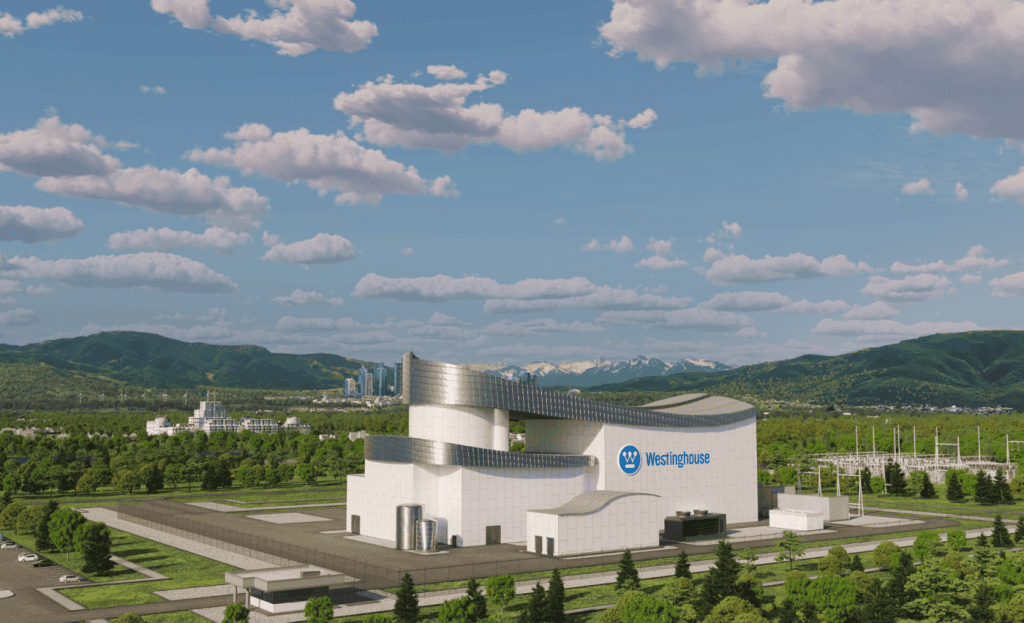
Nuclear energy plays a key role in the search for zero-emission ways to generate electricity. Small modular reactors (SMRs) are a clean energy source that will complement the energy mix and ensure Czechia’s energy and geopolitical security. Westinghouse’s AP300 SMR technology is based on the proven, larger conventional AP1000 reactor, which will speed up its licensing and could allow the first unit to generate electricity as early as 2033.
Westinghouse, with its long history in the nuclear industry, focuses on innovation and advanced technologies. One such innovation is the development of the AP300 small modular reactor, which promises to usher in a new era of nuclear energy. The AP300 builds on the foundations of an advanced, proven conventional reactor. This makes the AP300 SMR the only small modular reactor based on a facility already in operation.
Westinghouse’s small modular reactor is a single-loop pressurized water reactor with an output of 300 MWe, capable of supplying power to up to 300,000 households. The declining reliance on coal-fired power and the war in Ukraine have raised awareness of the benefits of energy security and independence provided by nuclear power.
Technology licensing
The fact that leading politicians are considering deploying small modular reactors is therefore a sensible response to the situation. In developing the AP300 SMR, Westinghouse has opted for a strategy of creating a de facto mini conventional reactor, streamlining key processes by using existing supply chains. This will allow the technology to reach the market sooner than those of other manufacturers.
Several factors could speed up the deployment of the AP300 SMR. “It is important to have a partner and a selected site. Selecting a site in advance speeds up the whole process, since each site may require a specific design and licensing. Clarifying these issues as early as possible will accelerate the entire SMR deployment process. Another advantage is working with an experienced supply chain and a qualified workforce,” says Dr. Rita Baranwal, vice president of the energy systems division.
Westinghouse is discussing opportunities with partners around the world, including in the Czech Republic. The company previously signed a memorandum of cooperation with ČEZ on the development of small modular reactors. The AP300 SMR technology is expected to receive a licence in North America in 2027, followed by the issuance of a licence for specific sites and construction of the first unit.
In Czechia, SMRs could be built at sites where coal-fired power plants operate today. Nuclear and coal power plant sites are ideal for deploying small modular reactors, which is why ČEZ decided to locate its pilot project in Temelín, South Bohemia.
“Czechia is certainly a country of interest to Westinghouse, not only because of its developed nuclear industry but also its nuclear expertise. There are many opportunities for the Czech nuclear supply chain to contribute to the deployment of our AP300 SMR. This will be a major advantage when building new reactors,” Baranwal says, highlighting the Czech market. The supply chain for the AP300 SMR is virtually the same as that for the large AP1000 reactor.
The AP300 SMR design uses proven advanced Gen III+ reactor technology, which has been approved by regulatory authorities in the US, the UK and China, and complies with the European Utility Requirements (EUR) standards for nuclear energy. This brings licensing advantages and significantly reduces delivery risk for utility and industrial customers. The AP300 reactor is based on proven conventional reactor technology with more than 18 years of safe operation behind it.
An energy source for hundreds of thousands of households
SMRs require lower initial capital investment, have shorter construction times and need less space. The AP300 SMR will occupy roughly a quarter of a football pitch. The reactor will be able to generate enough power for 200,000–300,000 households or a large industrial site with enormous energy needs.
The reactor is designed to operate for 80 to 100 years. Like a larger conventional reactor, the AP300 SMR is also designed with inherent safety features. The AP300 is based on the same proven passive safety systems, which have been extensively tested. Regulators around the world have reviewed these systems and determined that they meet advanced safety criteria.
The reactor is designed to reach and maintain a safe shutdown state without operator intervention, backup power or pumps. It is self-sufficient thanks to its passive approach to operating the safety system, which eliminates the need for backup power and power for cooling. It is also protected by a robust containment structure that can withstand extreme external hazards and has multiple layers of defence to mitigate the consequences of a potential accident.
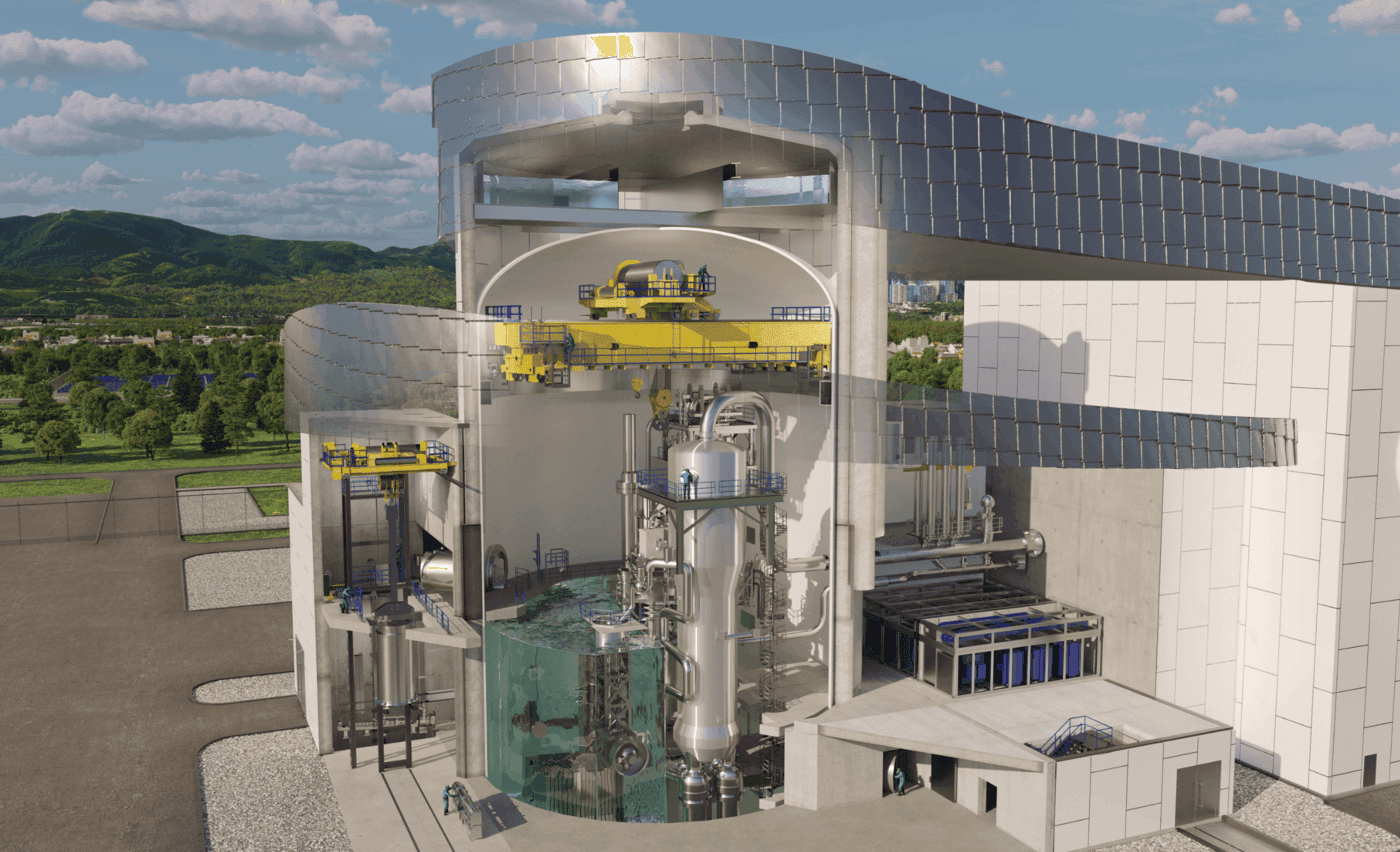
The AP300 SMR is also modular, meaning that components are manufactured in a factory and transported to the installation site. This simplifies their manufacture and construction and reduces overall costs. This modularity also makes expansion easier, as multiple SMRs can be deployed together to meet growing demand for capacity. In addition, the smaller footprint reduces initial capital costs.
Overall, the AP300 SMR model has fewer components, requiring less maintenance. Westinghouse plans to refuel the reactor every four years rather than the usual two, which will also be more economical. And because the larger conventional reactor and the AP300 use similar components, maintenance support resources and methods are well established.
“SMRs provide not only clean energy but also well-paid jobs, technological innovation and, for example, life-saving isotopes for medical use. The AP300 SMR is an energy source that will be operating for more than a generation, with a range of additional benefits,” Baranwal concludes.
Translation disclaimer
This article is a machine translation of the Czech original and has not yet been fully reviewed. In case of any doubt, please refer to the Czech version.




