11 October 2026, 08:24
Loading...
Can Venezuelan oil replace Canadian oil in the US?

Marek Kršák
17 January 2026, 13:57
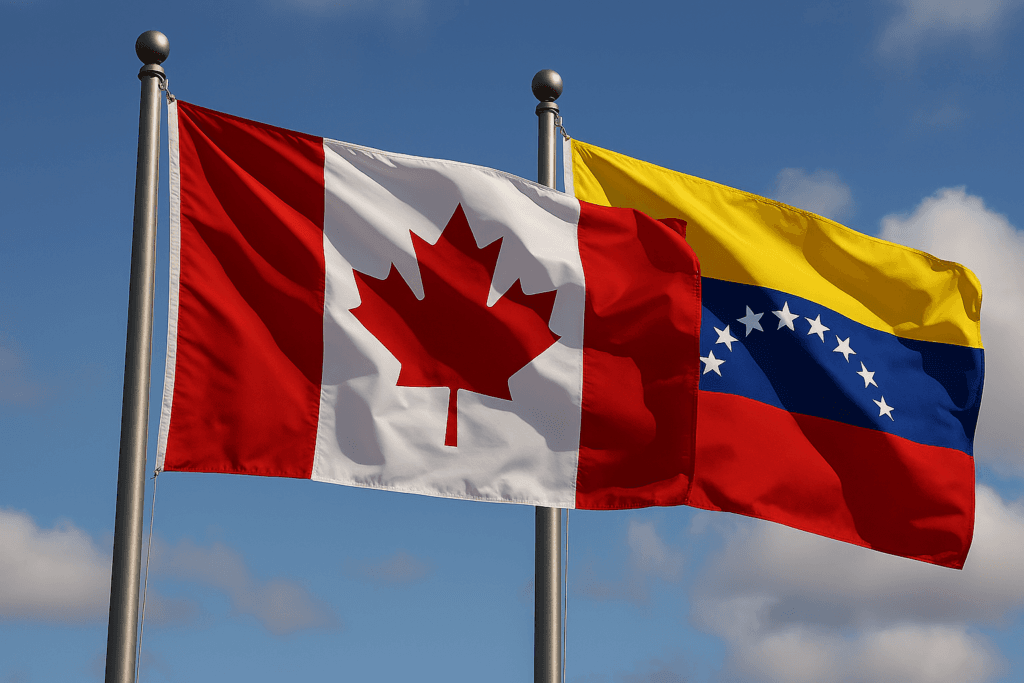
Following the abduction of President Nicolás Maduro from the country, speculation has emerged that the United States is preparing to resume imports of Venezuelan oil in order to reduce its dependence on Canadian supplies. The type of heavy oil found in Venezuela’s oil fields is a direct competitor to the oil produced in Canada. But is it really that simple to replace Canadian oil with Venezuelan oil?
Oil imports from Canada to the US surpassed imports from Venezuela in 1999, shortly after Hugo Chávez was elected president and began implementing measures that led to a significant drop in Venezuelan oil production. Since then, the volume of Venezuelan oil flowing to the US has gradually declined, from an original 60 million barrels per month to just 4 million barrels at the end of 2025. The exception was the period between 2019 and 2023, when US sanctions on Venezuelan oil meant the South American country exported no oil to the United States.
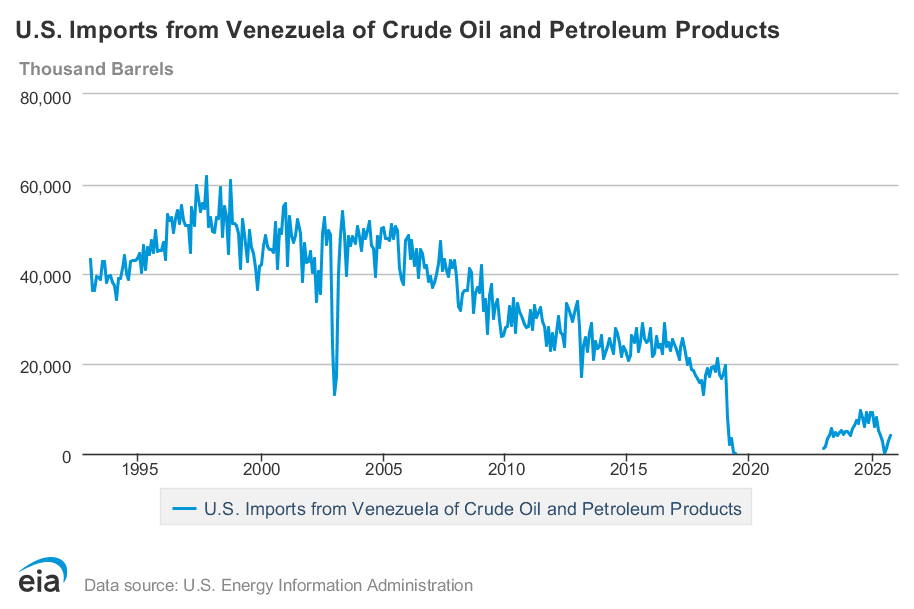
US imports of crude oil and petroleum products from Venezuela, source: eia.gov
The bitumen in the Orinoco Belt is identical to the bitumen in Alberta. However, thanks to its climate and geographic location, Venezuela has some advantages over Canada. Higher ground temperatures make its heavy oil more fluid, allowing it to be extracted directly rather than mined as a solid resource. Both its heavy oil deposits (concentrated near the Orinoco Delta) and its conventional oil (found mainly around the Maracaibo Basin) are much closer to the sea than Canada’s oil sands.
Many US refineries were built before the country became a major oil producer and are optimized to process this type of heavy imported oil. If the US could address the problems with Venezuela’s aging infrastructure, Venezuelan oil could theoretically replace Canadian oil and weaken its northern neighbor’s advantageous export position.
The price of Canadian oil
To make oil exports to the US competitive, Canada typically sells its crude at a discount to US-produced oil. This is because Canada has significantly limited access to global markets. However, extraction and processing costs are relatively high. In 2024, Canada succeeded in expanding the Trans Mountain pipeline, which carries oil from Alberta to Canada’s west coast, making it easier to access global oil markets.
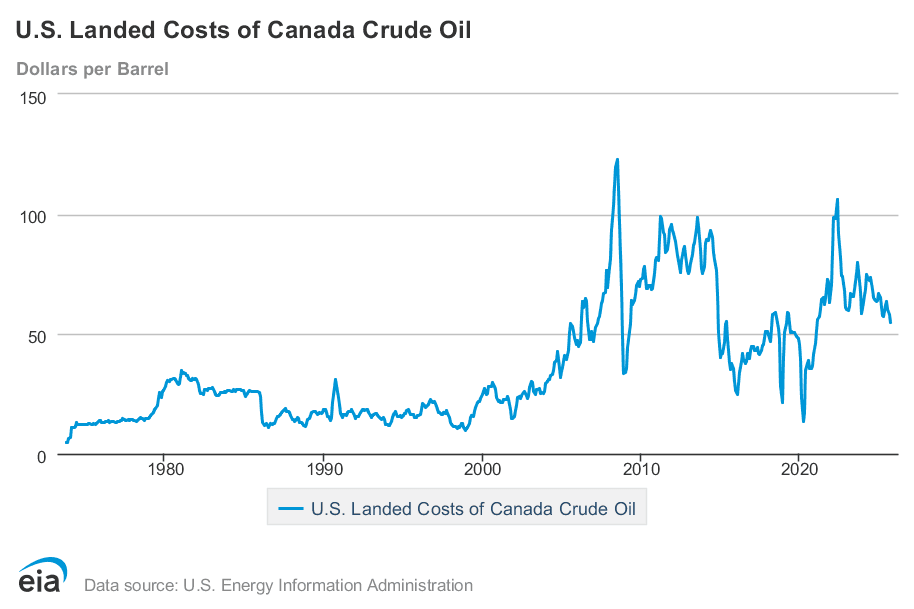
Canadian oil prices in the US, source: eia.gov
If more Venezuelan oil were delivered to US refineries, the discount on Canadian oil would widen again. While increasing Venezuelan oil production could take some time, lifting sanctions could immediately give US refineries access to greater volumes of heavy oil.
Reserves aren’t everything
Venezuela has enormous proven reserves of heavy, sour crude—around 300 billion barrels, almost a fifth of global reserves. That is more than Saudi Arabia has. The reality, however, is far less impressive. Sour crude is difficult to handle and requires specialized technology and complex refining. This is very different from US shale oil, which is mostly light and sweet, making it suitable for gasoline but less ideal for diesel, asphalt and industrial fuels.
Years of sanctions, economic collapse and underinvestment have devastated the industry. Current production stands at around 1 million barrels per day, barely 1% of global supply and just a fraction of what the country produced a decade ago (2.5 million barrels per day in 2016). Restoring Venezuelan production to 2016 levels is estimated to require more than $60 billion and several years.
This gap between potential and reality explains why oil prices barely reacted to recent events in Venezuela. Global markets are already grappling with concerns about oversupply, as OPEC has increased production while demand growth remains weak due to inflation and affordability pressures.
Canada rules out a threat to its position in the US market
Oil is Canada’s largest export, and the overwhelming majority of it is sold to the US. The detention of Venezuela’s leader has raised concerns that Canada could lose its biggest buyer and its leverage in trade talks with Donald Trump.
Although Canada exports more than 90% of its total oil exports to the US, Venezuela would be able to replace only 10% of Canadian oil in the short term. Around 70% of Canadian oil exports go to refineries in the US Midwest, 10% to the Gulf Coast and another 10% to the US West Coast.
Oil that reaches the Gulf Coast cannot be transported north to refineries in the Midwest because the pipeline system is designed to carry Canadian oil from the Midwest to the Gulf Coast.
Canadian Prime Minister Mark Carney has also said he is not worried about the future of Canadian oil, even if Venezuela begins producing larger volumes of the commodity following Nicolás Maduro’s detention. Carney said Canadian oil remains competitive because it is “low-risk”, “low-cost” and “low-carbon”..
Translation disclaimer
This article is a machine translation of the Czech original and has not yet been fully reviewed. In case of any doubt, please refer to the Czech version.
Sdílejte článek prostřednictvím:
You might also like

10 October 2026, 13:19
10 October 2026, 07:37

10 October 2026, 07:02