
23 October 2026, 11:01
Loading...
EU to present plan to end Russian fuel imports in two weeks

oEnergetice.cz, ČTK
24 April 2025, 17:28
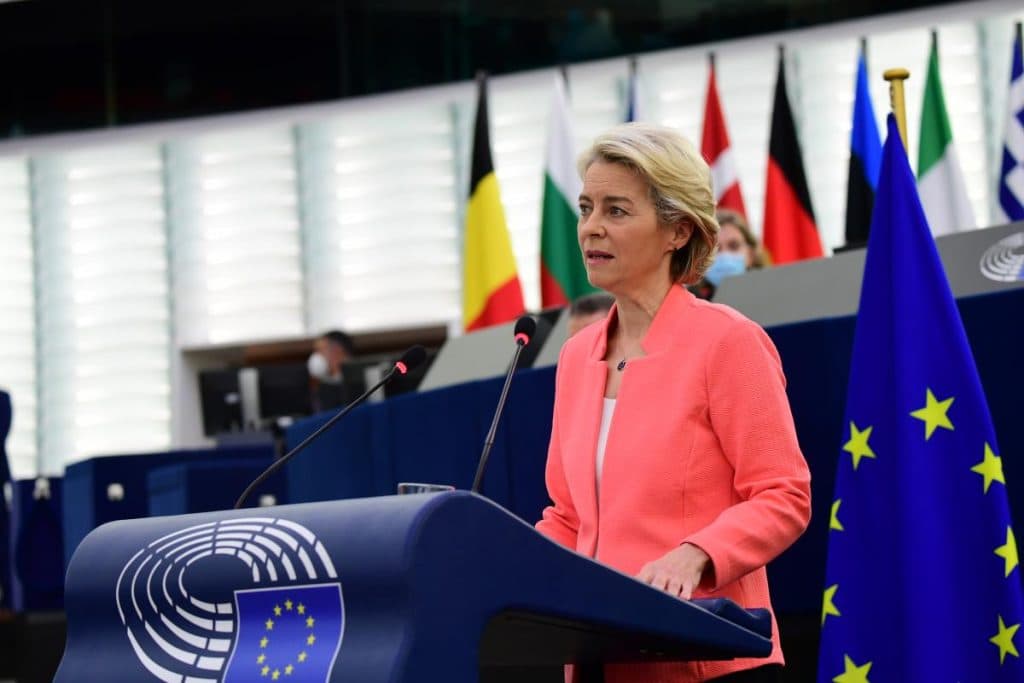
London/Brussels, 24 April (CTK correspondent) – The European Commission will present a plan in two weeks setting out how it intends to gradually end all imports of Russian fossil fuels. European Commission President Ursula von der Leyen said this today at an international energy security summit in London.
The European Commission was originally due to submit its „roadmap to end imports of Russian energy“ by 2027 at the end of March, but its publication has been postponed several times. Energy Commissioner Dan Jørgensen said experts had been working intensively on the document in recent weeks. It is particularly important to ensure that ending dependence on Russian gas does not harm EU citizens, Jørgensen added. The plan is now expected to be published on 6 May.
According to the European Commission president, the positive news is that progress is being made worldwide on energy security. Over the past decade, for example, one billion people have gained reliable access to electricity. „If we triple renewable energy and double energy efficiency, we will bring affordable energy to millions more people around the world,“ von der Leyen said.
Part of her speech focused on Russia. „At the start of this decade, we were too dependent on a single supplier. Russia supplied us with 45 percent of our gas, 50 percent of our coal and almost one-third of our oil,“ the Commission president said. For many years, the EU had not realised everything this dependence entailed, she said. „The risk of blackmail, economic coercion and price shocks. We only saw the reality after the invasion of Ukraine,“ she added, saying that Russia had then tried to exploit this excessive dependence and cut off the EU's gas supplies. „They tried to trigger economic turmoil and weaken our resolve to support Ukraine. They failed,“ the Commission president added.
The European Union now gets only 18 percent of its gas from Russia, down from 45 percent. Whereas one in five barrels of oil used to come from Russia, now it is one in 50. And the EU no longer imports any coal from Russia, von der Leyen said in her speech. „In short, we have reduced the funding of Russia's war economy and strengthened our energy security,“ she added.
However, she said, more needs to be done. That is why the Commission should present a plan with specific measures to end the 27-member bloc's dependence on Russian energy by 2027.
„When it comes to gas supplies, we have not forgotten how the United States immediately stepped in with LNG supplies when we needed them during the energy crisis. We also secured additional pipeline gas from Norway,“ the Commission president said.
The EU has also established close cooperation on energy security with Japan and South Korea. „These energy partnerships, including imports of LNG from the United States, continue to be of strategic importance to the European Union,“ she added.
In 2024, the European Union imported more than 45 billion cubic metres of liquefied natural gas (LNG) from the United States. This accounted for 16.5 percent of the EU's total gas imports and nearly 45 percent of its LNG imports. US President Donald Trump has said several times that he wants the European Union to buy more American gas, and EU officials have not ruled out this possibility. It is also part of the current negotiations with the United States over high tariffs, some of which have already been introduced while others have been suspended for now.
To strengthen energy security, the Commission president said, greater cooperation is needed across the entire energy value chain. It is also necessary to „turn the goals we have set into concrete projects, not only at home but also abroad“. In this context, von der Leyen also mentioned the Global Gateway initiative, which falls under the remit of Czech European Commissioner for International Partnerships Jozef Síkela.
Through its Global Gateway plan, the EU aims to compete with China's New Silk Road project. It envisages securing up to 300 billion euros (CZK 7.5 trillion) in investment for infrastructure, particularly in Africa, India, Latin America and the Pacific region.
The Commission president also mentioned the need for critical raw materials, noting that Europe had already signed ten strategic raw materials agreements with partner countries. She said that further joint development of infrastructure and the construction of networks and interconnections were also needed to strengthen energy security. As the final point in her speech, she mentioned cooperation, including with NATO, to protect this infrastructure, such as undersea cables, from cyber and physical attacks.
Translation disclaimer
This article is a machine translation of the Czech original and has not yet been fully reviewed. In case of any doubt, please refer to the Czech version.
Sdílejte článek prostřednictvím:
You might also like


23 October 2026, 06:34

