23 October 2026, 14:38
Loading...
A quarter-century of pointless climate conferences
Vítězslav Kremlík
24 January 2016, 20:53
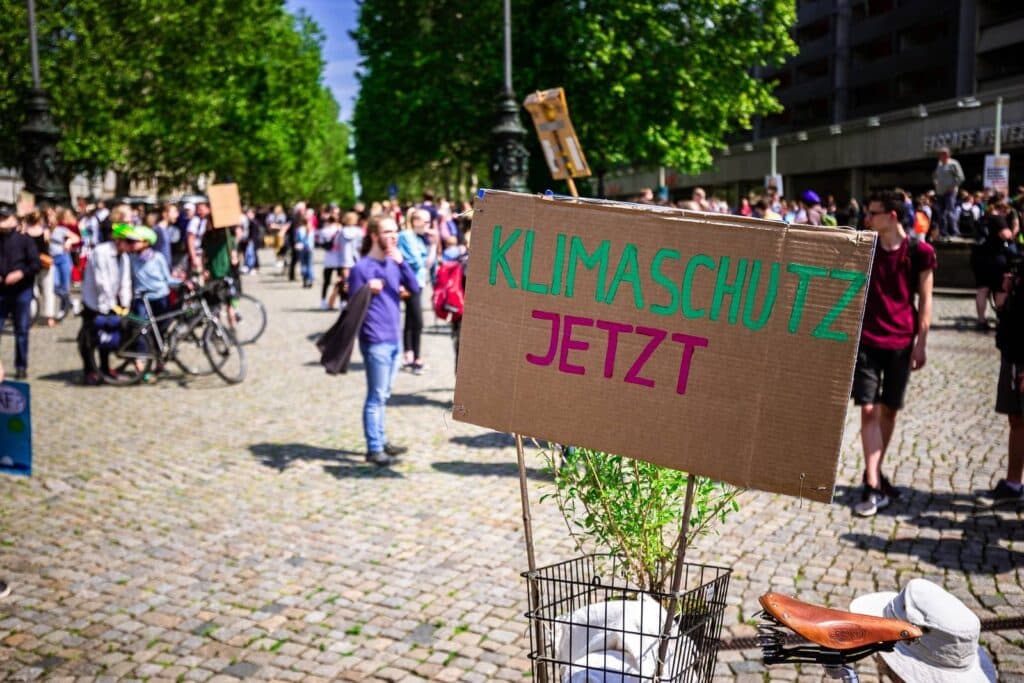
Greenpeace claims that the Paris climate conference of December 2015 brought “the end of the coal era”. In reality, however, Paris brought nothing new. It merely repeated the long-standing commitment from Rio de Janeiro (1992) that we should somehow fight carbon dioxide. But unlike under the Kyoto Protocol (1997), no specific commitments were adopted. Which is no loss. After all, even the much-praised Kyoto was merely theatre for the cameras. States committed themselves to pretending, as it were, to reduce greenhouse gas emissions. Nothing more.
The Czech Republic’s signature under the Kyoto Protocol was also just a sham. We committed to having emissions 8% lower than in 1990. But we had already met that target long before then! Environmentalists deserve no credit whatsoever for the Czech Republic reducing its greenhouse gas emissions since 1989. The reason was the collapse in production caused by the breakup of the Council for Mutual Economic Assistance (CMEA). In 1985, the Czech Republic had annual emissions of 168 million tonnes of CO2. In 1990, this was 155 million tonnes of CO2. And in 1995, just 123 million tonnes of CO2. These are figures from the International Energy Agency (IEA) report “CO2 Emission From Fuel Combustion” (2009).[i] Note that more recent editions only give data for 1990 and the present day (for example, 2013), creating the illusion that Kyoto also deserves credit for the reduction in emissions. Paradoxically, the most was done against greenhouse gases under the governments of Václav Klaus. The same situation applies in Germany, because East Germany saw a major fall in production after the fall of the Berlin Wall, inadvertently reducing emissions.[ii] John Rosenthal of Stanford University brilliantly analysed this illusion in his article “The EU Connection in Climate Research”.
Besides decimating production and losing exports, there is another way to reduce greenhouse gas emissions: moving production to other countries. This is happening because companies are fleeing Europe in the face of climate taxes and higher energy prices. Along with production, CO2 emissions, jobs and tax revenues are moving out of Europe. This is known as “carbon leakage”. At one time, Britain boasted that it had reduced its emissions by 18% compared with 1990 levels. But when the British Department for Environment, Food and Rural Affairs (Defra) commissioned an analysis from the Stockholm Environment Institute (SEI), it turned out to be merely a statistical illusion.[iii] Britain had seemingly reduced its emissions by moving production to developing countries. In reality, the emissions of British companies rose by 20%. This is also one reason why industrial production is growing in developing countries such as China and India. And with it, global greenhouse gas emissions are growing. Europe has long ceased to be the main driver of the global economy. Only around 13% of the world’s greenhouse gas emissions are generated annually in the EU. Even if we drastically reduce our emissions, in global terms it will be like spitting into the sea. So despite all the meetings and paperwork, greenhouse gases continue to rise.
We still do not have enough alternative energy sources to abandon fossil fuels. And we need energy, because economic growth rests on it. No, this is not merely a matter of some pursuit of wealth. It is a humanitarian issue. Only economic growth makes it possible to fight malnutrition and poverty. The global poverty rate (including developing countries) fell from around 85% to around 25% between 1820 and 1990. Looking only at advanced industrial countries, the decline over this period was from around 70% to less than 5% (in the case of Scandinavia and Central Europe).[iv] We owe this to the Industrial Revolution, which was driven precisely by the burning of fossil fuels.
Mgr Vítězslav Kremlík
Sources used:
[i] CO2 emissions from fuel combustion – Highlights. 2009 Edition. International Energy Agency. (tables on pp. 23 and 44).
[ii] ROSENTHAL, John. The EU Connection in Climate Research. Stanford University – Hoover Institute – Policy Review No. 162, August 2010. [accessed 22 February 2015]. Available at: http://www.hoover.org/research/eu-connection-climate-research
[iii] WATT, Robert. Carbon dioxide emissions associated with UK consumption increase. Stockholm Environment Institute, 2 July 2008 [accessed 22 February 2014]. Available at: http://www.sei-international.org/asia/about-sei-asia/1276
[iv] RAVAILLON, Martin. Poverty in the Rich World When It Was Not Nearly So Rich. Center for Global Development. 28 May 2014. Available online at: http://www.cgdev.org/blog/poverty-rich-world-when-it-was-not-nearly-so-rich
Translation disclaimer
This article is a machine translation of the Czech original and has not yet been fully reviewed. In case of any doubt, please refer to the Czech version.
Sdílejte článek prostřednictvím:
You might also like

23 October 2026, 11:01
23 October 2026, 06:34