10 September 2026, 15:21
Loading...
Could Middle East destabilisation accelerate Europe’s ‘green’ revolution?
Beáta Packová
20 September 2019, 07:31
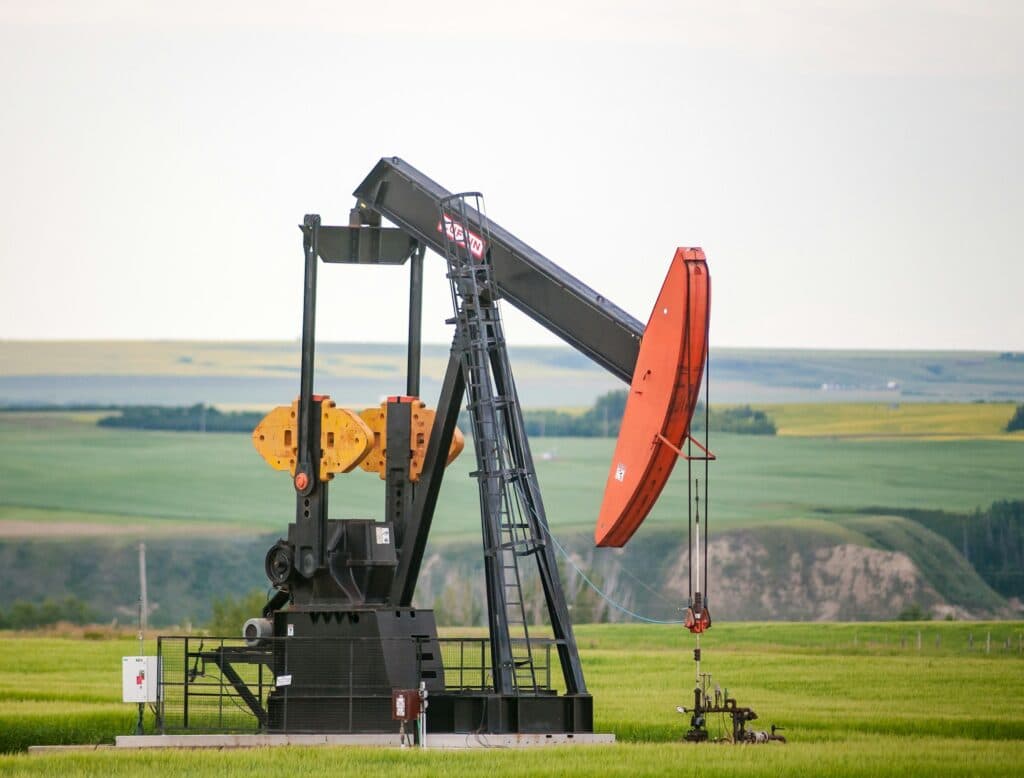
The attack on Saudi oil facilities confirmed just how profoundly the global security paradigm has changed over the past 30 years. While in 1991 Saddam Hussein needed to deploy his massive conventional army to destroy Kuwait’s oil fields, sabotage is much easier to carry out today. Maintaining functional trade relations with an oil power while avoiding entanglement in regional problems, on the other hand, is becoming increasingly difficult.
Saudi Arabia is one of the West’s key military allies in the region and serves as a counterweight to Iran. With crude oil production of 10.32 million barrels per day, the monarchy was the world’s third-largest producer of the commodity in 2018, according to OPEC. An attack on Saudi extraction facilities can therefore significantly affect global oil prices and disrupt the fragile balance of power in the region.
The forgotten war
The oil monarchy is among the more stable states in the Middle East, yet it has a large number of enemies. Besides its latent conflict with Shia Iran, the Saudis also lead a coalition of Arab states fighting Houthi rebels in Yemen. The bloody conflict in Yemen is taking place largely outside the spotlight, even though a recent UN report estimated that its direct and indirect death toll would reach 233,000 by the end of 2019.
It is precisely the latest attack, for which the Houthi rebels claimed responsibility, that could draw the world’s attention to the conflict. Speculation has even emerged that this may have been the attack’s true motive: to alert the world to a forgotten war. The rebels in Yemen’s civil war are backed by Iran, which, like the Houthi rebels, adheres to the Shia branch of Islam. The conflict has been ongoing since 2015 and, while 14 million Yemenis are threatened by famine, the economic and strategic interests of all parties involved have not yet reached a point at which they would seek an end to the fighting.
Rebels vs. kingdom
There are many uncertainties surrounding the attack itself. Initially, it was unclear whether it had been carried out by drones or missiles – Saudi authorities later determined from the wreckage that both had been used. It is also unclear where the entire operation was launched from – both physically (where the drones took off and the missiles were fired from) and in terms of who directed it. US Secretary of State Mike Pompeo has already identified Tehran as the culprit, while other states, including Saudi Arabia itself, were initially more cautious in their statements and spoke of “weapons of Iranian origin”.
After analysing the drone wreckage, the Saudi investigative commission also concluded that Iran was behind the attack. The Houthi rebels, who use Iranian weapons, officially claimed responsibility for the attack, but many analysts question the ability of Houthi forces to plan and carry out such a logistically demanding operation. The Houthis have previously attacked Saudi oil pipelinesattacked, but never so far from Yemen’s border.
For observers following developments in the Middle East, the attack on energy infrastructure is not particularly surprising. In June this year, similarly mysterious attacks took place on oil tankers in the Strait of Hormuz, for which most states blamed the Iranian regime. In July, Iranian armed forces directly detained a British tanker. While the narrow strait between the Persian Gulf and the Gulf of Oman was once considered the critical chokepoint of the global oil trade, the vulnerability of inland pipelines is now becoming fully apparent as well.
A partner with a poor reputation
All the events of recent months point to two trends. First, the political situation in the Middle East is not calming down but rather escalating. Iranian-Saudi rivalry, which until now has taken the form only of various proxy wars in Yemen or Syria, threatens to develop into an open conflict. Second – and this is important for global oil prices – energy infrastructure may also become a target in the event of open conflict. Middle Eastern regimes have traditionally used their oil reserves as leverage – the best-known example is the oil shock caused by the embargo imposed by Arab states in retaliation for support for Israel in the Yom Kippur War. Another example is the aforementioned burning of Kuwait’s oil fields by the retreating Iraqi army during the first Gulf War.
Europe’s efforts to free itself from dependence on fossil fuels are thus taking on a new dimension. Measures presented primarily as environmental may become a very strong strategic element in the near future. Relying on unstable partners is proving disadvantageous in the long term, because in this case relations are never purely commercial. Oil powers will always be tempted to draw European states into regional disputes, and the more dependent Europe is on Middle Eastern oil, the more vulnerable it will be to blackmail. The missiles fired at the oil facilities therefore struck Riyadh very effectively, and at a very sensitive point. They may, in fact, have given the green light to Europe’s energy farewell to the Orient.
Translation disclaimer
This article is a machine translation of the Czech original and has not yet been fully reviewed. In case of any doubt, please refer to the Czech version.
Sdílejte článek prostřednictvím:
You might also like

10 September 2026, 10:37

9 September 2026, 15:05
9 September 2026, 13:24