23 October 2026, 14:38
Loading...
Current state of fusion: Records at JET and other tokamaks
Vladimír Wagner
23 February 2024, 12:36
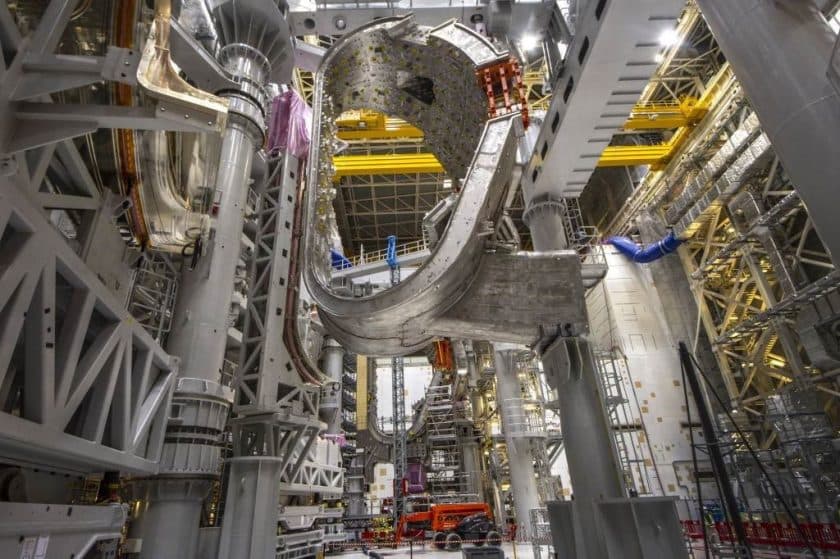
At the end of 2023, Europe’s largest tokamak, JET, concluded its successful research work. It was one of the few to operate with tritium. It therefore studied not only plasma behaviour but also fusion reactions. It holds a number of fusion records. At the same time, a number of new tokamaks have begun operating and are also setting records. Let us therefore review the results of the JET tokamak and the current state of fusion facilities using magnetic confinement.
Europe’s largest tokamak, JET (Joint European Torus), located in Culham near Oxford, ended 40 years of successful operation. The final pulse at the facility took place on 18 December 2023 and was numbered 105 929. Its foundation stone was laid in 1979. It was a European project, involving eleven countries from the outset. Scientists from up to 28 countries were involved in its work. Let us use this occasion to review the state of the journey towards a fusion reactor in the field of magnetic plasma confinement, namely the achievements of tokamaks and stellarators.
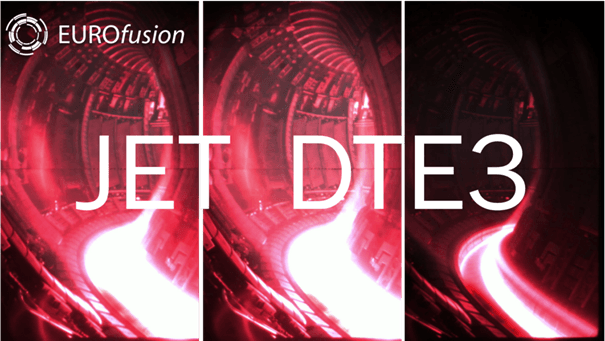
Images from record pulses at the JET tokamak (source: Eurofusion).
First, however, let us recall the basic principles behind achieving fusion. The principles of implementing nuclear fusion on Earth are described in detail in an analysis published on Osel more than three years ago (here and here). It should be recalled that fusion of tritium and deuterium, two heavier isotopes of hydrogen, appears to be the most optimal option for the first fusion power plants. It requires a lower temperature and the probability of these reactions is higher. Later, fusion of two deuterium nuclei, or of deuterium and the helium-3 isotope, could also be used. The optimum temperature for deuterium-tritium fusion reactions begins at around 160 million degrees, although lower temperatures, in any case in the range of tens of millions of degrees, are sufficient. This is a temperature an order of magnitude higher than that reached in the Sun’s core. To obtain sufficient energy from fusion reactions to heat the plasma, or for a functioning thermonuclear power plant, we must meet the so-called Lawson criterion. At a given temperature, a sufficiently high value of the product of plasma density and confinement time must be achieved.
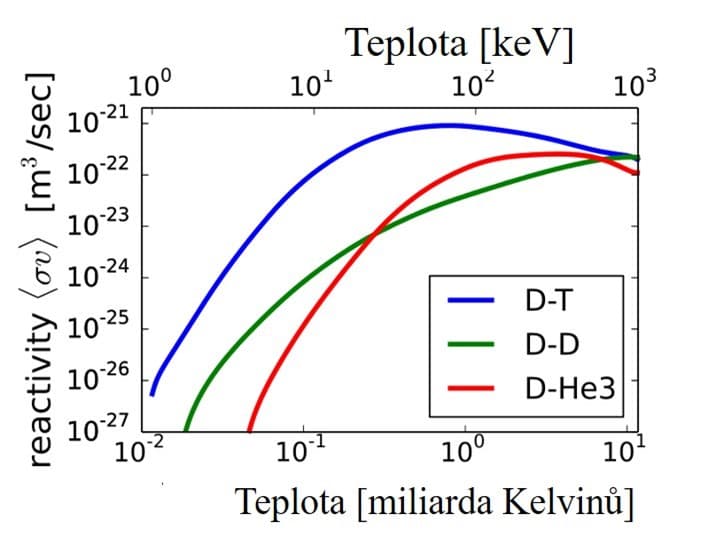
Dependence of reaction probability on temperature for the three most promising fusion reactions (source: Dstrozzi Wikicommons).
There are three threshold values important on the path towards thermonuclear power. The first is scientific breakeven, when the power produced in fusion reactions equals the power needed to heat the plasma. A significant proportion of the energy produced in fusion reactions is carried out of the plasma by neutral neutrons and cannot be used to heat it. Only the resulting charged helium-4 ions remain in the plasma and can heat it. Recall that in the deuterium-tritium fusion reaction, the neutron carries away 14.1 MeV of energy while helium carries only 3.5 MeV. The second threshold is therefore higher and is referred to as ignition breakeven. It must ensure that charged products of fusion reactions alone can heat the plasma. At this point, absorbed power equals loss power. The third is called engineering breakeven, at which the power produced in fusion reactions covers all energy needed to operate a thermonuclear power plant. The Lawson criterion for ignition breakeven exceeds 1020 m-3s.
For research tokamaks, the Lawson criterion for scientific breakeven is usually considered. It can be achieved in two ways. Either a relatively low-density plasma, corresponding to the density of a dilute gas, is confined by a magnetic field for a relatively long time. This is referred to as magnetic plasma confinement. The second possibility is extreme compression of the plasma, corresponding to the density of a solid, which need only be maintained for a very short time. This is referred to as inertial confinement. In inertial confinement, a dramatic breakthrough was achieved roughly two years ago. We wrote about it in several articles (here, here, here and here). Fusion-focused startups in particular are seeking to use approaches that combine magnetic and inertial confinement, which we also discussed recently (here and here). We will now focus on the situation and progress in magnetic plasma confinement.
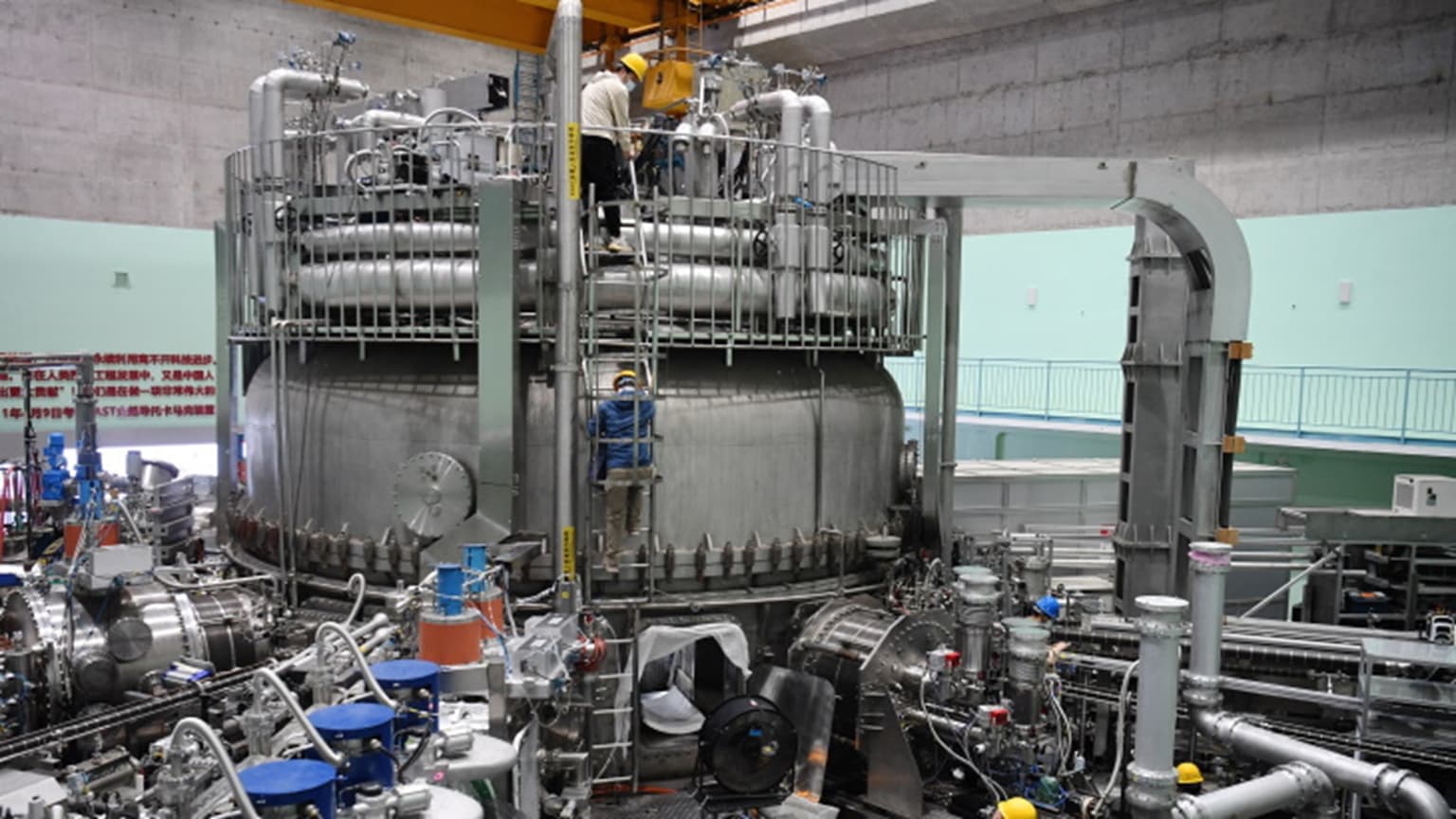
China’s EAST tokamak is among the most advanced (source: Hefei Institutes of Physical Science).
Magnetic plasma confinement
There are two types of magnetic traps at the forefront of research into magnetic plasma confinement: tokamaks and stellarators. Recall that with magnetic confinement, the formation and confinement of plasma can be studied without using deuterium and tritium or conducting fusion reactions. Light hydrogen, or alternatively deuterium, is sufficient. Indeed, it is preferable to conduct research without fusion reactions, as no neutrons are produced and thus no radioactivity is generated through their reactions in the walls of the vacuum vessel. In inertial-confinement tests, a deuterium-tritium fuel mixture must be used.
There are a number of large tokamaks, several of them very modern, having either been newly built or reconstructed and upgraded. Tokamaks are simpler, using current in the plasma to generate part of the required magnetic field. Stellarators have a much more complex electromagnet system, and only now have a few larger ones entered operation. Advances in computing and technology for electromagnet design have brought a dramatic leap in their development and use. Progress in the use of superconducting magnets has also aided the development of tokamaks, which we will consider first. The newest ones use entirely superconducting magnets.
Tokamaks and their records
A large number of tokamaks have been built worldwide since the 1950s, and a number remain in operation today. In addition to modern medium-sized and large tokamaks, a significant number of older and smaller facilities are operating. The path towards thermonuclear sources requires research into a broad range of aspects of fusion and the provision of necessary conditions. Different types of facilities, options for achieving plasma stability and purity, and methods of thermal protection for various components inside the vacuum vessel must be tested. Various instruments for measuring plasma parameters and the required methodologies must also be tested. It is also useful to have tokamaks available for training a new generation of scientists and technicians.
In this respect, the history of a facility now operating at the Faculty of Nuclear Sciences and Physical Engineering of the Czech Technical University in Prague is very interesting. The TM1 tokamak was built in Moscow in 1959 and commissioned in 1960. In 1975, it was donated to the Czech Academy of Sciences’ Institute of Plasma Physics. It was upgraded there, including replacement of its vacuum vessel. Its major radius is 0.4 m and minor radius 0.085 m, magnetic induction is less than 1.5 T and plasma current is 0.025 MA. In 1985, it was given the new name CASTOR (Czech Academy of Sciences TORus) and operated at the Czech Academy of Sciences’ Institute of Plasma Physics until 2006, when it was moved to the Faculty of Nuclear Sciences and Physical Engineering. There, it underwent further reconstruction and received, for example, a control system allowing pulses to be controlled and carried out over the internet from anywhere. Under the new name GOLEM, it serves students in Czechia and abroad for teaching and for bachelor’s and master’s theses. Students at the faculty therefore have an opportunity to work with teaching fission facilities as well as a fusion facility. A more detailed article on the GOLEM tokamak was published years ago.
Let us now look at some key tokamaks. One of the first superconducting tokamaks was T-15, which began operating in 1988 at the Kurchatov Institute in Moscow. Unfortunately, it failed to meet expectations and pulses lasted only around one second. It operated until 1995, when it was shut down mainly due to a lack of funding. In 2010, a decision was made to extensively rebuild it and rename it T-15MD. This practically entirely new facility has a major radius of 1.48 m and a minor radius of 0.67 m, toroidal magnetic field induction of 2 T, plasma current of 2 MA and available plasma heating power of up to 20 MW. Its physics commissioning took place in 2021. Its tuning continued until March 2023. On 15 December 2023, it achieved a pulse at a temperature of 40 million degrees lasting 2 s. This confinement duration is a Russian record. It is expected to achieve a confinement duration of up to 30 seconds. The facility is involved in the programme to identify optimum parameters for the ITER tokamak.
The French tokamak WEST (W Environment in Steady-state Tokamak) in Cadarache was originally called TORE Supra. Under this name, it was for a long time the only tokamak of this size with superconducting toroidal magnets. It was renamed following reconstruction and upgrading carried out between 2013 and 2016. During this work, a divertor and a tungsten wall were installed. The W at the beginning of the tokamak’s new name is the symbol for this element. The divertor is where particles that have escaped confinement are directed by the magnetic field. It is therefore subjected to very high thermal loads. The walls now have active cooling. The tokamak’s major radius is 2.5 m and its minor radius 0.5 m, magnetic induction is 3.7 T, plasma current is 1 MA and thermal heating power is up to 17 MW. It is expected to achieve plasma confinement times of up to 1000 s.
Its predecessor, TORE Supra, operated from 1988 to 2010. Its aim was to achieve the longest possible plasma confinement time. Its record pulse was achieved in 2003, when plasma was maintained for six and a half minutes (390 seconds). Total heating energy in this pulse reached 1000 MJ, giving an average heating power of 2.6 MW.
A number of large, modern tokamaks operate in Asian countries. Japan’s JT-60 (Japan Torus) has been in operation since 1985. Its major radius is 3.4 m, minor radius 1 m, toroidal magnetic field induction 4.2 T and plasma current up to 5 MA. Like the British JET tokamak, it initially failed to meet its expected parameters, mainly due to turbulence and plasma instability. However, the tokamak made a major contribution to understanding these negative effects, helping to enable a range of improvements.
It was gradually upgraded. Not only were the magnets generating the poloidal field and the vacuum vessel replaced. The new improved tokamak was named JT-60U and the quality of plasma confinement improved substantially. The tokamak began operating in 1991 and has held the plasma temperature record since 1995, now standing at 522 million degrees. Recall that plasma temperature can be of two types: ion temperature or electron temperature. Which is higher and by how much depends on the plasma heating method. In this case, it was the ion temperature; electron temperature was roughly half this value.
In 1997, the divertor was reconstructed, enabling improved plasma purity and more effective removal of impurities. As early as 2003, plasma confinement time was increased from 15 s to 65 s.
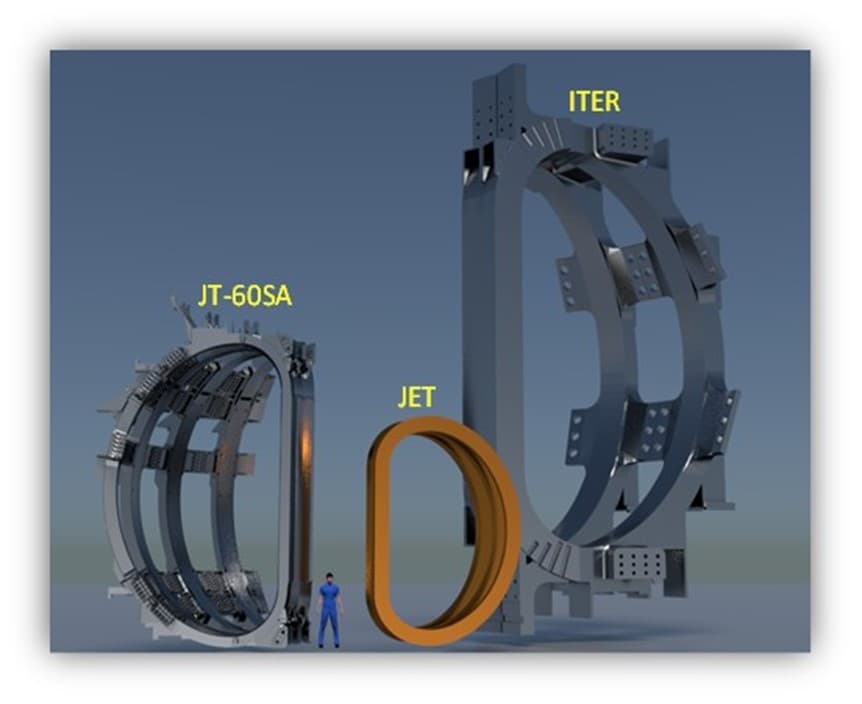
Comparison of the sizes of the JT-60SA, JET and ITER tokamaks (source: JT-60SA).
Its successor, JT-60SA (SuperAdvanced), built on the same site, began installation in 2013. Commissioning was delayed by a short circuit during start-up. It therefore only entered operation last year, in 2023. The reconstruction was truly fundamental. It is now one of the largest and most advanced tokamaks. Heating power can reach up to 41 MW. Its plasma volume is even larger than that of JET, reaching 135 m3, or one-sixth of that planned for ITER. Interestingly, the European Union is involved in work on this tokamak, including Czech physicists and students.
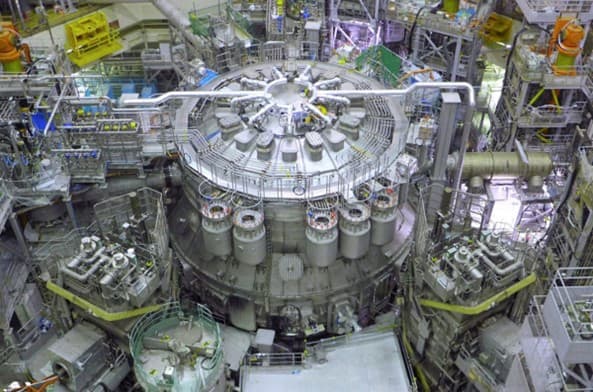
Japan’s JT-60SA tokamak after reconstruction (source: National Institutes For Quantum Science and technology).
South Korea has also built a very modern, albeit smaller, tokamak. It was among the first to have all electromagnets superconducting. The KSTAR tokamak (Korea Superconducting Tokamak Advanced Research) has a major radius of 1.8 m and a minor radius of 0.5 m, toroidal magnetic field induction of 3.5 T, plasma current of 2 MA and achievable plasma heating power of 14 MW. It was completed in 2007 and the first pulses were carried out in June 2008. In December 2016, plasma at a temperature of 50 million degrees was maintained for 70 seconds; in 2017, plasma at 70 million degrees was maintained for the same duration. In December 2020, plasma at 100 million degrees was maintained for 20 seconds, and for 30 seconds in subsequent years. Following upgrades to power sources and the divertor, including tungsten wall cladding, the facility should gradually achieve plasma confinement at this temperature for up to 300 seconds in 2026.
China built the EAST tokamak (Experimental Advanced Superconducting Tokamak). It was the first tokamak to use superconducting toroidal and poloidal magnets. Its major radius is 1.85 m, minor radius 0.45 m, magnetic induction 3.5 T and plasma current 1.0 MA. Maximum available heating power is 7.5 MW. It entered operation in 2006. As early as 2011, it achieved plasma at a temperature of 50 million degrees and maintained it for 30 seconds. It was upgraded between 2011 and 2014. In February 2016, it maintained plasma at a temperature of 50 million degrees and density of 2.4∙1019 ions/m3 for 102 seconds. In 2021, it maintained plasma with an electron temperature of 120 million degrees for 101 seconds. In December 2021, it maintained plasma with lower parameters for as long as 1056 seconds and, in April 2023, plasma with better parameters for 403 seconds.
In 2020, China’s new HL-2M tokamak in Chengdu entered operation. It is a major reconstruction and upgrade of the HL-2A tokamak, which had operated there since 2002. Its major radius is 1.78 m, minor radius 0.65 m, magnetic induction 2.2 T and plasma current 3 MA. China is devoting very considerable effort to fusion research.
Germany has withdrawn from the use of fission nuclear power. To avoid completely losing its nuclear technology expertise, it is seeking intensive involvement in thermonuclear fusion research. ASDEX Upgrade (Axially Symmetric Divertor Experiment) is a German tokamak and Germany’s second-largest fusion facility; the first is the Wendelstein 7-X stellarator, to which we will turn shortly. It began operating in 1991 as successor to the ASDEX tokamak, which operated between 1980 and 1991. Its major radius is 1.65 m and minor radius 0.5–0.8 m, maximum magnetic induction 3.1 T and maximum current 1.6 MA. Its total mass is 800 t and plasma volume 13 m3. Three types of heating are used: ohmic heating, neutral beam injection and ion cyclotron frequency heating. A maximum total heating power of 27 MW is achieved. Its fundamental upgrade was the installation of the first tokamak vacuum-vessel inner wall made entirely of tungsten. Tungsten has a very high melting point of more than 3000ᵒC and can therefore withstand extreme thermal power. Testing the properties of the tungsten inner wall, including how it affects the vacuum in the vessel under different tokamak operating modes, is very important. Alongside beryllium and graphite, tungsten is another promising material for this role.
Finally, let us mention the COMPASS tokamak, which operated at the Czech Academy of Sciences’ Institute of Plasma Physics. It came to Czechia from the United Kingdom and its advantage was that it was similar to the ITER tokamak. Work is currently under way on the new, larger COMPASS Upgrade tokamak. Its major radius is 0.9 m and minor radius 0.27 m, magnetic induction is 5 T, plasma current is 2 MA, heating power should be up to 5 MW in the first phase and up to 18 MW in the second. It will thus join the modern tokamaks providing a basis for the ITER project.
Plasma with deuterium and tritium
Only very few tokamaks have actually operated with a deuterium-tritium mixture and fusion reactions. This is because fusion reactions produce an intense neutron flux. Neutrons are neutral and escape the plasma. Their reactions with the vacuum vessel walls produce radioactive elements, greatly complicating facility maintenance.
The first tokamak to test operation with deuterium and tritium was the US TFTR (Tokamak Fusion Test Reactor), which entered operation in 1982 in Princeton. It was built with the aim of achieving scientific breakeven. Although this was not achieved, the tokamak set a number of records. Its major radius is 2.5 m, minor radius 0.87 m, magnetic field 6 T, plasma current 3 MA and maximum available heating power 51 MW. Above all, it was the first to intensively study the use of fuel consisting of equal proportions of tritium and deuterium. It was the first to release 10 MJ of energy in fusion reactions.
In 1986, TFTR achieved a plasma temperature of 200 million degrees, the highest reached at that time. This temperature is more than sufficient to achieve scientific breakeven, but a sufficient product of plasma density and confinement time must also be reached. Unfortunately, this was not achieved. The problem was turbulence and instabilities in the plasma, understanding of which was greatly advanced by this tokamak. In December 1993, it began testing a mode using fusion fuel, deuterium and tritium. In 1994, it produced 10.7 MJ of energy in fusion reactions in the aforementioned record pulse.
In 1995, it achieved a plasma temperature of 510 million degrees. A year later, its record was surpassed by the aforementioned JT-60 tokamak. The tokamak operated until 1997.
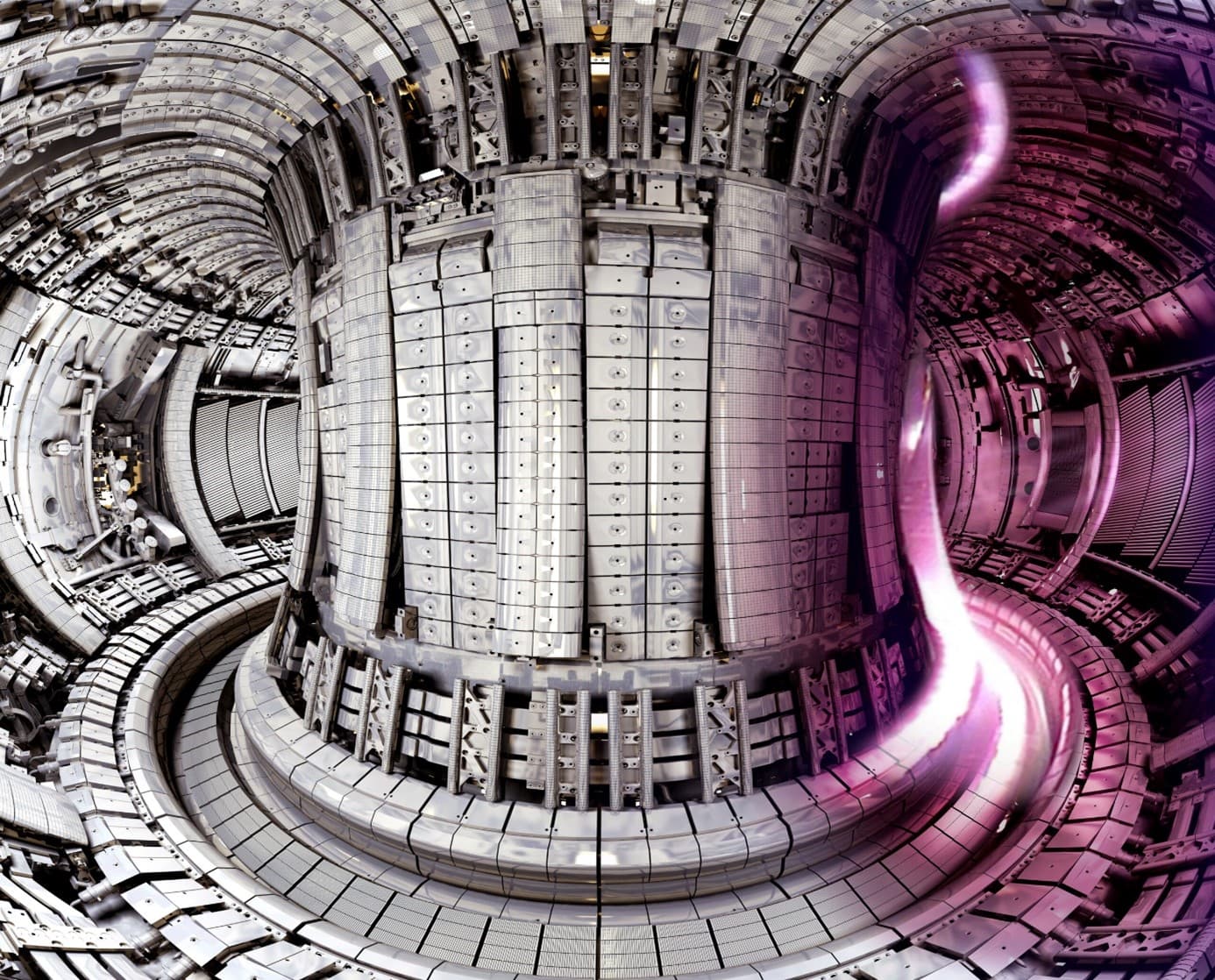
The JET tokamak ended operations at the end of 2023 (source: Eurofusion).
The broadest research into fusion reactions was conducted at the aforementioned JET tokamak (Joint European Torus). It should be stressed that, mainly owing to its size, this tokamak is the closest to ITER. Size is crucial in fusion facilities. Sufficient plasma volume makes it possible to limit thermal and other plasma losses. The JET tokamak has a major radius of 2.96 m, minor radius of 0.96 m, magnetic induction of 4 T and plasma current of 7 MA. Its first pulse and the start of experiments took place on 25 June 1983.
Three campaigns using deuterium and tritium were conducted: the first, DTE1, in 1997; DTE2 in 2021; and DTE3 in 2023. During the first fuel campaign, fusion energy of around 16 MJ was achieved with heating energy of roughly 24 MJ, resulting in a ratio of produced fusion energy to heating energy of 0.67. Subsequent campaigns mainly targeted improvements in plasma stability and heating power, and hence fusion power during a pulse. This ultimately made it possible to increase the total energy produced in fusion reactions. During the DTE2 campaign, up to 59 MJ was eventually produced in fusion reactions. A very stable pulse profile was also achieved, as shown in the figure.
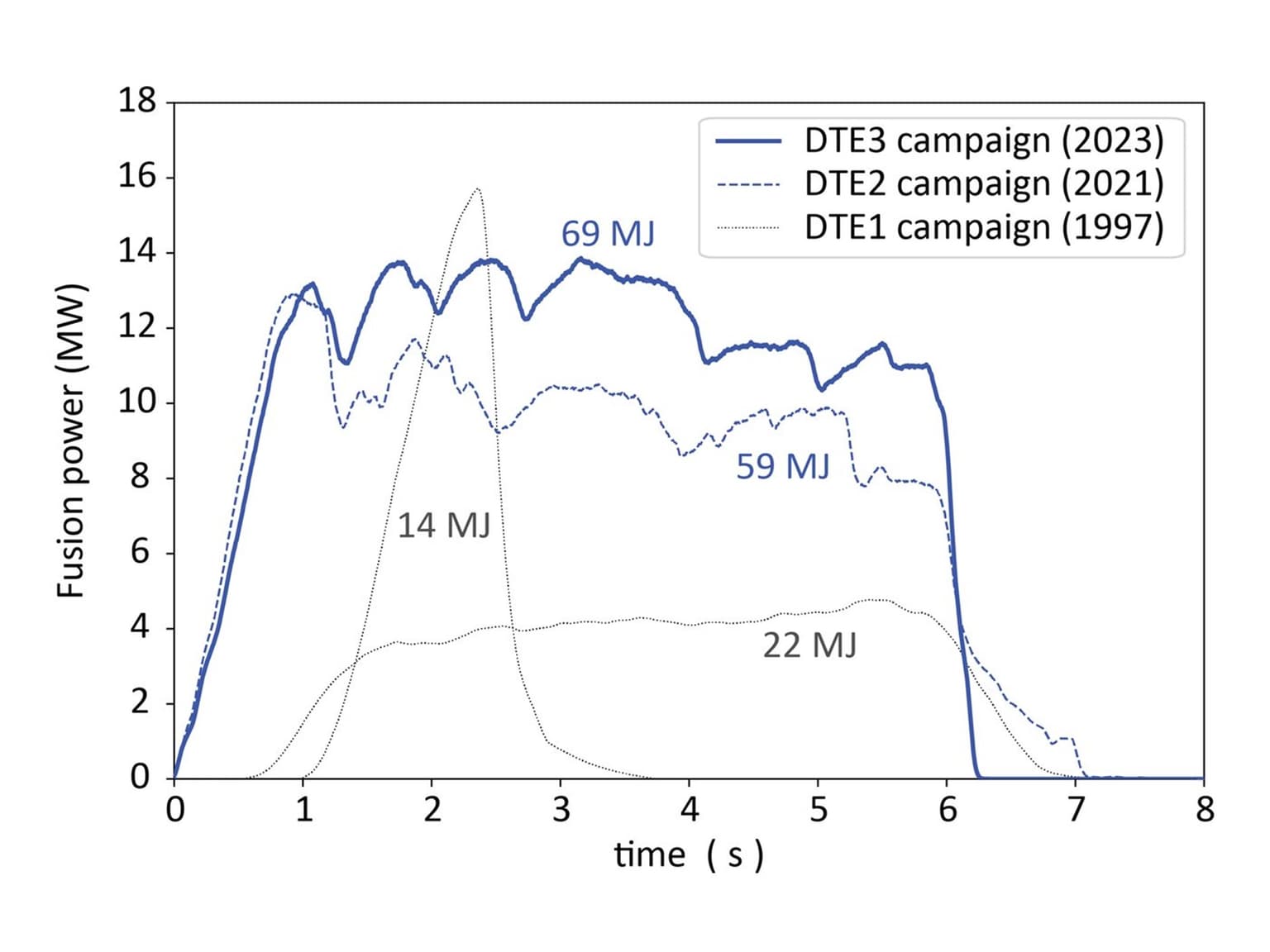
Profiles of record pulses in individual campaigns at the JET tokamak (source: JET).
The final DTE3 campaign took place in 2023. Pulse parameters were improved further. The pulse conducted on 3 October 2023, numbered 104 522, set another record. It used 0.2 mg of deuterium-tritium fuel and produced a total of 69 MJ in fusion reactions.
The main purpose of using the JET tokamak was not to set records, but to identify ways of optimising the properties of the central plasma regions, stabilising its edge regions and minimising particle losses from the plasma. Interaction of the plasma with different facility components was also studied, along with testing and optimisation of materials used. The knowledge gained can be transferred very effectively to ITER. The final pulse of this campaign, mentioned in the introduction, was carried out on 18 December 2023 and numbered 105 929. It was also the final pulse at this facility.
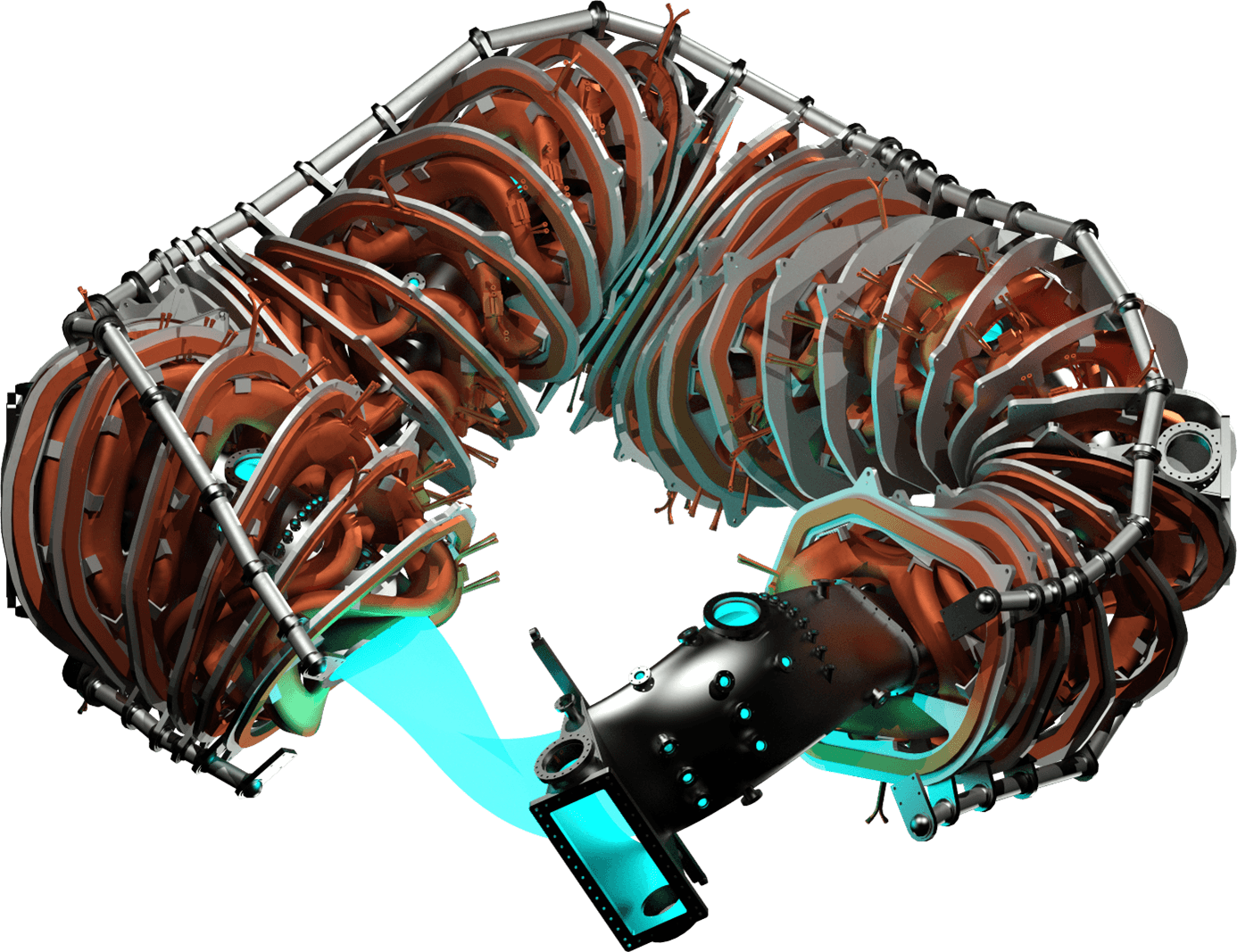
CAD rendering of the HSX stellarator. It is clear that this is indeed a very complex electromagnet structure (source: HSX).
Stellarators and their records
Unlike a tokamak, a stellarator does not induce an electric current to generate a magnetic field. This results in a very complex structure and shape of the magnetic field generated by electromagnets, and therefore of the magnets themselves. Only sophisticated computer simulations and magnet designs based on them have enabled a dramatic leap in the construction of these facilities. Their advantage over inherently pulsed tokamaks is greater stability and the possibility of plasma confinement times of up to tens of minutes. However, this is only possible with a perfect magnetic-field shape.
The number of such facilities is very limited. An interesting device is HSX (Helically Symmetric eXperiment), a stellarator optimised for quasi-helical symmetry of the magnetic fields used to confine plasma. It entered operation in 2001 at the University of Wisconsin–Madison in the United States. Magnetic induction of the magnetic field used reaches up to 1 T. Its plasma density was limited by the frequency (28 GHz) of its 100 kW electron heating to 1∙1019 ions/m3. Following a recent upgrade enabling use of a gyrotron with the same power for heating, density could be increased up to threefold. A temperature of 3 keV is achieved, corresponding to 34.8 million kelvin.
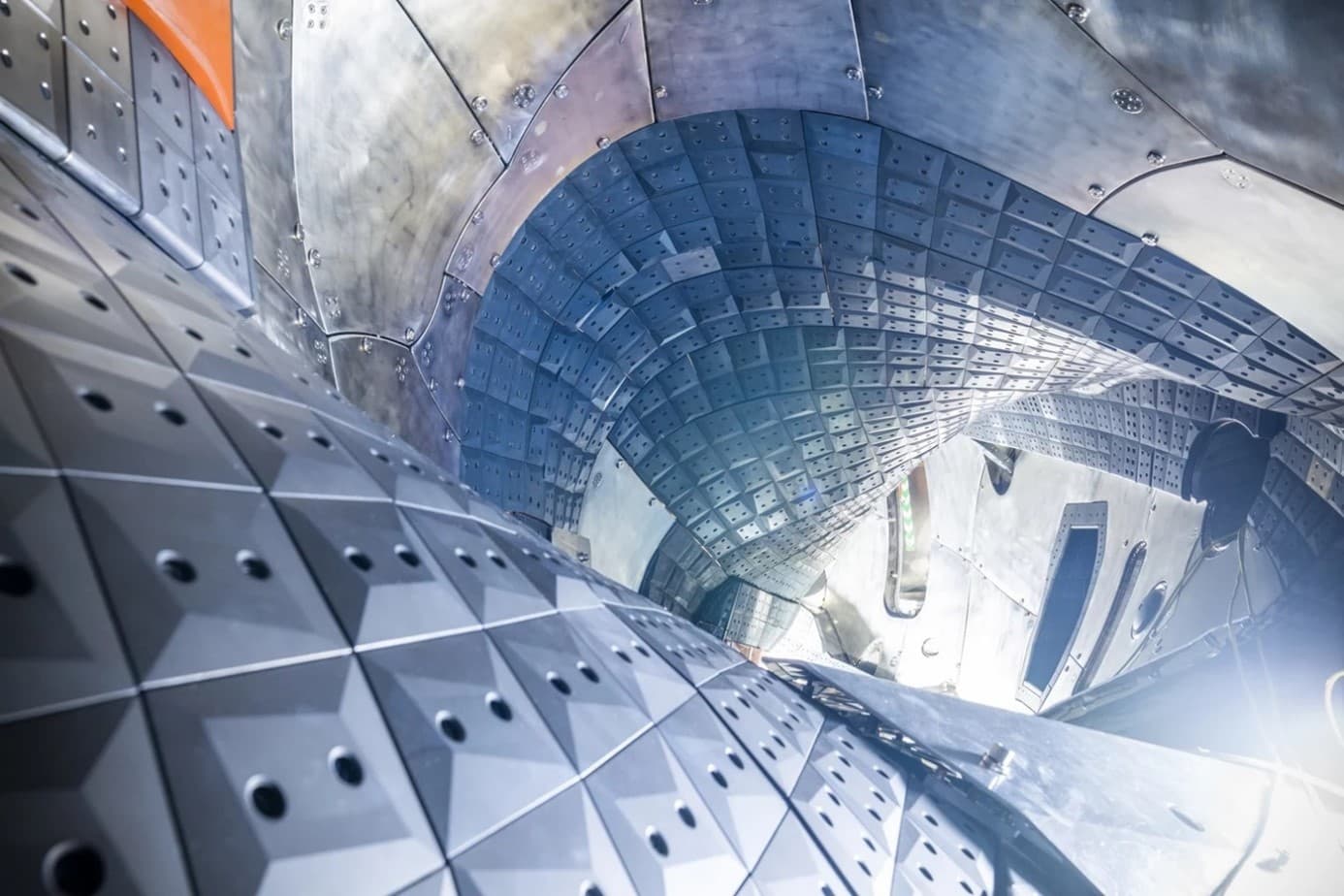
Upgrading the Wendelstein 7-X facility (source: Max Planck Institute for Plasma Physics).
Following the current upgrades, efforts continue to test and optimise magnetic fields while seeking to suppress turbulence and fluctuations in the plasma as much as possible. The facility has proved in many cases to be highly sensitive even to very small changes.
The pinnacle in this area is the recently launched German Wendelstein 7-X stellarator at the Max Planck Institute for Plasma Physics in Greifswald, Germany. Construction began in 1994 and was completed in 2015. It is the only stellarator built entirely using superconducting magnets. In the first period of experiments, it achieved a temperature of 20 million kelvin and, after 100 s, maintained a density of 2∙1020 ions/m3.
Following more than a three-year shutdown and upgrade, it set out last year towards plasma confinement times of up to 30 minutes. During reconstruction, it was equipped with water cooling for wall components and an improved plasma heating system. The new cooling effectively reduced temperatures at the divertor, the vacuum vessel’s most thermally stressed component. This is where particles from the plasma edge strike. This is also where pumps remove neutral atoms produced by deionisation and other impurities, thereby purifying the plasma. The divertor, as well as other components, received new cladding. The new divertor tiles can withstand temperatures of up to 1200ᵒC. Thanks to cooling, however, operating temperature is maintained at around 600ᵒC. It is very important that the joints between tiles are as smooth and inconspicuous as possible, while following the curved shape of the divertor as closely as possible. Sharp edges heat up extremely. The tiles are carbon and similar to those that protected the space shuttle during atmospheric re-entry. The system should withstand thermal loads of 10 MW/m2.
It was recommissioned in autumn 2022. On 15 February 2023, it achieved a discharge with energy supplied for plasma heating of 1.3 GJ and a duration of 480 s, or 8 minutes, meaning heating power was 2.7 MW. Heating power thus also substantially exceeded previous records. This already surpassed the TORE Supra tokamak record, but there remains considerable scope for improvement. Work is now under way to maintain plasma for up to 30 minutes and reach heating energy of 18 GJ.
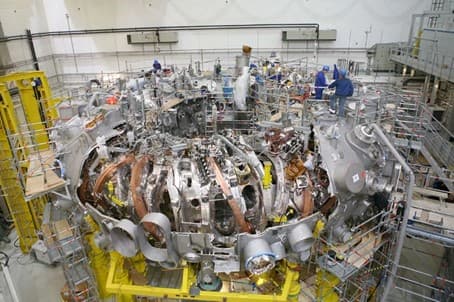
Construction of the Wendelstein 7-X stellarator (source: Max Planck Institute for Plasma Physics).
Summary of records achieved
As already mentioned, size matters in the case of tokamaks and stellarators. The larger the plasma volume, the better the thermal insulation and therefore the plasma confinement time. Another critical factor is magnetic-field strength, namely magnetic induction, as well as the quality of the magnets and the magnetic field they generate. A number of medium-sized and larger tokamaks, particularly in Asia, have now begun operating with all-superconducting magnets and toroidal magnetic field induction of 3 T or more. At the same time, refinement of settings is combating the effects of turbulence and making plasma impurity removal more effective. Ion temperatures of 100 million degrees and more, the optimum range for deuterium-tritium fusion, are therefore routinely achieved. Record confinement times are in the order of tens to hundreds of seconds. Plasma density is also improving and approaching the order of 1020 ions/m3.
It should be stressed, however, that the described temperature records, including those well above 100 million degrees, are achieved for shorter confinement times and lower plasma densities. Conversely, record confinement times tend to have lower temperatures and densities. The highest plasma densities achieved in turn tend to lead to lower temperatures and confinement times. There are also records for the product of confinement time and plasma density at sufficiently high temperature. At the most modern facilities, such as KSTAR, JT-60SA and EAST, conditions are in principle being achieved that, if plasma composed of deuterium and tritium were used, would lead to scientific breakeven. However, it should be stressed that these tokamaks are not designed to allow work with this fuel. The use of more complex plasma composition and the existence of fusion reactions producing helium naturally present a range of challenges in maintaining plasma quality, which may make it more difficult to meet the Lawson criterion.
Updates from ITER tokamak construction
In any case, these tokamaks are an extremely important source of information for the ITER tokamak under construction. Based on their results, it can be stated with certainty that ITER will achieve scientific breakeven. Construction of this breakthrough tokamak has already advanced substantially. Let us recall its parameters. Its major radius is 6.2 m and minor radius 2 m, magnetic induction is 5.3 T and plasma current will be 15 MA. The aim of this tokamak is to reach a situation where the dominant part of heating is provided by fusion reactions. It should produce total fusion power of 500 MW, while heating power is to be 50 MW. The ratio of fusion power to heating power is 10.
It should form the transition between current smaller research tokamaks and a demonstration thermonuclear power plant. The thermonuclear power plant prototype project will use knowledge gained with ITER. From this perspective, it is important that tritium production through neutron reactions with lithium will also be tested there. Demonstration of radiation safety is another very important task. This will be the first tokamak to be a nuclear facility and nuclear safety will therefore be assessed. Intensive fusion reactions will produce very intense neutron fluxes. The vacuum vessel walls will thus be subjected not only to extreme thermal loads but also radiation loads.
Neutron fluxes will be far more intense than in fission reactors. A fission reaction releases roughly 200 MeV of energy and 2–3 neutrons, while a fusion reaction releases 17.6 MeV and one neutron. To obtain 200 MeV of energy, fusion releases more than 11 neutrons. The vessel will therefore suffer neutron damage and radioactivity production on a scale encountered for the first time, presenting a major challenge.
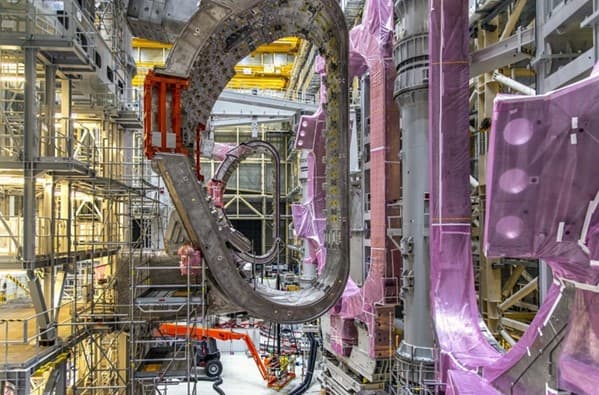
Assembly of vacuum-vessel sectors was interrupted due to defects and will only resume after they are repaired (source: ITER).
Thorough practical verification of radiation and environmental safety, and demonstration of the safety of a fusion nuclear facility, are also why ITER will operate for at least ten years only with plasma of light hydrogen or deuterium. Only afterwards will it begin using a deuterium-tritium mixture.
ITER commissioning in 2025 and the start of work with deuterium and tritium in 2035 are still assumed. However, these dates were set before the COVID-19 pandemic, which contributed to delays because experts could not travel and components could not be transported. Further delays resulted from the discovery of defects in the thermal shield and vacuum vessel. These were found in autumn 2022 on a vacuum-vessel sector that had already been installed. Assembly of the vacuum vessel was suspended. It had to be dismantled and assembly can resume only after the relevant repairs. In May 2022, ITER Director-General Bernard Bigot also died and was replaced by Pietro Barabaschi. Russia is also an important project participant and supplier of components, so construction will be affected by the impacts of Russia’s invasion of Ukraine and subsequent sanctions.
The defects concerned corrosion cracks in cooling-pipe welds. Shape deviations that also need to be repaired were found as well. All nine vacuum-vessel sectors must be inspected and repaired. Only then will installation and joining of the sectors begin again. A revised work schedule and date for completion and commissioning of the tokamak should be published in the summer of this year.
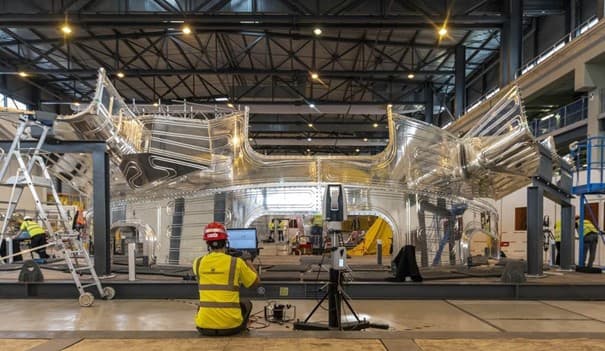
Installation work continues intensively (source: ITER).
Conclusion
Several highly modern larger tokamaks, as well as the most advanced stellarator, have recently been completed or are nearing completion. Their results and numerous records clearly show that the ITER tokamak will achieve scientific breakeven. They also make it possible to establish and refine all parameters of the ITER tokamak under construction. It should be completed and commissioned in the coming years. It will represent a fundamental turning point in the path towards a thermonuclear power plant. The synergy of jointly using the large ITER tokamak and a whole range of smaller facilities is highly significant. Neural networks and artificial intelligence are also used intensively in their design and in describing their operation. This makes it possible to test a wide range of configurations and settings for magnetic fields, plasma heating profiles using different methods, instruments and methods for measuring plasma properties, and usable materials. Work is also under way on other tokamaks; in Czechia, for example, the COMPASS-Upgrade tokamak is being built. China plans to begin construction in the coming years of a large tokamak that would follow ITER and bridge the gap between it and the DEMO project. It is designated CFETR (China Fusion Engineering Test Reactor) and should have double ITER’s fusion power. It is therefore clear that further interesting developments and records in scientific and technological thermonuclear fusion research can be expected in the years ahead. However, it must be stressed that commercial nuclear power plants remain decades away, unless an unexpected technological breakthrough occurs.
Finally, I would like to include a very good lecture on thermonuclear fusion given by my friend Honza Mlynář. He knew infinitely more about thermonuclear fusion than I did, but unfortunately left us recently after a long battle with illness. I had the honour of teaching and collaborating with him. Not only this lecture of his belongs among the gems of our internet and is the best possible remembrance of him:
https://www.youtube.com/watch?v=i5rhzC4ySCY
I sought to present a popular comparison of thermonuclear fusion in stars and fusion in terrestrial laboratories in an earlier lecture for the cosmology section:
Translation disclaimer
This article is a machine translation of the Czech original and has not yet been fully reviewed. In case of any doubt, please refer to the Czech version.
Sdílejte článek prostřednictvím:
You might also like
23 October 2026, 11:01

23 October 2026, 06:34