10 September 2026, 15:21
Loading...
Czech commission and experts urged a more ambitious climate plan. Why did the government stop halfway?
Beáta Packová
16 January 2020, 13:59
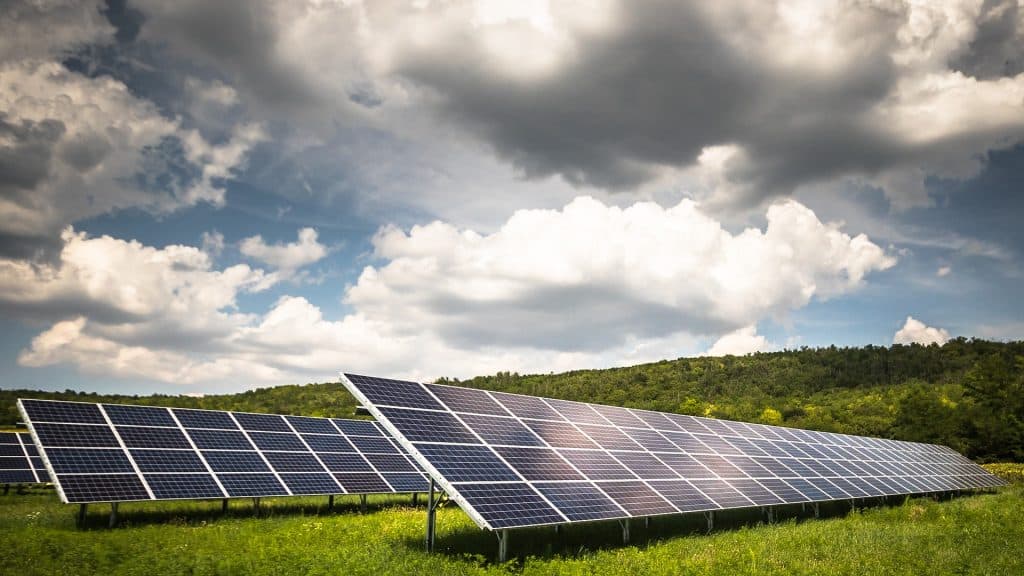
Under the revised national energy and climate plan (NECP), the planned share of renewables in the Czech energy mix is set to rise to 22 percent by 2030. The European Commission criticised the original plan as insufficiently ambitious. But where can the resources be found? What is the real potential of renewables in Czechia? And why is the government taking an extremely conservative stance on renewable energy?
Analysts see a green future
The biggest leaders in the share of renewable energy sources (RES) among EU countries are the Nordic countries (Sweden, Finland, Denmark) and the Baltic states (Latvia, Estonia), while the Visegrád Group did not even make it into the top half of the table. National governments were tasked by the European Commission with incorporating European targets into their energy and climate plans – the original Czech proposal envisaged increasing the share of renewables from around 15% currently to 20.8% by 2030. Following comments from the Commission, the government increased the share to 22% (although the Commission still recommends at least trying to reach 23%). What evidence can the government rely on in making its decision?
Perhaps the most comprehensive publicly available study on renewables was conducted by consultancy Deloitte. It recommended an even more substantial increase in their share and described the government’s original forecast for renewable growth as “extremely conservative”.
Unlike government strategists, Deloitte analysts also note the potential benefits of the Czech energy transition in terms of creating new jobs and providing an impetus for engineering and other sectors of the economy. They see the greatest potential in solar and wind power plants – according to the study, electricity generated by photovoltaics should reach market prices in Czechia by 2025.
What will grow on brownfields
The development of renewables in Czechia is also linked to another energy phenomenon – growing energy self-sufficiency among smaller units, including municipalities, companies and individual households. In December, the Union of Towns and Municipalities of the Czech Republic published an appeal to the government to pay more attention to community energy.
So-called hybrid solar power plants could also provide a solution at this level. Operating off-grid, they are not connected to the distribution network, although the house, company or municipality is. A hybrid solar power plant is thus backed up by the conventional distribution grid when, due to seasonal and weather fluctuations, it does not provide sufficient output.
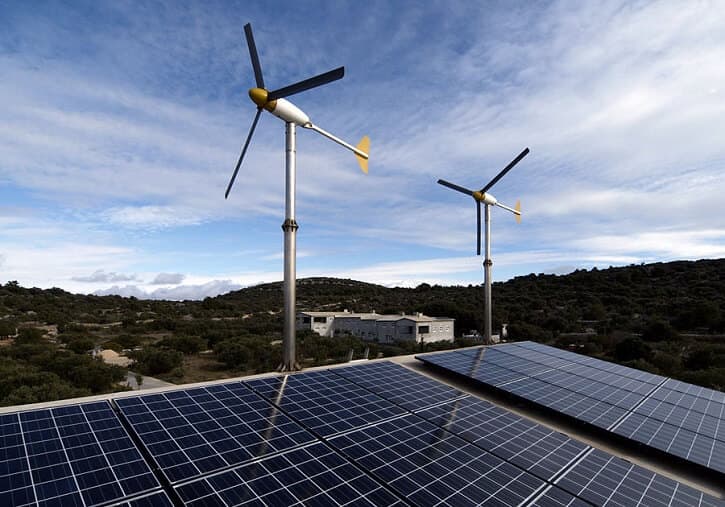
An undeniable advantage of photovoltaics is also that, unlike biomass cultivation, solar panels can be installed on brownfields – on the roofs of industrial buildings and homes. Deloitte likewise sees the greatest potential for renewables in the Czech Republic in the energy use of brownfields.
The main obstacle therefore appears to be the lingering public resentment towards “solar barons” as a result of fraud involving state support. However, government strategists and Czech society must consider whether, because of these cases (some of which have already resulted in prison sentences), the country can afford to miss the boat on renewable energy.
Czechs as climate sceptics? Not at all
A striking paradox emerged in the drafting of the NECP – Czech society appears more prepared for the rise of new technologies than its political representatives. Municipalities and citizens are responding to current energy trends, which are moving towards greater independence from centralised sources, while the government continues to insist on a centralised energy strategy and sees support for renewables not as an opportunity but as a burden. The question is whether this is climate scepticism or rather particular government economic interests.
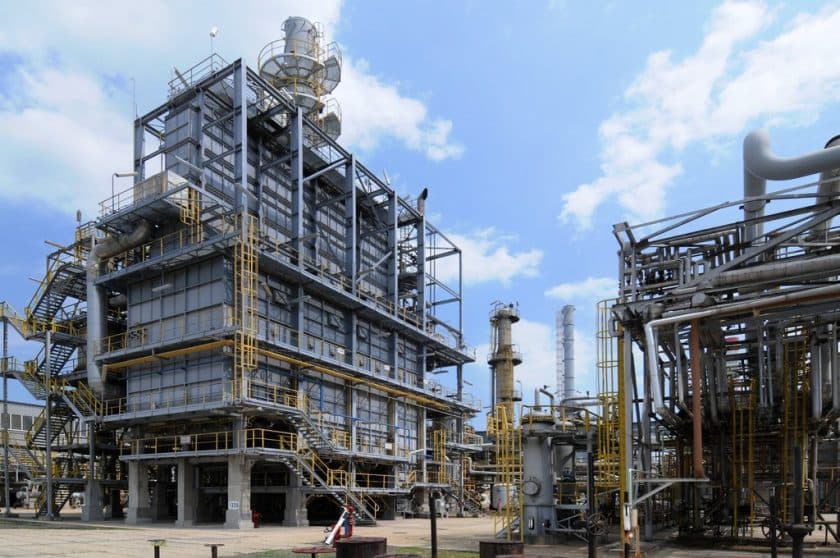
It should be recalled that substantial revenues flow into government coffers from ČEZ (which owns the brown-coal mining company Severočeské doly) and, until recently, from OKD (which last year posted a loss and whose takeover by the state remains legally disputed, as does its financial contribution given the looming arbitration). The government, which is therefore indirectly the country’s biggest coal baron, has no economic interest whatsoever in moving away from fossil fuels. But as interest in renewables grows among individuals, private businesses and municipalities, its conservative position is becoming highly suspicious.
Translation disclaimer
This article is a machine translation of the Czech original and has not yet been fully reviewed. In case of any doubt, please refer to the Czech version.
Sdílejte článek prostřednictvím:
You might also like
10 September 2026, 10:37
9 September 2026, 15:05

9 September 2026, 13:24