23 October 2026, 14:38
Loading...
Czech utility ČEZ has a very sound nuclear energy strategy
Vladimír Wagner
10 December 2024, 16:37
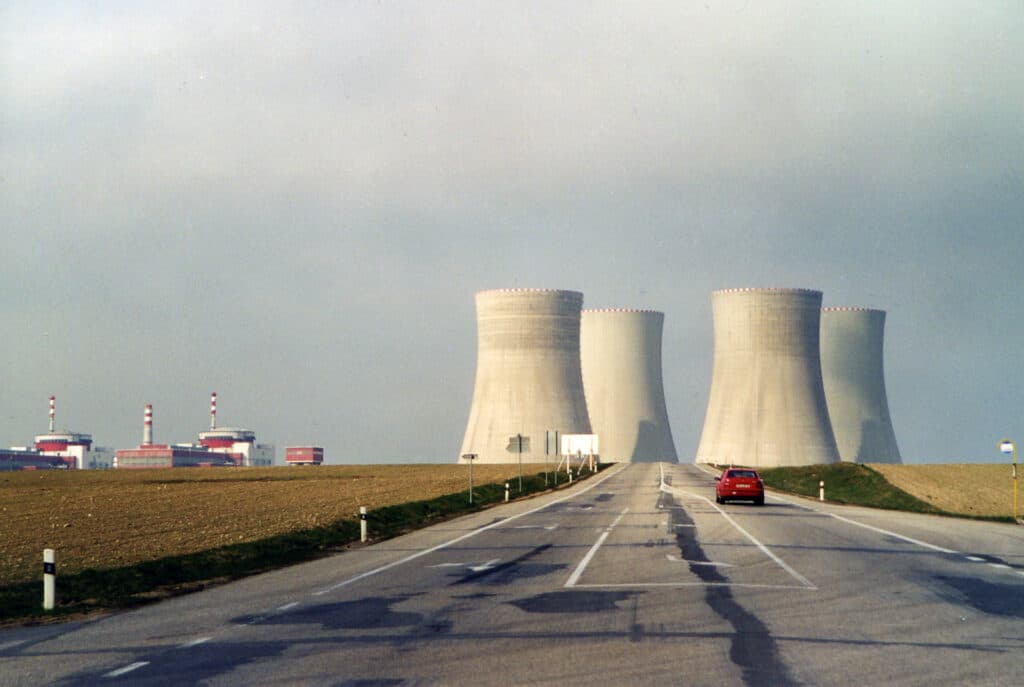
Last week, ÚJV a.s. in Řež hosted a discussion panel organised in cooperation with E15 and dedicated to small modular reactors. Panellists from ČEZ, SÚJB, the Ministry of Industry and Trade (MPO) and ÚJV presented a clear strategy for the development of small modular reactors in Czechia. Against the backdrop of this seminar, I would like to assess ČEZ's vision for the development of nuclear energy.
You can watch the seminar on the E15 website, which took place on 5 December 2024. I would like to use its context to provide an overview of ČEZ's approach and strategy in the field of nuclear energy. ČEZ was represented in the discussion by Tomáš Pleskač, a member of the board of directors; SÚJB by Štěpán Kochánek, Director of the Nuclear Safety Section; MPO by Tomáš Ehler, Director of the Nuclear Energy and New Technologies Section; and ÚJV Řež by CEO Martin Ruščák. I was encouraged by the emphasis the speakers placed on the fact that all their organisations communicate very intensively with one another and are working to address issues associated with the future deployment of small modular reactors in the Czech Republic.
Let us therefore look in more detail at three areas that are key to the development of nuclear energy in the Czech Republic.
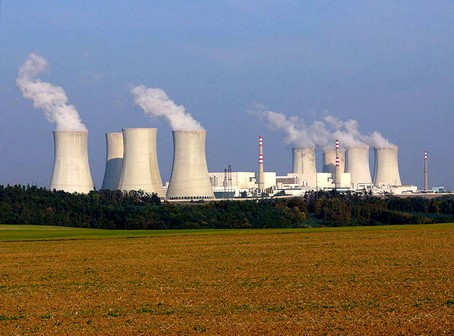
Dukovany nuclear power plant. Source: Petr Adámek, Wikipedia
Extending the operation of existing reactors beyond 60 years
At the seminar, I heard for the first time an official statement from a ČEZ representative that it would seek to operate the existing reactors at Dukovany for more than sixty years. I have been advocating for extending the operation of the VVER440 units to seventy years for a long time, and I believe this is very important. Tomáš Pleskač stressed that the ongoing care of operating units is a priority for ČEZ and that, in ensuring their long-term safe operation, the company will work very closely with SÚJB, which will carefully oversee compliance with all safety requirements.
At present, one of the key safety risks associated with operating VVER440 units in European Union countries and Ukraine has been addressed. Westinghouse has begun intensive testing of its fuel for these reactors. At the beginning of September 2024, the first batch of this new Westinghouse fuel was loaded into unit 2 of Finland's Loviisa nuclear power plant. Following the end of Rosatom's fuel supply contract for Dukovany, it will therefore be possible to secure supplies from this company.
The two reactors at Loviisa were commissioned in 1977 and 1981, while the four reactors at the Dukovany nuclear power plant were commissioned between 1985 and 1987. The Finnish plant is therefore five to ten years older. Its operation beyond sixty years is also being considered. The plant already has a licence to operate for seventy years. It will therefore be possible to observe how long-term operation performs at this plant.
The only component of a reactor that cannot be replaced is the reactor vessel. It is exposed to a neutron flux that damages it. So-called surveillance specimens are placed inside it to monitor its condition. The vessels of the Dukovany reactors were manufactured in Czechia and are of very high quality. If necessary, their service life can be extended by annealing, which can partially remove radiation damage. Czech industry also has experience with such annealing, having carried it out on one of the reactors at the aforementioned Loviisa plant. However, the reactor vessels at Dukovany may last the stated seventy years even without annealing.
Steam generators and cables can in principle be replaced. However, this may be so demanding that it is not economically worthwhile. This makes monitoring the condition of both steam generators and cables very important. Their potentially differing condition at different reactors may mean that the reactors are shut down at different times.
If the Dukovany reactors were operated for sixty years, they would be shut down between 2045 and 2047. With seventy years of operation, this would be between 2055 and 2057. There is a very high probability that the Temelín reactors will operate for more than sixty years and be used well into the second half of this century.
The direction for using heat from these large units is also clear. A district heating pipeline from Temelín to České Budějovice has been completed, and this winter season is the first in which it is being used. Intensive work is under way to prepare the project for a hot-water pipeline from Dukovany to Brno. This is increasing the use of heat from nuclear units.
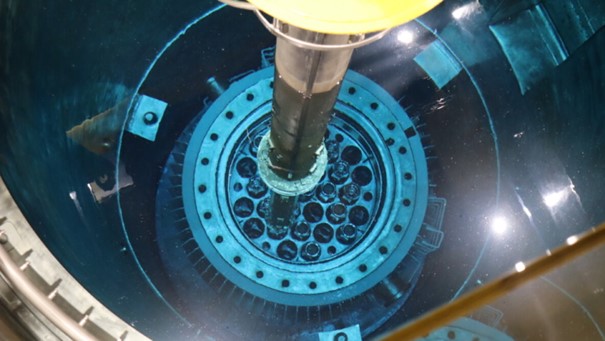
The first Westinghouse fuel assemblies are in the Loviisa 2 reactor. Source: Fortum
Intensive work on delivering the new APR1000 units at Dukovany
This year saw the decision on the winner of the tender to build new reactors at Dukovany. Let us recall the key decisions during this tender. In September 2021, China and Russia were excluded for geopolitical security reasons. This soon proved very prudent when Russia launched its war in Ukraine at the end of February 2022. The tender thus came down to three bids: EDF's French EPR1200 reactor, the AP1000 reactor from US company Westinghouse, and South Korea's APR1000 reactor.
The main tender criteria are economic parameters and guarantees on price and construction completion dates. In January 2024, Westinghouse was excluded from the tender because it failed to meet a fundamental requirement: submitting a binding bid guaranteeing delivery of the construction. At the same time, the terms changed from construction of one unit with an option for three more to construction of two units at Dukovany, with an option for another two at Temelín. In July 2024, the bid from South Korean company KHNP was selected as superior in all material respects.
I wrote in detail about the tender outcome and why the APR1000 reactor was selected in an article at the time. For both potential suppliers, these were scaled-down variants of their Generation III reactors. The South Koreans' advantage was that their 1400 MWe APR1400 reactor was developed from their 1000 MWe Generation II OPR1000 reactor by upgrading it, adding features ensuring Generation III parameters, and increasing output. For the APR1000 reactor, they can therefore again build on the OPR1000 reactor, but without increasing its output.
They are therefore much further ahead in project preparation than for the French EPR1200 reactor, where output must be substantially reduced and the design changed from four loops to three. Following the highly successful construction of four units in the United Arab Emirates, the South Koreans can also be much more confident regarding construction price and schedules.
It was also clearly evident that both KHNP and South Korea are extremely keen on the project. An optional tender requirement was that licensing of the scaled-down unit intended for Czechia should also be carried out in its country of origin. Neither France nor South Korea plans to build the scaled-down reactors. The French clearly stated that they would not undertake this licensing. The South Koreans, by contrast, even amended a law that had prevented their nuclear safety authority from licensing a reactor not planned for construction in South Korea. They are therefore carrying out licensing of the APR1000 reactor in South Korea. This is significant assistance for the licensing process at the Czech SÚJB.
Transparency and clearly defined parameters determining the winner are key to the success of the tender. So far, this appears to be in order. EDF and Westinghouse did file complaints with the Office for the Protection of Competition. However, these were rejected on 31 October 2024 with very clear reasoning. Both companies filed appeals, but these are very likely to be rejected. The Office for the Protection of Competition is to issue its decision within 60 days. It is therefore very likely that the signing of the final contract, which should take place in March 2025, will not be jeopardised.
There has also been progress in the licensing dispute between Westinghouse and KHNP. An agreement was reached between the governments of South Korea and the United States. This leaves only the issue of financial compensation between the companies, which will not affect delivery of the Czech project.
I am also encouraged when I see the very intensive activity of Petr Závodský's team, which already has around 200 people and their Korean colleagues. It is clear that they are fully determined to deliver the project successfully.
If operation of the old reactors can be extended to seventy years, that is, beyond the middle of this century, and the new pair of units is completed in the second half of the 2030s, the overlap in their operation could exceed ten years. In this case, insufficient cooling capacity could become apparent. This problem can be addressed in various ways. It is possible to use dry cooling, expand the capacity of waterworks, or adjust the operating regime of individual reactors. In summer, when cooling problems can be expected, electricity demand is lower and output from solar sources is also high. This period can therefore be used for fuel replacement, maintenance and modernisation. An analysis is already under way to determine which of the possible approaches will be best.
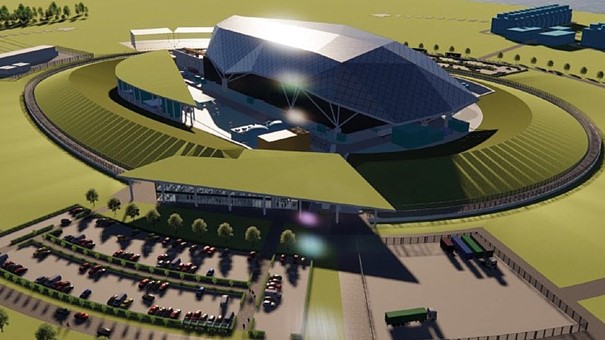
Visualisation of the Rolls-Royce small modular reactor. Source: Rolls-Royce
ČEZ selects the Rolls-Royce small modular reactor
In Czechia, small modular reactors could replace coal-fired units used for combined heat and power supplies of electricity and heat. Such applications would suit ČEZ at a number of sites, including Tušimice, Dětmarovice and others. These typically have several 200 MWe units. These coal-fired sources need to be replaced as soon as possible, so ČEZ began selecting a partner that is advanced in developing a small modular reactor and could begin offering it as early as the 2030s.
The Czech Republic has a long-standing tradition not only in the use of nuclear energy, but also in the development and manufacture of nuclear technologies. ČEZ also has research and engineering capabilities, such as the aforementioned ÚJV a.s. in Řež, as well as industrial companies such as Škoda JS. It therefore wants not only to use small modular reactors, but also to develop and manufacture them. It intends to involve the broad educational, research and industrial base that exists in this field in Czechia.
ČEZ therefore wanted to find a partner with which it could participate in both the development and manufacture of small modular reactors. Initially, it considered five options: Westinghouse's AP300 reactor, GE Hitachi's BWR300, the Rolls-Royce reactor from the British company of the same name, EDF's NUWARD, and Holtec's SMR160. However, it gradually became clear that some projects were not sufficiently advanced. Some underwent major redesigns of their concepts, while the NUWARD integral reactor project was halted altogether.
The BWRX300 and Rolls-Royce projects remained in contention. The BWRX300 is a conventional 300 MWe boiling water reactor, while the Rolls-Royce design is a 470 MWe pressurised water reactor. The advantage of the Rolls-Royce reactor is that the Czech Republic, and especially SÚJB, has many years of experience with pressurised water reactors. There were also far greater opportunities to participate in the reactor's development and production. ČEZ therefore ultimately opted for the Rolls-Royce project. It signed a cooperation agreement and recently also an agreement to take a stake in Rolls-Royce SMR.
Even at the time of selection, ČEZ and SÚJB staff were monitoring the licensing process and work around the new reactor. The group focused on this area will now be expanded. ČEZ expects to take a significant stake in Rolls-Royce SMR. It wants a 20 % stake that would allow it to participate in managing the company. However, such a large stake has one important condition: Rolls-Royce must be selected as the preferred option for the UK. A decision on this should be made in the first half of next year. If Rolls-Royce is not selected for its home country and its first prototype is not built there, its chances of gaining a significant share in Europe will be lower. ČEZ does not want to deliver the first prototype of this reactor.
If a decision on the deployment of small modular reactors in the UK is made in the first half of 2025, licensing and construction of ČEZ's first prototype at the Temelín site should follow its first deployment in the UK, in very close cooperation. The advantage of the Temelín site, which will be next to the location designated for two new large units, is that it is a well-investigated nuclear site. The licensing and construction permitting process will therefore be simpler. Standard procedures for use at other locations should be developed here.
ČEZ expects to build around ten small modular reactors at its sites currently hosting coal-fired sources. Tušimice and Dětmarovice are expected to be the first. Preliminary geological, seismological and environmental surveys are already being conducted at the potential sites.
At the same time, ČEZ is beginning work on establishing the necessary supply chain for production of these small modular reactors. As part of building the required industrial base, ČEZ is considering the construction of two facilities for assembling and producing modules for these reactors. This would harness and also expand the potential of industry in the Czech Republic.
If construction of Rolls-Royce small modular reactors can get under way in Europe and Czechia, other electricity and heat producers could also start using them. Some large industrial companies could likewise use them as captive power plants.
Conclusion
In my view, ČEZ's vision in all three areas described is very rational and meaningful. At the same time, I can see that the people responsible are working intensively on its delivery and that the relevant ČEZ, SÚJB and MPO departments communicate closely with one another. If it can be delivered, it will be an enormous benefit for the Czech Republic. As I have written many times, we will not achieve a low-emission energy system without nuclear energy. However, it is an enormous challenge. At present, the biggest question is financing. So far, only the financing model for the first large unit at Dukovany has been notified. It is therefore very important that political representatives work intensively to negotiate the required European notification.
Another major challenge will be securing sufficient numbers of qualified specialists, a task facing universities in the relevant fields. However, this is solvable. In my experience, successful progress in delivering ČEZ's nuclear power plant construction will lead to growing numbers of students in the relevant disciplines. ČEZ is regarded as a highly promising employer.
My greatest concern at present is the behaviour of politicians, who very often view energy purely as a tool for political struggle. They are unable to reach rational compromises and unite in negotiations at the European level. What we then see there is inaction that may have catastrophic consequences for our energy sector.
Seminar on small modular reactors at the Engineering Academy:
Translation disclaimer
This article is a machine translation of the Czech original and has not yet been fully reviewed. In case of any doubt, please refer to the Czech version.
Sdílejte článek prostřednictvím:
Topics:Opinion
You might also like
23 October 2026, 11:01
23 October 2026, 06:34