How to tame Czech solar PV and how much running an EV really costs
In previous articles, I described my experience with home solar PV and operating an EV. A whole range of questions came up in the related discussions that are worth exploring further and explaining in context. At the same time, 2024 brought several changes to the energy market that have a major impact on the economics of both solar PV and cars.
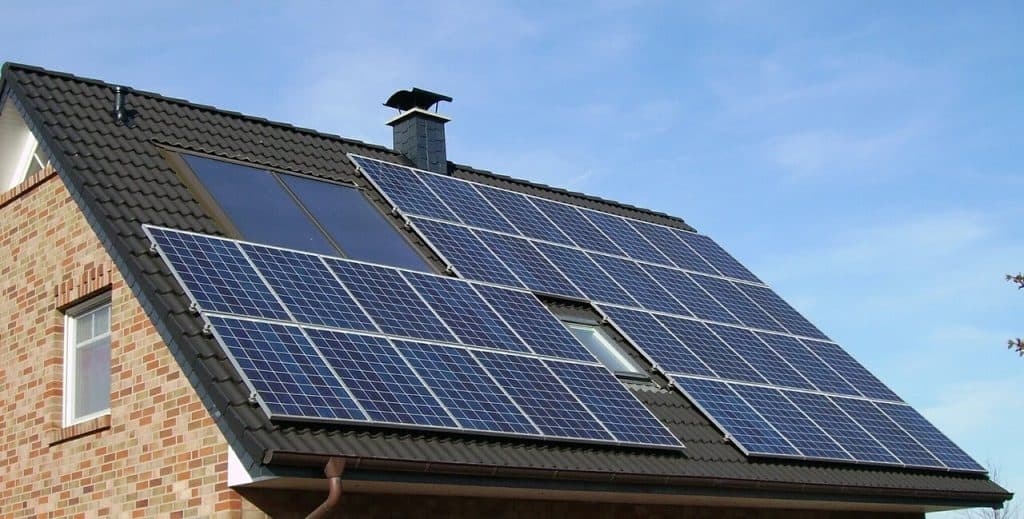
At the beginning of the year, based on my experience to date, I decided to expand my solar PV system. Compared with previous years, component prices had fallen, so without any subsidies I expanded the system to 9.5kWp with a 24kWh battery. Such a system can already cover a relatively substantial part of winter consumption; however, in summer it produces roughly twice as much in monthly terms as the house can consume. For the system to achieve a reasonable payback even under these conditions, it was necessary to add smart control.
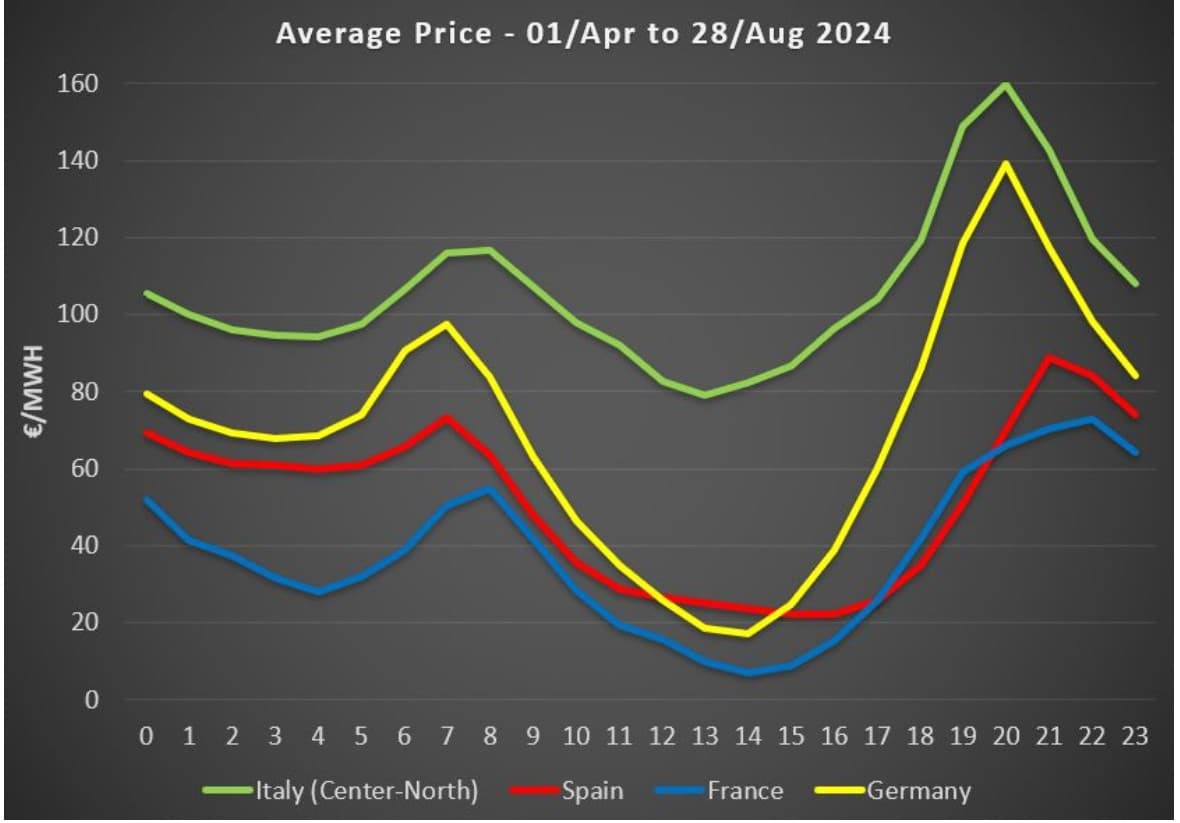
To better understand the smart-control system, it is necessary to look at the behaviour of the energy market in the region. Large numbers of solar PV systems have been installed in recent years, both in Czechia and neighbouring countries. In 2023, roughly 1GWp was installed in Czechia, with multiples of that capacity installed in neighbouring countries. The price on the day-ahead electricity market is also responding to this increase in capacity. (Electricity price formation is described in detail here: https://faktaoklimatu.cz/explainery/cena-elektriny-na-trhu). The result is the so-called duck curve, with one morning and one afternoon peak. While the “duck’s tail” has grown quite significantly in recent months, with prices above 10Kč/kWh not unusual, electricity prices frequently fall close to zero around midday. Negative electricity prices also occur very often, especially at weekends and on public holidays.
For solar PV owners, this entails several inconveniences. PV owners normally sell electricity they do not consume to the grid. They have several options to choose from: supply based on spot prices, a fixed feed-in tariff, or various forms of virtual battery, where the distributor provides a discount on electricity drawn during periods when the PV system is not generating, based on the electricity it has purchased. However, as midday prices fall, distributors’ willingness to pay for purchased electricity also declines, ultimately reducing system payback.
However, there are several solutions to this situation. First and foremost, the owner can use so-called consumption flexibility, meaning they schedule major appliances for times when the sun is shining and thus minimise consumption when it is not. Another option is to increase stationary battery capacity, while the final option is to use smart PV control. In my case, I use a combination of all the options mentioned. Essentially, the aim is to shift consumption to midday and weekends, which automatically reduces consumption at night and during peak periods. Daytime flexibility can be improved by scheduling larger appliances, such as a boiler, dishwasher or washing machine, for daytime operation, which can be done with simple timer settings. However, the most flexible household appliance in my case is the car. It consumes roughly a quarter of total energy, and in my case charging can be scheduled very effectively for when the sun is shining most strongly. As I can work from home part of the time, from March to October, with only minor exceptions, all charging takes place from the PV system. It is also preferable to wait until the weekend to charge, as during the week it is more economical to sell electricity to the grid. In my case, weekend charging accounts for around 45% of total mileage. It should be added that this is a car with a very small 40kWh battery. With the 60-80kWh batteries common today, this share would be even higher.
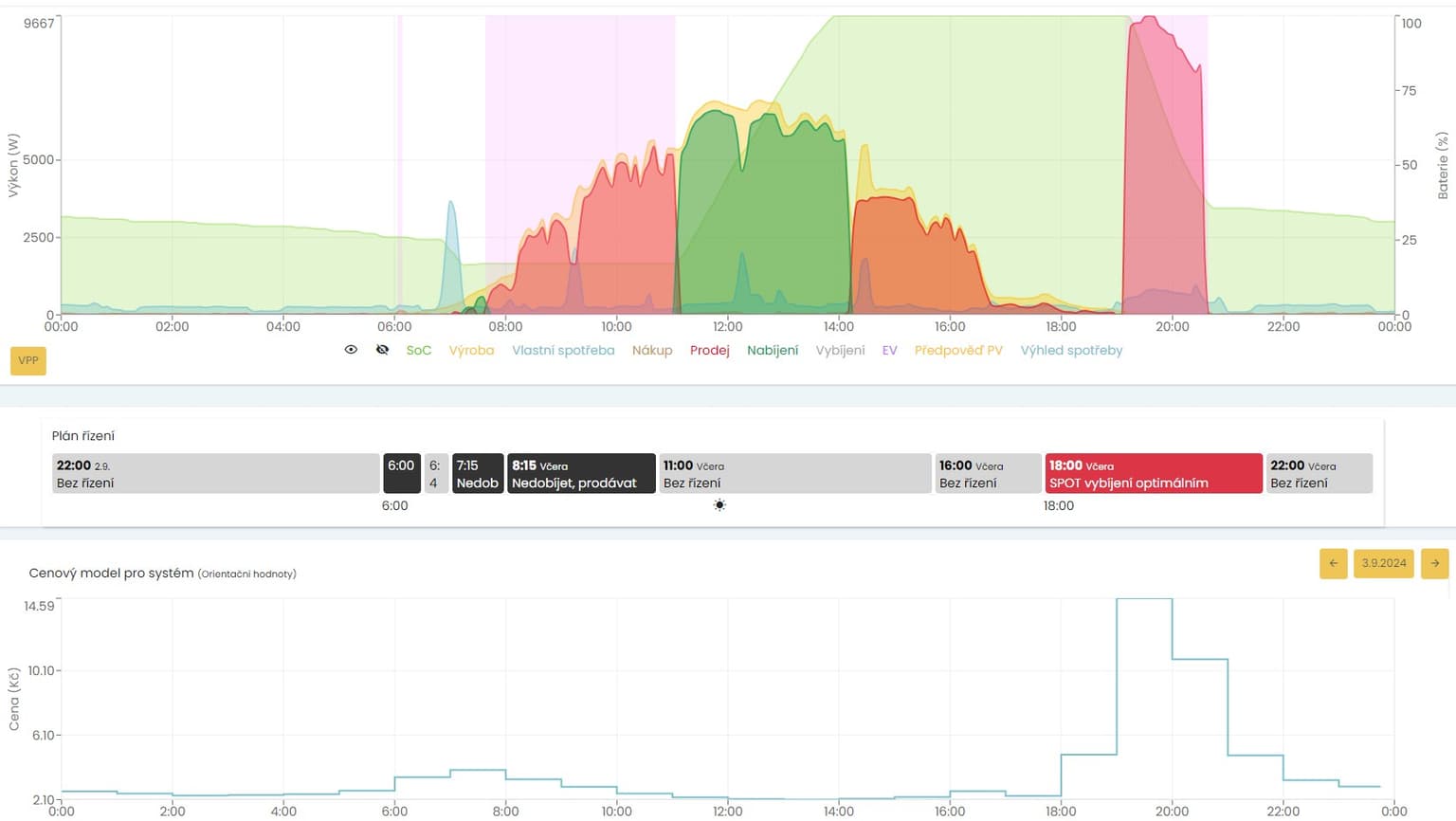
A further improvement is the combination of a larger battery with smart control. The PV inverter is controlled by AiFlexibility software, a detailed description of which can be found here: https://www.prosolar.cz/novinky-blog/ai-flexibilita-dil-c2-trvala-sluzba-klientum. Several electricity distributors have already appeared on the market offering their own software control systems for all major inverter manufacturers (Deltagreen, Electree). An uncontrolled PV system starts charging the stationary battery immediately after dawn, when SPOT prices are still high; it then charges during the morning and pushes electricity into the grid around midday, when prices are often negative. By contrast, the control system deliberately allows electricity to flow into the grid in the morning when prices are higher, then charges the stationary battery around midday at low feed-in prices and, if evening feed-in prices exceed the price set by the user, can sell part of its capacity to the grid at high feed-in prices. A record this year was set on 3 September, when spot prices at around 8pm reached almost 15Kč/kWh. It should be stressed that such conditions do not occur very often; nevertheless, selling electricity into the evening peak significantly improves the payback of the installation.
As for battery wear, shifting charging to later in the morning has no impact on lifetime, as it is merely a shift in timing. When it comes to sales into the evening peak, battery wear must also be taken into account. Manufacturers of the most commonly used LFP (lithium iron phosphate) batteries quote 10 000 - 12 000 cycles, which at today’s battery prices means an amortisation cost of less than 1Kč per stored kWh.
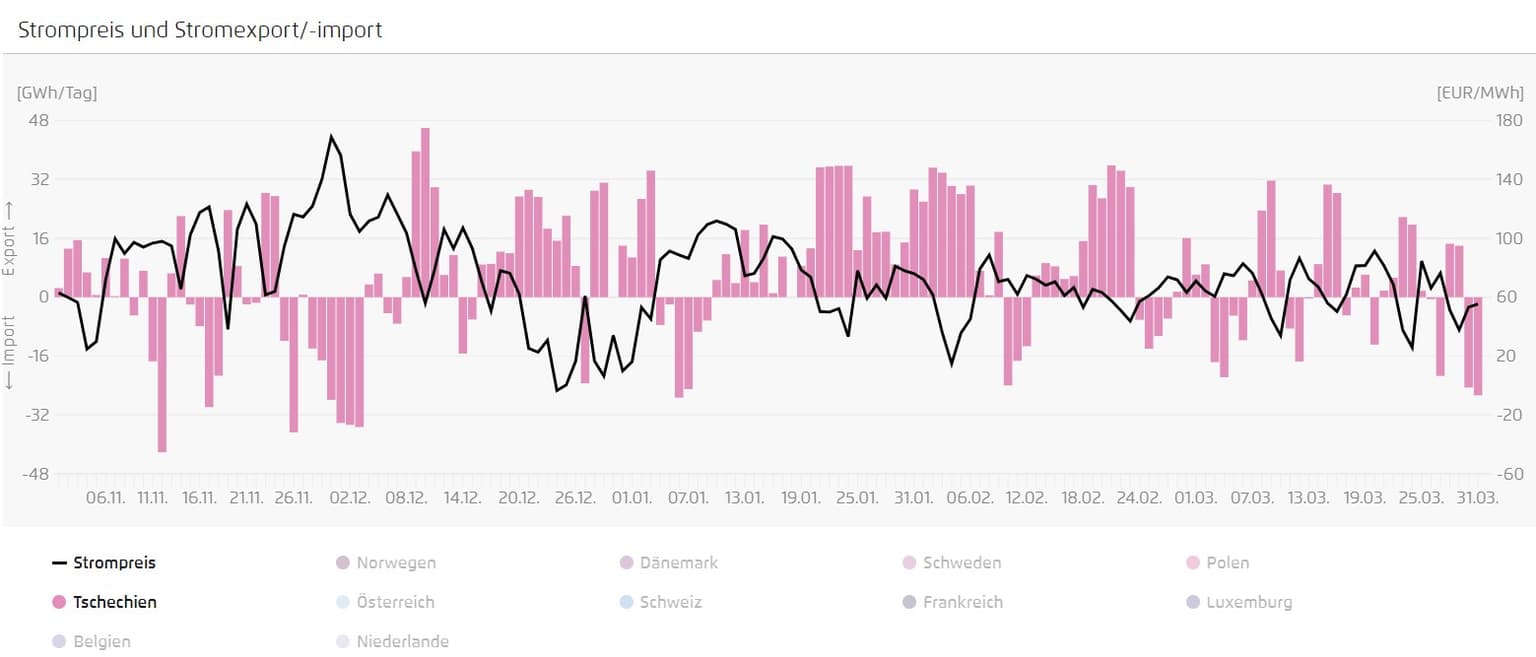
Once users adopt these habits over the summer, it is natural to apply a similar principle in winter and buy electricity on a spot tariff as well. There is less sunshine in winter, but there is more wind. Germany in particular, with its 70GW of wind capacity, produces electricity surpluses in winter, often at night, and exports them, among other places, to Czechia. These surpluses reduce electricity prices across the region, allowing PV systems to charge stationary batteries with this cheap electricity. Even in winter, prices behave similarly according to the aforementioned duck curve, which means a similar approach for users as in summer: blocking major appliances during the morning and evening peaks and, for example, starting car charging mainly on weekend nights. It should be emphasised that the resulting average electricity price depends considerably on the specific behaviour of the user and is not worthwhile for everyone. It is particularly worthwhile for households with higher electricity consumption, which must also be able to control appliances at least in a simple way. However, for PV users with a home battery and an EV, a spot tariff is highly likely to be worthwhile. Users must bear in mind, however, that they assume the risk of a sudden rise in prices, as happened for example in 2022. In the long term, though, the combination of controlled solar PV, spot tariffs and an EV appears to be a route to significant savings in electricity costs. Jan Staněk described this topic in detail on his channel. https://www.youtube.com/watch?v=y_PElZ_6EP8&t=76s
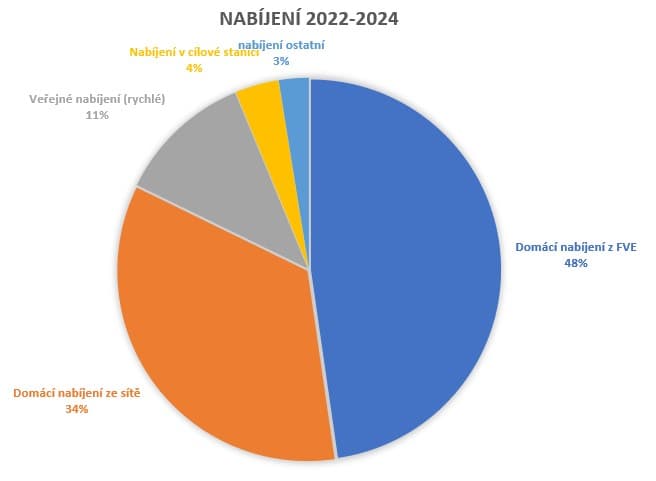
In discussions about electric mobility, the question often arose of how much operating an EV costs, including the investment in solar PV. The answer is not entirely straightforward. Someone who has to purchase both the car and the PV system will view the acquisition very differently from one of the 200 000 PV owners who already has an installation on their roof and is sending some surplus power to the grid at minimal prices. However, for PV owners, the price of electricity for charging is what that electricity would otherwise have earned if exported to the grid. At an average feed-in price of around 2Kč and consumption below 20kWh/100km, driving one km on PV power costs up to 50 haléřů. When charging from the grid on a spot tariff, an average price including distribution of up to 5Kč/kWh can be achieved. At the aforementioned consumption, the resulting cost per km is up to 1Kč. Part of the car’s mileage also comes from charging at fast-charging stations, at a price of 10-15Kč/kWh (2-3Kč/km). The resulting cost for the full year then depends considerably on the frequency of long journeys, the battery capacity in the car and charging options at destination stations. In my case, the largest share of charging comes from solar PV, followed by charging at home from the grid, while expensive fast charging accounts for around 11% of mileage. The average for the full year, including all charging types and taking into account PV amortisation, therefore comes to roughly 70 haléřů per km.
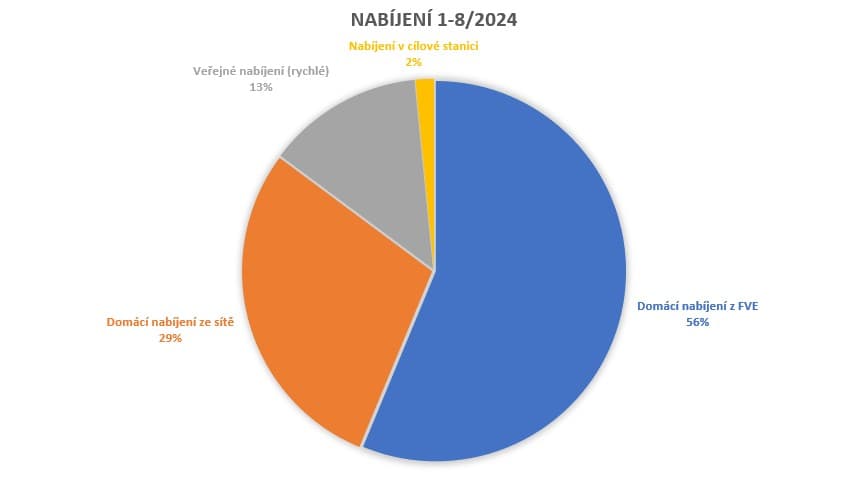
For the months from January to August, when the larger PV system was installed in April, the statistics look even better in favour of PV.
As for the purchase price, it is still higher than for comparable internal-combustion models, although model prices continue to fall. Used cars are also appearing on the market, and their prices no longer differ so fundamentally, especially compared with diesel variants. An EV is not yet worthwhile for everyone, but for owners of small PV systems it is certainly one way to improve the economics of PV alongside other useful measures.
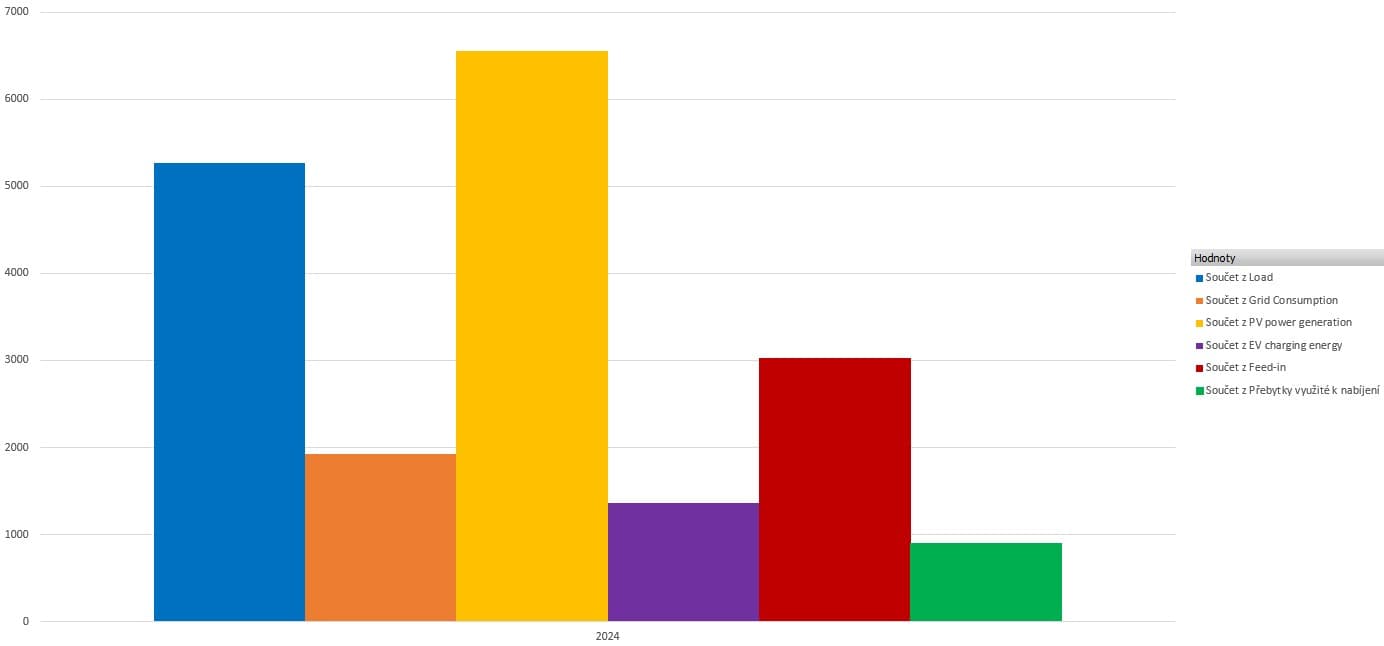
Based on experience to date, several recommendations can be made on sizing solar PV and batteries. The house has annual consumption of around 8 MWh. PV capacity in kWp is around 1.2 times annual consumption. With this combination, the PV system covers around 70% of the house’s consumption, including energy for charging the car. However, the measured data show that further capacity increases result in only minimal additional coverage, so it is not worthwhile to oversize PV excessively; instead, it is better to focus efforts on optimising the source. At this capacity, sales to the grid also improve the economics of PV, achieving an average price of around 2,3kWh/kWh. Although the system needs to be configured to some extent and users need to learn how to operate it, the applications developed are highly user-friendly and settings can be managed relatively easily. Adapting to the system’s generation again does not mean any fundamental reduction in comfort. The consumption of an ordinary household naturally already tends to occur more during the day, and it is also higher at weekends. It should also be remembered that being able to do something does not mean one has to do it that way in every case. So if, for timing reasons, something needs to be switched on when prices are higher, I simply charge the car, do the laundry or roast a goose. However, in my experience, this occurs statistically rather infrequently.
Translation disclaimer
This article is a machine translation of the Czech original and has not yet been fully reviewed. In case of any doubt, please refer to the Czech version.