Is Germany’s nuclear phase-out really the right path to sustainable energy?
Many of our green activists regard Germany’s closure of nuclear power plants as the right path towards sustainable low-emission energy. In their view, Germany’s energy strategy is also the right model for us to follow. Let us look at whether this is really the case.
In a recent article, Oldřich Sklenář presents the case for the German path towards low-emission energy. He is an analyst at the AMO Research Center who also works on energy for the Facts about Climate organisation. Let us therefore examine how his views correspond to reality. A very good illustration for assessing the real possibilities of transitioning to low-emission energy using a combination of nuclear and renewable sources, compared with a case where we ban nuclear sources and attempt to do so solely using renewables, is provided by comparing developments in France and Germany.
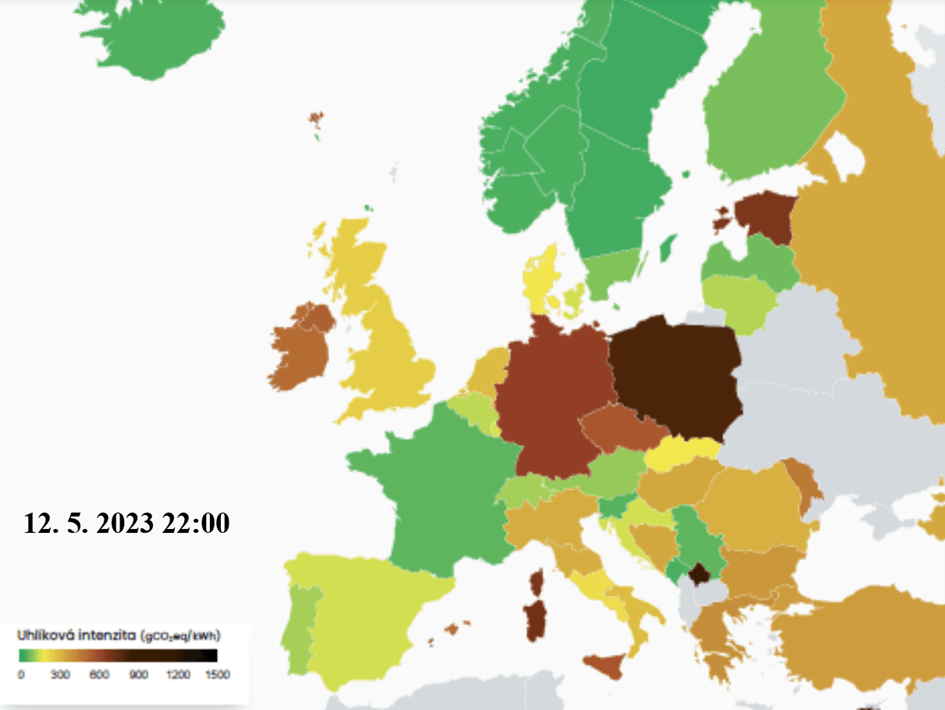
France has a low-emission electricity sector, while Germany has yet to achieve one
I described the development of France’s transition to low-emission energy and its experience with nuclear power in a recent article. France’s electricity sector became low-emission as early as 1987. It has therefore benefited from it for thirty-five years and ranks among the European regions with the lowest emissions from electricity production. In 2022, 89.2 % of electricity in France came from low-emission sources, with nuclear generating 64.4 %. And that was a year when reactors faced problems with welds and a relatively large number of them were shut down. France also meets a large part of its heating demand with electricity. This further reduces its CO2 emissions.
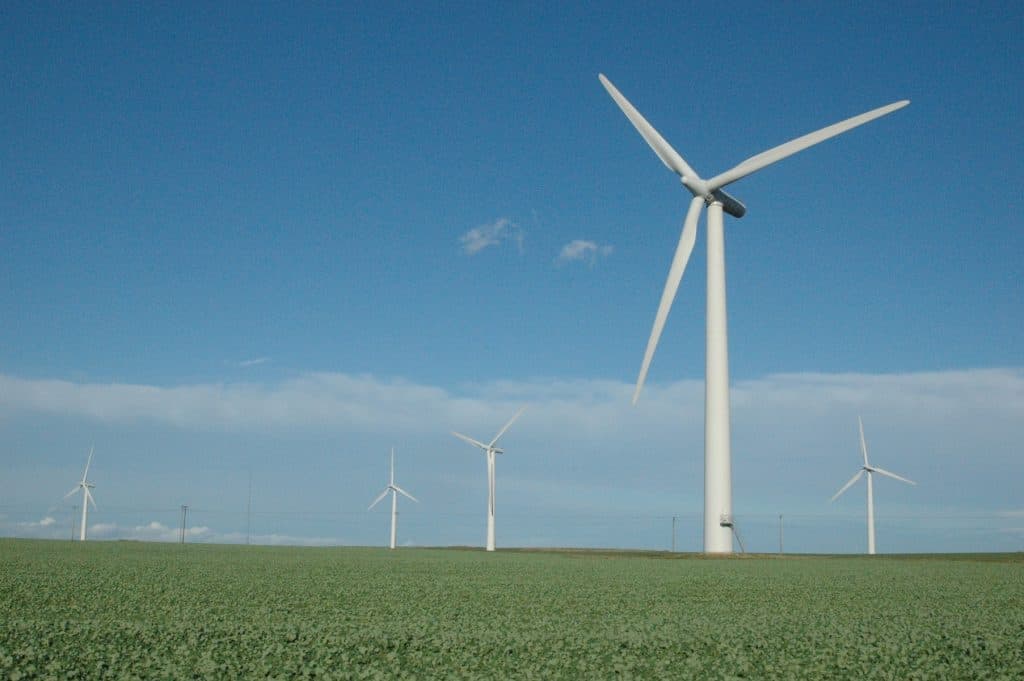
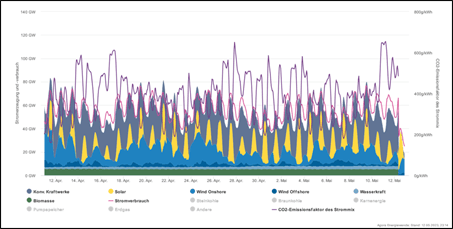
Germany has invested enormous effort and financial resources in installing wind and solar capacity. It currently has around 60 GWp of installed solar capacity, while the total installed capacity of wind turbines is at a similar level. Demand in Germany ranges between 50 and 80 GW during the year. It is therefore clear that solar power alone can already cover total demand during the ideal midday peak, and the same is true of wind turbines. When there is plenty of wind and sunshine, Germany already has a major surplus of wind and solar electricity. Some of these sources must therefore be curtailed at such times. This problem is also compounded by the fact that even in such a situation, fossil-fuelled sources cannot be shut down entirely, because they must be kept as hot reserve at a certain output so they can replace wind turbines and solar power when weather conditions change.
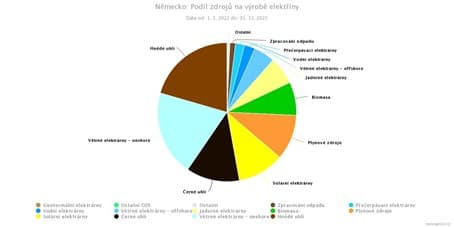
Yet even after such intensive and costly deployment of enormous solar and wind capacity, Germany obtained only 54 % of its electricity from low-emission sources in 2022, with six percentage points still coming from nuclear power. Thus, less than half of the electricity generated came from renewable sources, even in a situation where Germany intensively benefits from the ability to export surpluses from wind and solar sources to its neighbours and import electricity from them when there is no wind or sunshine. Unlike France, Germany meets a large share of its heating needs with fossil fuels. And heating demand is highest in winter, when solar sources provide a minimum.
Without long-term storage, a low-emission electricity sector cannot be achieved without nuclear power
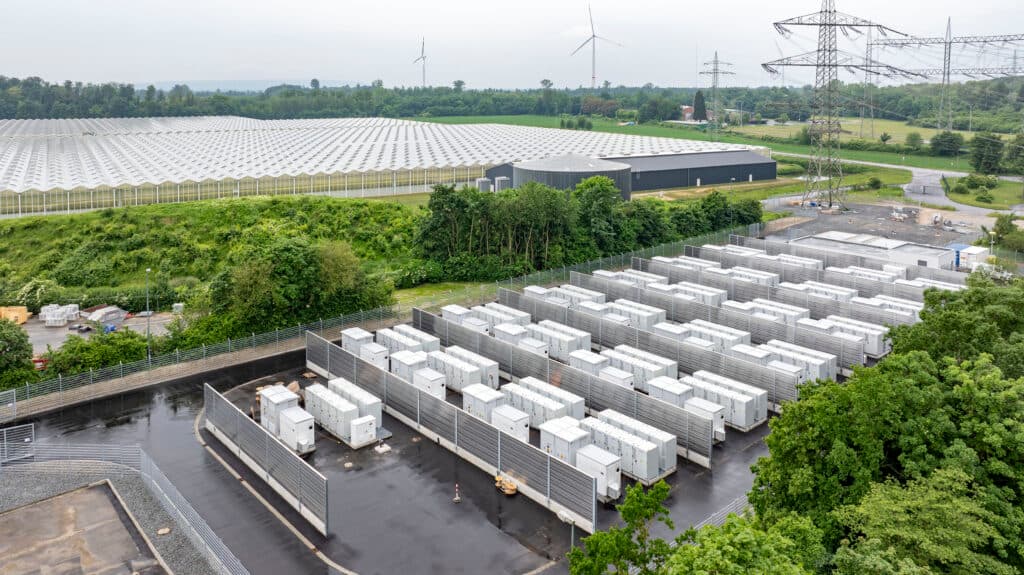
Germany is already in a situation where, without solving the storage problem, it will be very difficult to increase the share of wind and solar sources. In sunny and windy periods, surpluses and the need to curtail output will grow; in periods of poor weather conditions, increasing capacity will not help. Storage for a few hours is not enough: long-term, even seasonal, storage is needed. Without it, the share of renewables will not rise much beyond half. And that is helped by the fact that renewables are not limited to wind and solar. Such a share has so far been exceeded only in very specific geographical conditions, such as Norway or Iceland. Under normal geographical conditions, a low-emission electricity sector cannot be achieved using renewable sources alone.
According to advocates of achieving low-emission energy solely on the basis of renewable sources, the storage problem should be solved through the use of hydrogen. It is assumed that it will be produced by electrolysis during periods of surplus electricity generation. However, it should be recalled that the issue of mass hydrogen production by this route has not yet been resolved technologically, and even less so economically. Hydrogen storage facilities and infrastructure for its transport and use are far more demanding than those for natural gas. At present, the dominant share of hydrogen for industrial use is produced from natural gas and is accompanied by carbon dioxide emissions. Even replacement of this hydrogen with green hydrogen from electrolysis cannot be expected in the near future. Building the necessary infrastructure and sources for mass storage will be very challenging and, in my view, is not yet in sight. So far, only some prototype examples of individual components of such a system exist on a relatively small scale.
The technical solutions for transmitting wind energy from northern Germany, where wind resources are concentrated, to the industrial south are based on known technologies and relatively common equipment, and Germany’s Energiewende had been planned for decades to deliver them. Yet the required transmission lines have still not been built and will not be available for several more years. It is therefore a huge unknown how long the construction of hydrogen infrastructure will take and how it will turn out.
Is the rapid shutdown of nuclear sources really the right path?
In his article, Oldřich Sklenář describes Germany’s rapid shutdown of nuclear sources, which could still supply low-emission electricity for another twenty or thirty years, as a good path worthy of following towards sustainable low-emission energy. He justifies his call for the rapid shutdown of nuclear units by arguing that less wind and solar generation will have to be curtailed during periods that are ideal for wind and solar plants. He acknowledges that emissions will increase in the short and medium term. However, he does not consider this a problem, even against the backdrop of campaigns by various climate movements calling for immediate reductions in CO2 emissions. This is because he assumes that Germans will solve hydrogen storage quickly. He bases this expectation on Germany’s declared plan to generate 80 % of its electricity from renewables by 2030. This is indeed not possible without resolving long-term hydrogen storage.
I have already mentioned that, unlike Oldřich Sklenář, I am sceptical about the speed at which hydrogen storage can be deployed. The future will show which of us is wrong. However, let us look at the two possible scenarios—rapid or difficult development of long-term storage—from the perspective of Germany’s rapid shutdown of nuclear units.
The first possibility is that my view of a long road towards long-term storage is more realistic. If Germany did not prematurely shut down its nuclear sources in this case, it would be much closer to a low-emission energy system with the newly built renewable sources and would avoid a large amount of emissions. During periods of ideal wind and sunshine, it would admittedly have to curtail a larger share of wind turbine and solar output, but nuclear reactors can also help with balancing. However, it would certainly be worth it for permanently lower emissions. If Germany has shut down its nuclear units, though, it will still have to curtail a large share of solar and wind power in ideal conditions without solving long-term storage. At the same time, it will continue to have high emissions. Let us recall that, because of greenhouse gas emissions from extraction, transport, liquefaction and regasification, the advantage of natural gas over coal in this regard may not be very large.
If Oldřich Sklenář is right and hydrogen storage will be resolved soon, then the premature shutdown of nuclear sources makes no sense at all. From the perspective of storing energy as hydrogen using electrolysis, there is no difference between electricity from nuclear or renewable sources. This is especially true given that German experts themselves state that their domestic production of green hydrogen will by no means be sufficient and that they will have to import it. Nuclear units would be a major benefit in such a case.
France has had a low-emission electricity sector for almost forty years. In my view, mass long-term storage will not be resolved for another twenty years or more. Until it is resolved, the German path to a low-emission electricity sector is not realistic. Germany will therefore reach a low-emission electricity sector at least half a century later than France. Let us recall that following the oil crisis, not only France but also Germany and other European countries wanted to follow the path of using nuclear power. Due to the views and intensive anti-nuclear campaigns pursued by movements similar to Greenpeace and Hnutí Duha, as well as people similar to Oldřich Sklenář, nuclear power in Europe was successfully frozen and the path towards low-emission energy was dramatically delayed. In my view, they are therefore the greatest culprits should this transition fail to be implemented in time. That is one problem; worse still is that they have shown no self-reflection and continue their campaign for following Germany’s nuclear exit.
A lecture on the possibilities for low-emission energy in the Czech Republic:
https://www.youtube.com/watch?v=jn89W3RKXIM
Translation disclaimer
This article is a machine translation of the Czech original and has not yet been fully reviewed. In case of any doubt, please refer to the Czech version.