Key progress on India’s path to the thorium cycle
India has finally succeeded in taking key steps towards building a thorium cycle. After a series of delays, the first three domestically developed 700 MWe heavy water reactors have entered operation and their series construction is beginning. At the same time, a sustained fission chain reaction has been achieved at the domestic 500 MWe sodium-cooled reactor, which is expected to become the second pillar of the thorium utilisation system. Let us take a closer look at its current status.
India has only very limited uranium reserves, but it has very large deposits of thorium ores. If it succeeds in building its nuclear power sector around the thorium cycle, domestic raw materials would suffice for many centuries or even millennia. This is why India has chosen this path. To use thorium-232, it must first be transformed through neutron capture into thorium-233, which subsequently undergoes two beta decays to become uranium-233, a fissile material similar to uranium-235.
Fast reactors are suitable facilities for this transformation. Their neutron fluxes and reactor core configuration can be arranged so that a large share of the neutrons is captured by thorium-232 and used to transform it into uranium-233. In a suitable configuration, such a fast reactor can also operate as a breeder reactor. This is why India is incorporating a fast reactor into its thorium cycle. It chose a sodium-cooled fast reactor, the type with which the world has the greatest experience. This is the only type of fast reactor operating as a commercial power plant, with two sodium fast reactor units in operation at Russia’s Beloyarsk nuclear power plant.
Another suitable component of the system can be conventional reactors moderated and cooled by heavy water. Deuterium, the heavy isotope of hydrogen, has a much lower probability of neutron capture than light hydrogen. This again provides greater scope for neutron capture by thorium-232 and the production of uranium-233. With a suitable core configuration, a thorium-uranium cycle can achieve uranium-233 production close to its consumption. In the first phase, however, Indian heavy water reactors use uranium ore. It should be recalled that, thanks to the better neutron economy mentioned above, these reactors can use natural uranium, which does not need to be enriched.
Indian heavy water reactors
India had targeted this path from the outset, which is why Canadian CANDU heavy water reactors were among the first power reactors in the country. The very first reactors to begin supplying electricity to the grid were US BWR (Mark 2) boiling water reactors rated at 150 MWe, Tarapur 1 and 2. Electricity from them began flowing into the grid in April and May 1969. They therefore started up even earlier than the other longest-operating units: the pressurised water reactor at Switzerland’s Beznau and the US boiling water unit Nine Mile Point 1, which began supplying electricity in December 1969.
Unlike the Swiss and US reactors, however, the Indian units experienced relatively frequent and lengthy planned and unplanned outages. In 2020, both units were shut down to assess the possibility of continued operation and potential refurbishment to improve safety parameters. Tarapur 1 was restarted in December 2025, while Tarapur 2 received authorisation to resume operation in May 2026.
A comparison of cumulative capacity factors and electricity production availability is interesting. For the Tarapur 1 and 2 pair, the PRIS database reports values through 2020 of 63.1 and 64.3 % for the capacity factor, while electricity production availability was approximately 67.5 % for both. For Beznau 1 and Nine Mile Point 1, the first indicator is 80.6 and 76.6 %, respectively, and the second is 80.9 and 80.4 %. It is precisely their continuous generation throughout their operating lifetimes that is why Beznau 1 and Nine Mile Point 1 are considered the longest-operating reactors. Both will soon enter their seventh decade of operation, and Nine Mile Point 1 already has an 80-year operating licence.
Let us return to Indian heavy water reactors. The first pair, the aforementioned Canadian CANDU reactors, was built at the Rajasthan power plant. Rajasthan 1, with an actual output of around 137 MWe (the design output was 200 MWe), began supplying electricity in November 1972, while Rajasthan 2, with an actual output of approximately 187 MWe, did so in November 1980. Canada ceased supporting these reactors in 1974 after India’s first nuclear weapons test. The first unit in particular has experienced numerous planned and unplanned outages; it has been in a long-term shutdown since 2001, and the question of whether it will return to operation remains open.
Based on the Canadian design, India began developing its own 200 MWe pressurised heavy water reactor model. The first pair entered service at the Madras and Narora plants: Madras 1 and 2 were commissioned in 1983 and 1985, and Narora 1 and 2 in 1989 and 1992. Kakrapar units 1 and 2 then entered service in 1992 and 1995. At the beginning of this century, two sets of four such reactors began supplying electricity: Rajasthan units 3 to 6, commissioned between 2000 and 2010, and Kaiga units 1 to 4, commissioned between 1999 and 2011. A total of 14 of these domestic reactors are now operating in India. The older units went through their teething problems, but their cumulative capacity factor is nevertheless above 60 %, while for the newer units it ranges between 70 and 80 %.
Series construction of IPHWR-700 heavy water reactors begins
Based on experience with the smaller reactor, the larger IPHWR-700 was designed, with a gross output of around 700 MWe and a net output of around 630 MWe. The intermediate step was the two Tarapur 3 and 4 units, with net outputs of around 480 and 380 MWe. They too have cumulative capacity factors above 70 %.
The first two pairs of IPHWR-700 reactors were built as Kakrapar units 3 and 4 and Rajasthan units 7 and 8. Construction started in 2010 and 2011, but completion and commissioning were prolonged. The units began entering operation from 2023, first at Kakrapar. Rajasthan 7 reached full power in February 2026 after ten months of operation and gradual power increases. The last unit of the first four is expected to enter service in 2026. Both Kakrapar units have cumulative capacity factors above 70 %.
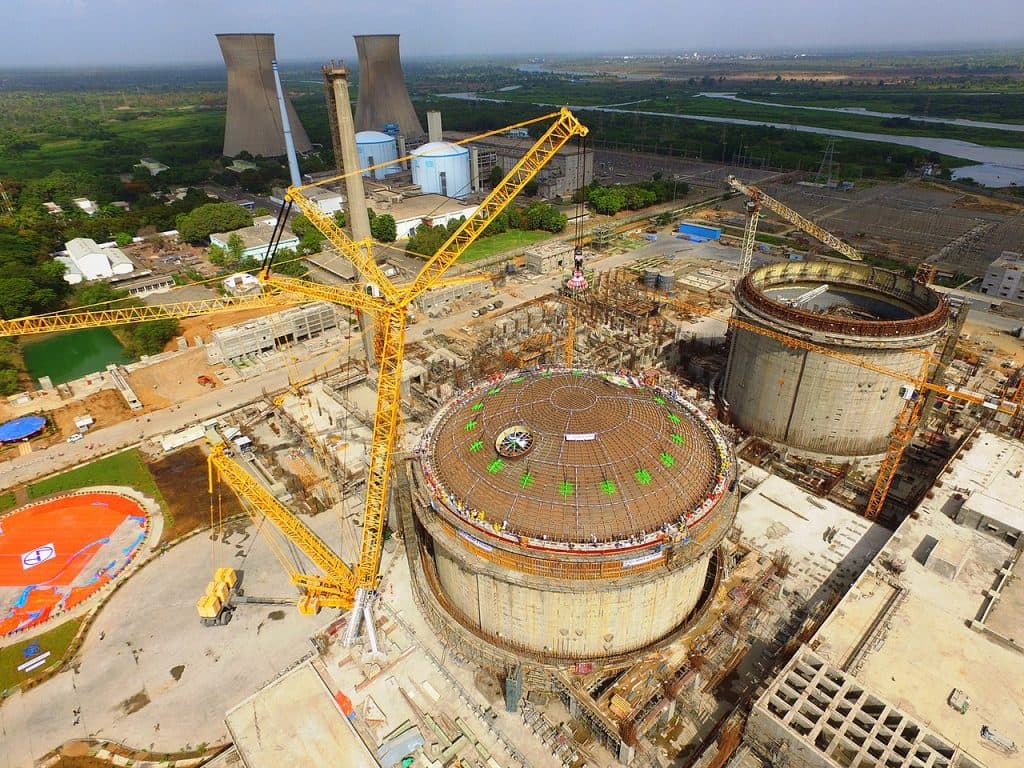
This has enabled intensive work to begin on further reactors of this type, which is to become the flagship of India’s nuclear power sector. The first pair of units for which nuclear island concreting began in March 2026 is Kaiga 5 and 6. Construction of two pairs of IPHWR-700 reactors is being prepared at the Gorakhpur power plant. For the first pair, ground improvement and soil stabilisation are under way after greater instability was found in some locations. Foundation piles for the nuclear buildings are already in place, and the start of nuclear island concreting is approaching. The first unit could enter operation in March 2031 and the second six months later. For the second pair, pre-project preparation and geomechanical surveys are currently under way. Contracts are being awarded for long-lead components. Construction of another pair is being prepared at the Chutka power plant, where work is still focused on acquiring and preparing the necessary land.
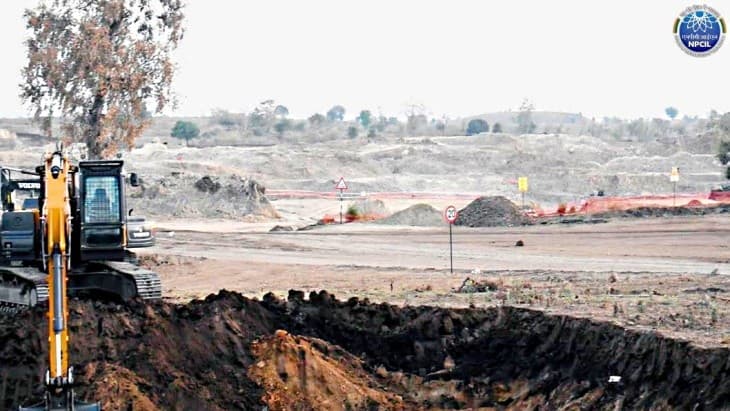
Preparations for four units at the Mahi Banswara power plant have advanced further. Preparatory and excavation work has begun for the first pair. The foundation stone was laid for their construction in autumn 2025. Earthworks and excavation began there in spring 2026. For the second pair, pre-project and engineering work is under way. A tender is under way for the construction of nuclear islands for all four reactors
Further construction of these reactors is also planned. Sufficient fuel production for them is therefore crucial. In May 2026, the second industrial complex for producing nuclear fuel for these reactors, NFC Kota (Nuclear Fuel Complex Kota) in Rajasthan, received its operating licence. It will complement the existing NFC Hyderabad facility in Telangana, established in 1971. It can produce up to around 1500 tonnes of fuel annually for heavy water reactors and 25 tonnes for the two boiling water reactors at the Tarapur plant. Natural uranium without enrichment is used for heavy water reactors, while uranium must be enriched for the boiling water reactors. The facilities cover the entire cycle, from uranium ore processing and the production of zirconium alloys to the assembly of fuel bundles. NFC Kota is focused exclusively on heavy water reactor fuel and therefore works only with natural uranium without enrichment. This significantly reduces operational safety risks. It is expected to produce 500 tonnes of fuel annually for heavy water reactors. India also has its own heavy water production plants.
India thus currently has its only Generation III heavy water reactor, as we discussed in greater detail in a recent article. The first pillar of the programme towards the thorium cycle is now fully under way. It currently uses uranium, but will switch to thorium fuel at a later stage.
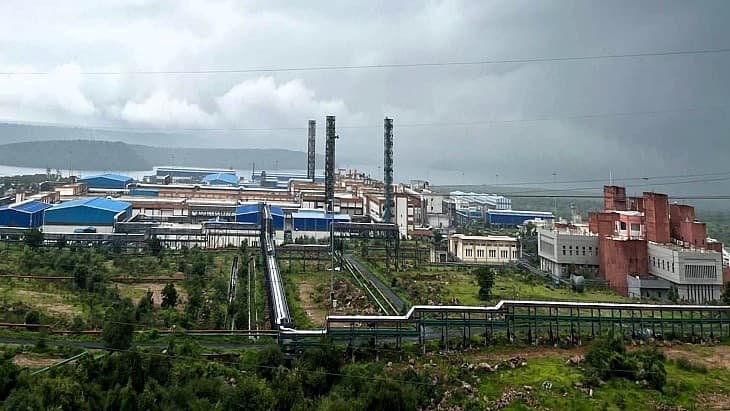
India’s PFBR sodium fast reactor
The situation with the deployment of the second pillar on the path to a closed cycle is more complicated so far. Construction of the first PFBR (Prototype Fast Breeder Reactor) sodium fast reactor in Kalpakkam, with an output of 500 MWe, began as early as 2004, and construction progressed at a very good pace in the first years. The planned reactor completion date of 2011 therefore appeared achievable. I wrote in detail about India’s thorium programme and the successful construction of the fast reactor in an article in June 2009. At the time, it appeared that the Indian fast reactor would even precede Russia’s BN800. Japan’s Monju fast reactor was also preparing for start-up at that time. It therefore seemed that the development of sodium fast reactors was beginning.
Unfortunately, it became clear that implementing the Indian project was far more demanding than expected, leading to very major delays. The Fukushima I accident occurred in Japan and also resulted in the cancellation of the Monju sodium fast reactor project. Russia’s BN800 reactor joined BN600 at the Beloyarsk nuclear power plant earlier, in 2015. Construction of the larger BN1200 sodium fast reactor is currently being prepared at this plant; it is intended to be available as a commercial serial offering. Site preparation is under way this year, with construction due to start in 2027.
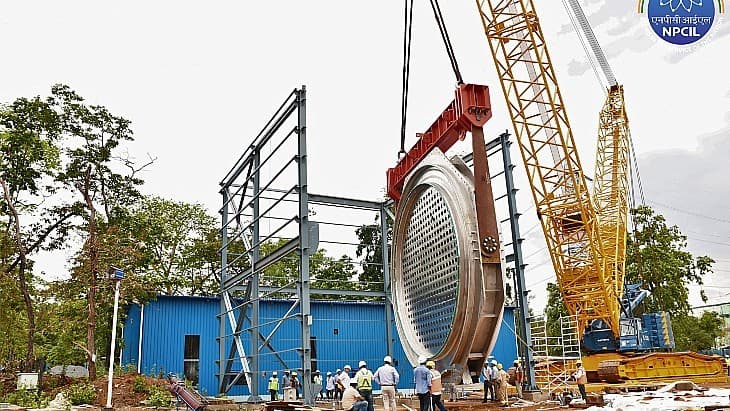
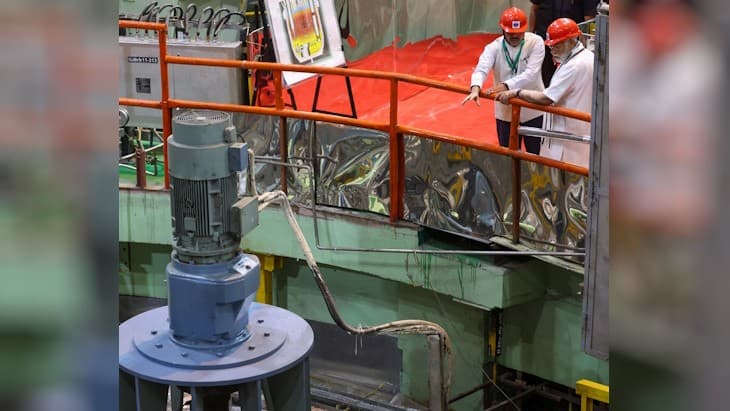
Indian specialists first had to gain experience with equipment that was entirely new to them, and they encountered a number of problems. Safety and very careful verification of every step were the priority. India’s PFBR-500 reactor in Kalpakkam is therefore only actually beginning start-up in 2026. Fuel loading was completed at the beginning of the year, and a sustained fission chain reaction was achieved in the reactor on 6 April 2026. Since then, equipment testing has been conducted at very low power. A range of physics tests is also being carried out. The aim is to verify plant stability and measure neutron fluxes and safety parameters. Power is being increased gradually, and sufficient output to begin electricity generation and grid supply is expected to be reached around the turn of 2026 and 2027. Output will then continue to be increased and, following tests at full rated power, the reactor is expected to enter commercial operation in 2027. It should be recalled that the transition from the first controlled nuclear reaction to the first electricity generation took around a year and a half at BN800, as the core had to be reconfigured, while the transition to full power took another six months.
India also manufactures fuel for sodium fast reactors itself. The AFFF (Advanced Fuel Fabrication Facility) at Tarapur developed fuel for the FBTR research fast reactor and also prepared fuel for the first PFBR cores. For serial production of fuel for sodium fast reactors, the FRFFP (Fast Reactor Fuel Fabrication Plant) was built directly in Kalpakkam. Kalpakkam also has a plant for reprocessing spent fuel from fast reactors, enabling the closed fuel cycle. Current fuel is based on plutonium and uranium oxides, i.e. MOX fuel. A future transition to metallic fuel, an alloy of uranium, plutonium and zirconium, is envisaged. This could enable more efficient production of plutonium for new fast reactors.
Based on experience from PFBR construction and its first year of operation, two further reactors, FBR-1 and FBR-2, are to be built at the Kalpakkam plant. They will make full use of all the experience gained from the implementation, start-up and operation of PFBR 500. They will form a twin-unit plant sharing certain auxiliary systems. These will already be commercial reactors. A further four are to be built in pairs at other sites. If serial construction of sodium fast reactors also gets under way in India, the second pillar of its domestic path to the thorium cycle will begin operating as well.
Conclusion
India’s path towards the thorium cycle is now gathering pace in a fundamental way. It is expected to have three phases. It begins with the uranium cycle. The first phase therefore consists of a fleet of heavy water reactors using natural uranium fuel, which generate electricity and produce plutonium in spent fuel for fast reactors. A number of these reactors are already operating, and large IPHWR-700 heavy water reactors are now being built in series.
In the second phase, plutonium obtained in the first phase is used in fast reactors in the form of MOX fuel. These operate in breeder mode and produce further plutonium. At the same time, they can be used to irradiate thorium and produce uranium-233. If PFBR500 can be successfully commissioned and serial construction of sodium fast reactors implemented, this second phase will be realised.
The third phase consists of advanced heavy water reactors, AHWRs (Advanced Heavy Water Reactors), which will burn uranium-233 produced in the second phase together with thorium. These reactors will consume uranium-233 from fast reactors and uranium-233 produced directly from thorium in the fuel of these reactors. Work is currently under way on the design of such heavy water reactors and on the thorium fuel concept and the entire closed fuel cycle. If the second phase is successfully launched, implementation of the third phase could begin relatively soon.
In this way, India can use its large thorium reserves to ensure full energy self-sufficiency and, in combination with other low-emission sources, meet the energy needs of its population and industry.
Translation disclaimer
This article is a machine translation of the Czech original and has not yet been fully reviewed. In case of any doubt, please refer to the Czech version.