
23 October 2026, 14:38
Loading...
Moorburg power plant – symbol of the Energiewende
Vladimír Wagner
5 February 2021, 06:19
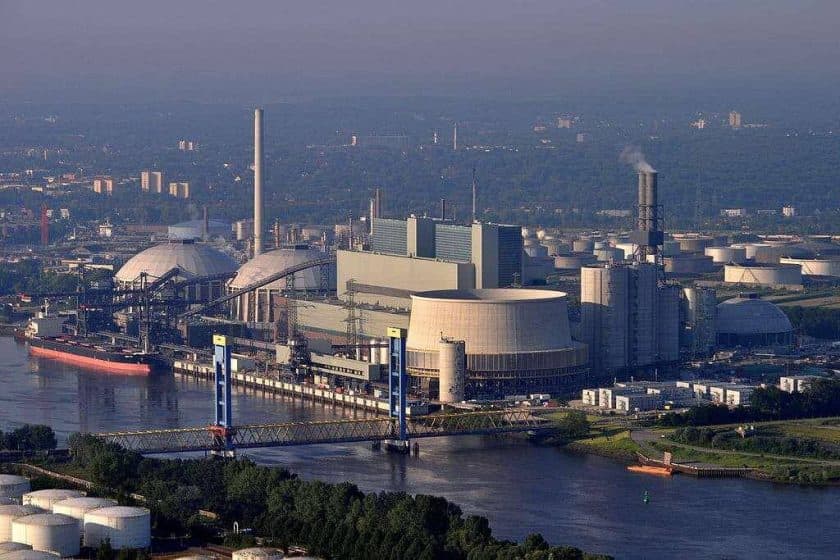
At the end of 2020, a decision was made to shut down one of Germany’s largest and most modern coal-fired power plants. It had been in operation for only five years, and both its construction and closure are a symbolic illustration of the reality and environmental impacts of the German Energiewende.
At the beginning of the Energiewende, it was clear that backup capacity for wind and photovoltaic sources would be needed as nuclear units were shut down. A number of new coal units were therefore planned and construction began. They were intended to replace not only nuclear reactors, but also the oldest and least efficient coal-fired plants with the highest emissions. Great emphasis was placed on achieving the highest possible efficiency, and thus the lowest emissions per unit of generation. The use of the plants for heat production was also intended to increase efficiency, replacing smaller local heating plants with higher emissions and lower efficiency. The power plants were therefore meant to operate in cogeneration mode.
In the Hamburg area, there was a need to replace the 1.4 GW Krümmel nuclear power plant and several other sources. The new Moorburg coal-fired power plant was designed specifically for Hamburg, on a site with a long tradition of power generation. A gas-fired power plant had operated there. Two units, each with a capacity of 827 MWe, were planned, for a total of just over 1.6 GWe. To achieve the highest possible efficiency, as advocated by green organisations, the units were built as supercritical units operating at a steam pressure of 27.6 MPa. They could thus achieve a net efficiency of up to around 46.5%. In theory, the plant could cover around 85% of Hamburg’s electricity consumption, which amounts to around 13 TWh.
The power plant was not intended to run continuously at full output, but to cover fluctuations in wind generation, which has been built out extensively in northern Germany during the Energiewende. Actual efficiency depends very strongly on the operating mode. If it complements wind or photovoltaic sources and varies its output across a wide range, net efficiency is lower. To increase the plant’s efficiency further, it was also meant to supply 650 MWt to the district heating system in southern Hamburg. The required equipment was installed for this purpose. The plant was intended to replace a number of local fossil-fuel heating plants there.
It is one of the most modern power plants and represents the state of the art in this field. Supercritical units require materials resistant to high pressures and temperatures. In this case, a new type of steel was used for the boiler’s membrane walls. However, problems emerged with welds, along with a number of other difficulties that extended the construction period and caused delays. Construction ultimately took eleven years, and the plant only entered operation in 2015. Similar problems also affected the Czech supercritical coal unit at Ledvice.
The plant ultimately cost around EUR 3 billion (CZK 78 billion). Its high cost resulted from the technological complexity of the supercritical unit and the need to operate in a highly flexible mode. The unit can reduce output by more than 600 MWe within fifteen minutes. In a specific operating mode, it can even change output at a rate of 90 MWe/min. At the same time, it can operate very efficiently at a minimum output of 25% of nominal capacity to remain in hot standby. A cold start is then tens of percent faster than at other coal units. Another financial blow came when permission to draw cooling water from the Elbe was denied, requiring the construction of special cooling towers. Financial demands were further increased by extreme pressure to cut emissions. Pollutants such as sulphur oxides, nitrogen oxides, dioxins and mercury were reduced far below the strictest environmental limits. Carbon dioxide output per unit of electricity, using the same fuel, is only 75% of that at earlier modern power plants.
Hard coal with a calorific value of around 25 MJ/kg, of which the plant consumes around 3.6 Mt annually, was imported from Russia and the US. Its proximity to the port was used, making hard coal a relatively cheap option without the need for land transport. Operating economics were severely undermined when green organisations prevented the construction of a heating pipeline beneath the Elbe. As a result, the planned cogeneration and supply of southern Hamburg did not materialise. Paradoxically, this extended the operation of small fossil-fuel boiler plants and the associated emissions. Together with rising emissions allowance prices, this prevented the plant’s operation from becoming profitable.
This was the main reason why the operator, Vattenfall, offered this very modern and environmentally clean coal-fired plant in the first auction for the compensated closure of coal units. The auction covered the closure of a total of 4 GWe of hard-coal-fired units. In December 2020, the company succeeded in the auction and will end electricity generation in exchange for compensation. In March 2021, a decision was expected on whether the plant was essential for grid stability and could be shut down. If the regulator approves its decommissioning, it will close no later than 1 July 2021. If it proves necessary to ensure grid stability, it will be kept as a reserve for a defined period.
An even more modern unit is Datteln 4, a power plant near Dortmund. For reasons similar to those at Moorburg, its construction took 13 years. It is a single-unit plant with a capacity of 1,100 MWe. It too was built to allow very high flexibility and rapid response, so that it can help regulate fluctuations in wind and photovoltaic generation. The unit started up in summer 2020 and is expected to be profitable. However, it is due to be shut down by 2038 at the latest, which is a very short period for such an investment.
Efforts to make use of the Moorburg power plant site resulted in a proposal that would enable the use of European Union subsidies for the hydrogen economy. A 100 MWe electrolyser is expected to begin operating there by 2025. It would use surplus electricity from wind sources to produce green hydrogen. The 380 kV grid connection will be used not to export power from the site, but to supply it to the electrolyser.
Thus, instead of a 1.6 GWe generation source, Moorburg will have a consumer with a 100 MWe load. It will be built thanks to subsidies, but the economics of such a system remain very much an open question. It may in future prove to be another dead end. The Moorburg coal unit was built to enable grid regulation and provide the necessary capacity when the sun does not shine and the wind does not blow. It was meant to make it possible to replace nuclear units through a combination of fossil and renewable sources. The closure of coal units together with the remaining nuclear ones is therefore leading to a shortage of the necessary stable generation capacity in Germany. This shortage is beginning to manifest itself across north-western Europe. Conversely, the region has an excess of renewable sources. This situation leads to large long-distance power flows and threatens system stability. The system is therefore increasingly exposed to the risk of a blackout, as was demonstrated on 8 January 2021, when the unified European power grid was split. Coal-fired and nuclear power plants will therefore have to be replaced by other sources. Germany is relying on gas-fired power plants, which is also why it is building the Nord Stream II pipeline.
For “environmental” reasons, ultra-modern supercritical coal units were built to replace nuclear and old coal-fired sources. However, for the reasons described, they have ended or will end before the investments made in them can be used effectively. This is not just about finances, but above all about the carbon footprint of their construction. The question is what the situation will look like for new gas units that will have to replace coal units once it becomes more widely recognised that their greenhouse gas emissions, when leaks during gas extraction and transport are included, are comparable to those of coal-fired sources. Using electrolysis to produce hydrogen is not very efficient, so it may turn out that even efforts to mass-produce green hydrogen will not be particularly successful from either an economic or environmental perspective. It is therefore possible that the German Energiewende will prove to be an even greater environmental failure than we think today. And the Moorburg power plant is becoming its symbolic monument.
A detailed analysis of the need for grid regulation and threats to it in Europe during the winter months is discussed here.
Translation disclaimer
This article is a machine translation of the Czech original and has not yet been fully reviewed. In case of any doubt, please refer to the Czech version.
Sdílejte článek prostřednictvím:
Topics:Opinion
You might also like
23 October 2026, 11:01

23 October 2026, 06:34