23 October 2026, 14:38
Loading...
Nuclear energy in 2019
Vladimír Wagner
19 February 2020, 15:17
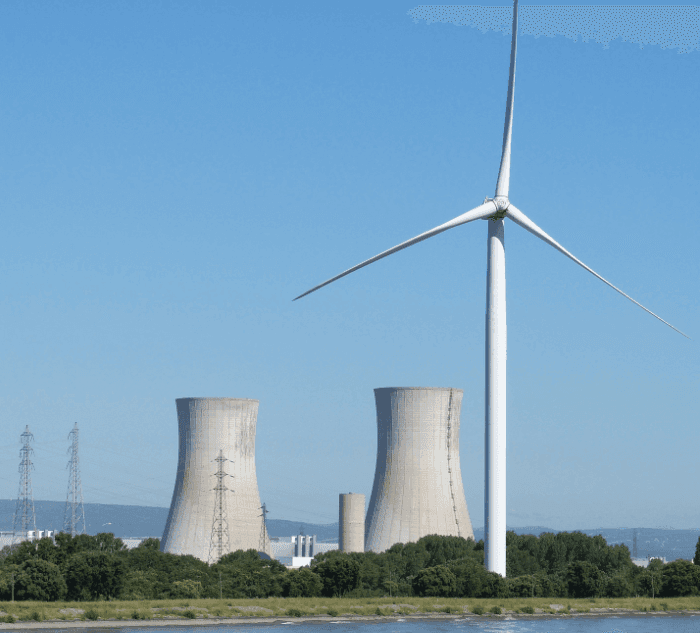
2019 once again highlighted the difference in the development of nuclear energy in Russia and China on the one hand, and Europe and the United States on the other. There are currently already 13 Generation III reactors in operation, but none in Europe or the US. While reactors are being commissioned in China and Russia, they are being shut down in Europe and the US.
This overview of developments in nuclear energy over the past year follows on from articles from previous years. The latest instalment dates from 2018. At the end of 2018, there were 450 reactors with a capacity of 398.9 GWe, while at the end of 2019 there were 442 with a capacity of 392.5 GWe (data from the World Nuclear Association website).
The main decline is due to the decision to decommission six Japanese reactors that had already been shut down for years following the Fukushima accident. These include all four units at Fukushima II, as well as Genkai 1 and 2. Officially, Japan now has 33 units. However, only 9 are actually in operation, while the possibility of restarting 18 is under assessment. Onagawa 2 has moved into the final phase, with the Nuclear Regulation Authority (NRA) approving modifications to meet new safety rules. Their implementation must now be completed and, above all, operating approval obtained from local authorities.
Other units shut down in 2019 were Russia's Bilibino 1, South Korea's heavy-water reactor Wolsong 1, Taiwan's Chinshan 2, the two US reactors Pilgrim and Three Mile Island 1, Switzerland's Mühleberg, Ringhals 2 in Sweden and Germany's Philippsburg 2.
Two reactors at the Akademik Lomonosov floating nuclear power plant began operating; these are among the first small modular reactors. Two Generation III reactors were commissioned in China: the second EPR unit, Taishan 2, and an ACPR1000 reactor, Yangjiang 6. The South Korean APR1400 reactor began operating as Shin Kori 4, the second unit of this type in operation. In Russia, a VVER1200 reactor began operating as Novovoronezh II-2. There are thus four more Generation III reactors in operation, 13 in total, excluding the shut-down ABWR units in Japan.
The capacity of the nuclear fleet also increased through upgrades to several units, contributing 212 MWe. Embalse in Argentina increased by around 35 MWe, while the US plants Browns Ferry 2 and Peach Bottom 2 added 155 MWe and 22 MWe respectively. The corresponding figure in 2018 was around 35 MWe.
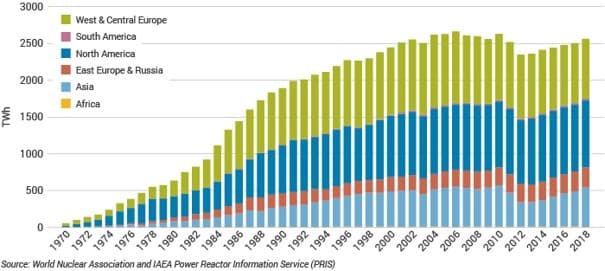
In 2018, nuclear reactors generated 2 563 TWh, an increase of 44 TWh compared with 2 519 TWh in 2017. For the second time since 2011, output exceeded 2500 TWh. We are still getting closer to the previous peak of 2658 TWh reached in 2006. Generation is expected to have been higher again in 2019. In the coming years, the question of further production growth remains open. The answer will depend on how successfully new units are completed and older ones kept in operation.
Construction started on three reactors. Kursk II-2 is a VVER1200 unit intended to replace another RBMK reactor still operating at the plant. Work also began on Bushehr 2, which is likewise of the Russian VVER type. Finally, concrete was poured for the nuclear island of a Hualong One reactor at Zhangzhou. This is a highly important event. It marks the first start of construction in China since December 2016. Given the projects under development, reactor construction starts should now occur relatively frequently in China. Two Hualong One units are to be built there in the first phase, with up to six units planned in total. Three reactors is a small number, but preparations for further projects, especially in developing countries, are very advanced in a number of cases.
Another successful year in Russia
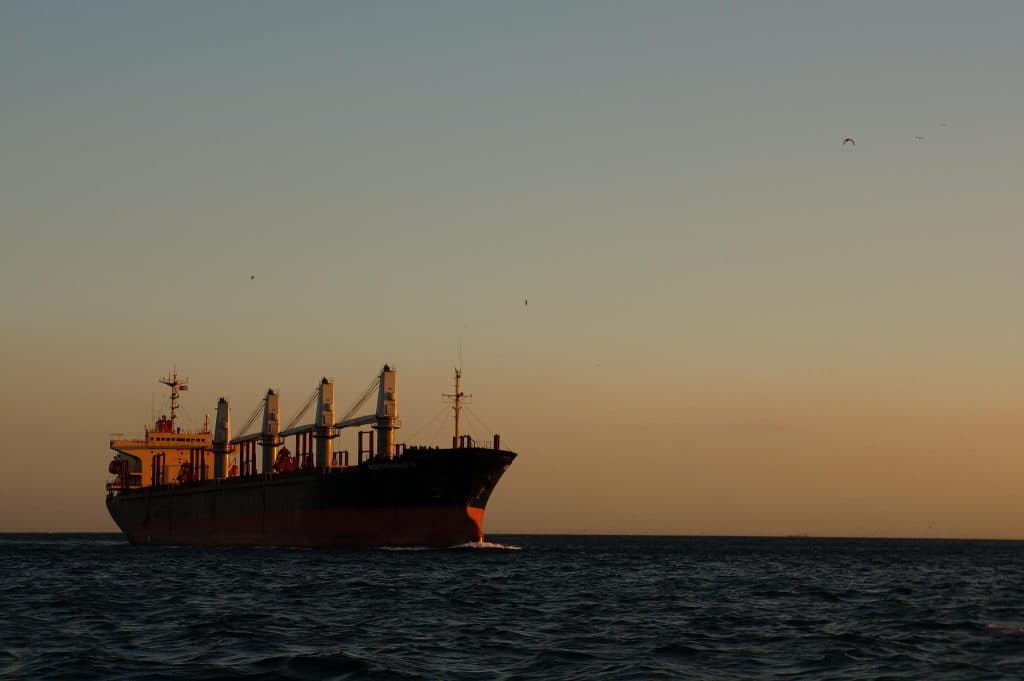
Russian nuclear energy had a highly successful year. Total nuclear generation increased to 209 TWh and its share of electricity production exceeded 19 %. The highlight of the past year was the commissioning of the Akademik Lomonosov floating nuclear power plant.
Comprehensive reactor tests began at the plant in Murmansk in January 2019. These tests continued until March. The floating plant also received its protective coating there. On 23 August, it began its journey from Murmansk to Pevek and was moored at its permanent location on 14 September. At the same time, infrastructure serving as the plant's support base and enabling the export of electricity and heat was completed and prepared in Pevek. On 19 December, the plant supplied its first electricity to the grid.
The Generation III VVER1200 reactor has already become a highly attractive product both domestically and for export. As expected, the third such reactor was commissioned in 2019: Novovoronezh II-2 (Novovoronezh 7). All important tests and an international readiness review had already been completed in 2018. Physical start-up of the reactor began on 19 February 2019, and commercial operation started on 1 November.
The commissioning of the first unit of the second phase of the Leningrad plant in March 2018 was covered in the previous overview. During its first year of operation, it had supplied 5 TWh of electricity by April 2019. Its successful operation enabled the shutdown of the first RBMK unit at the plant. This unit is known for an accident in 1975 that had partly similar causes to those at Chernobyl. Fortunately, it resulted only in the melting and damage of several fuel assemblies. Further details on the causes of this accident and the Chernobyl accident, and on the differences between reality and the HBO series, are available in an earlier article. The replacement had to proceed gradually and reliably because, in addition to electricity, the unit supplied heat to households and businesses. An important task was therefore switching district heating from the RBMK reactor to this source. The plant supplies the nearby town of Sosnovy Bor.
As already mentioned, concrete was poured ahead of schedule for the foundation slab of the second nuclear unit in the second phase of the Kursk nuclear power plant in mid-April. Its completion was also achieved ahead of schedule at the end of June. This plant, too, is preparing for the gradual replacement of RBMK units with the first units of the new VVER-TOI variant.
Another plant operating RBMK reactors is Smolensk nuclear power plant. It has three units commissioned between 1983 and 1990. The units were recently refurbished and are expected to operate for 45 years. The first unit should therefore last until 2027, the second until 2030 and the third until 2035. Work is already under way there, too, on a project for new VVER-TOI units to gradually replace them.
Russia is building Generation III units abroad as well
More VVER1200 units are being built outside Russia than within it. Of greatest interest to us are the two units at Belarus nuclear power plant near Ostrovets, where work is now nearing completion. At the turn of 2019 and 2020, hot hydraulic tests using thermal fuel assembly simulators were under way at the first unit. The unit should enter operation in 2020. As Belarus borders the European Union, construction of the nuclear power plant is being monitored very closely by the relevant international and European organisations.
Rosatom will benefit from experience in dealing with European Union authorities gained during construction of Belarus nuclear power plant, as well as from experienced specialists and companies involved in the project, in delivering its two projects within the European Union. Construction of one VVER1200 unit is being prepared at the Hanhikivi plant in Finland and of two identical units in the second phase of Hungary's Paks plant. At both plants, the Russian side is seeking to use the potential of European Union suppliers with experience of the local environment and licences for European projects. For example, the information and control system will be supplied by the Framatome-Siemens consortium and the turbines by General Electric. These companies will also help obtain the necessary permits.
Like Belarus, Turkey is also beginning with nuclear energy. Construction of the Akkuyu plant is continuing there. Four VVER1200 units are being built. The first unit should be completed in 2023, with the other three to follow at annual intervals. Construction of Egypt's first nuclear power plant, El Dabaa, is close to starting. Four VVER1200 reactors are also to be built there. Reactor construction should begin in 1920 and 1921 after the necessary permits are obtained. Two further VVER 1000 units are being built at Iran's Bushehr nuclear power plant, where one such unit is already operating. As already mentioned, concrete was poured for the foundation slab of the nuclear island of the second unit in November 2019. Units 2 and 3 should be completed in 2024 and 2026. Preparations for building VVER1200 reactors in Uzbekistan continued. A site near Lake Aydarkul was provisionally selected. In 2020, site selection should be completed and a permit obtained for locating the plant there.
Construction of the Rooppur plant in Bangladesh is at a far more advanced stage. Concrete was poured for the turbine hall foundation slab of the first unit at the beginning of 2019. The units are expected to start up between 2023 and 2025. This is one of the important elements of efforts to fully electrify this developing country. Support from Indian experts is also highly important. Russia and India would like to further develop such cooperation and jointly deliver Russian-unit projects in other countries in Asia and Africa.
Their cooperation is based on long-term experience. Two Russian VVER1000 units are already operating at India's Kudankulam plant. Work on the construction of Kudankulam 3 and 4 was intensive in 2019. Preparations were also under way to start construction of the fifth and sixth units at the plant, which should enter operation in 2024 and 2025.
Russia and China have also cooperated in nuclear energy for a long time. Construction of Tianwan 7 in China could begin in 2020. Rosatom is to build two VVER1200 reactors there. Both should be completed successively in 2026 and 2027. Four VVER1000 units are already operating at the plant. Two further reactors will be built in China at Xudabao, as the third and fourth units there. Construction will start in 2021 and 2022, with completion planned for 2027 to 2028
As the above overview of Russian nuclear energy developments shows, Russia has managed to ensure a smooth replacement of ageing units with new Generation III reactors. At the same time, it enables the safe use of the full lifetime potential of previously built units. Particularly important in this respect is the gradual replacement of RBMK units with VVER1200 reactors at the Leningrad and Kursk plants, and in the future also at Smolensk.
With VVER1200 units, Russia has gained not only a route to replacing and expanding its nuclear plants, but also a highly attractive export product. Three of these reactors are already operating in Russia and another three are under construction. Many more, however, are being built abroad. So far, their construction has been proceeding more or less to planned schedules. The units in Belarus, which will be the first foreign units to enter operation, are close to completion. The success of the two projects in the European Union will be key. If Rosatom obtains the necessary permits and construction begins, it will gain a crucial advantage not only in the European market. It will be prepared for a possible shift in attitudes towards nuclear energy, which could result in Europe from increased pressure to cut emissions and a possible failure of the German Energiewende in this area.
Russia is already benefiting from growing interest among developing countries in Asia and Africa in nuclear generation, driven by the need to increase energy production without raising emissions. Rosatom is therefore continuously gaining contracts and attracting more interested parties. This allows it to build supply chains whose subcontractors remain busy and do not lose their accumulated experience. This is reflected in the quality and price of the units being built.
As Russia is capable of supplying fresh fuel and recycling spent fuel, its expanding customer base also helps it in this area. It can also provide further services during operation, refurbishment and the final decommissioning of nuclear units.
Medium-sized and small reactors could become a new area in which it can establish itself in foreign markets. Floating nuclear power plants in particular could be attractive to a number of countries. In any case, Russia is also ready to capitalise on a potential wave of interest in small modular reactors. The growing number of nuclear icebreakers should provide it with opportunities opening up in the far north as a result of climate change.
Russia is one of the few countries capable of delivering all elements required for a closed fuel cycle. It can recycle spent fuel and prepare MOX and REMIX fuels. It is also the only country with fast sodium reactors in power plant operation. It is also preparing a commercial model of this reactor. Here too, it is ready for a renaissance in this field. Russia is rich in raw materials, and modern nuclear technologies could provide a foundation enabling economic development less dependent on raw-material sales.
Nuclear energy is also developing in China
Nuclear energy is also developing successfully in China, where it currently provides around 4 % of electricity. China would like to increase its share to 10 % over the next decade. This should help it not only reduce CO2 emissions, but above all cut coal use and thus pollutant emissions. In addition to electricity generation, it is seeking to expand nuclear energy into heating, desalination and industrial heat supply. Small modular reactors, Generation IV high-temperature reactors and small nuclear heating plants could help with this. In China, the average reactor construction period from first concrete to commercial operation is currently 6.2 years.
The second AP1000 unit at the Haiyang plant entered commercial operation at the beginning of January 2019. That year, operating units also began supplying heat to the district heating network of the nearby city of Haiyang. Further reactors should be built in the future, although the choice of type remains open. The growing number of units should gradually supply heat to the entire city. A demonstration project for producing drinking water through desalination also began operating at the plant. China now has four AP1000 units in operation, although it should be noted that a problem involving a pump failure and replacement at Sanmen 2 had to be addressed in 2019. The reactor was therefore out of operation for a relatively long time. The question of the reliability of this pump type thus remains open. The fission chain reaction started at the second EPR unit at Taishan in May 2019.
Hualong One reactors are becoming the flagship of Chinese nuclear energy. Concrete was poured for the nuclear island of Zhangzhou 1 on 16 October 2019. This was a very significant event because it marked the start of construction of a new unit in China after a long break. This was caused by several factors, but one deserves closer attention. Most planned new units were to be the Chinese version of the AP1000 reactor, designated CAP1000. It uses a number of Westinghouse licences, and the trade war between the US and China has had a very negative impact in this area. Zhangzhou is also such a case. China therefore decided to replace CAP1000 units with the entirely Chinese Hualong One reactor. However, switching to a different reactor type inevitably delays the start of construction. Above all, it is a problematic and demanding change at plants where preparations for construction of the Chinese AP1000 variant were already highly advanced. This also applies, for example, to Lufeng.
Four Hualong One reactors are currently under construction in China. Two at Fuqing are close to completion, while another two are being built at Fangchenggang. These are currently approaching start-up.
Construction of another two Hualong One reactors is being prepared at Changjiang, where Changjiang 3 and 4 should enter operation in 2025 to 2026. Taipingling-1 should be of the same type. Changes to plans in favour of this entirely Chinese reactor are also being considered for other planned units at various plants. Chinese Hualong One reactors have been under construction as Karachi 2 and 3 since 2015 and 2016. These units should enter commercial operation in 2021 and 2022.
Predecessors of the Hualong One reactor are also being completed. As already mentioned, the Chinese version of the Generation III ACPR1000 reactor was commissioned as Yangjiang 6. Two such reactors are also being built at Hongyanhe and Tianwan. As noted above, four VVER1000 units are already operating at the latter plant, where construction of two further Russian units, this time VVER1200s, is being prepared.
Along with Russia, China is the only country that has secured continuous reactor construction at home while also beginning to expand into foreign markets. However, it still lags behind Russia abroad. Even so, it has ensured workloads for its subcontractors, which are not at risk of production interruptions or losing their qualifications. China is also gradually reaching a stage where it covers all stages of the nuclear facility life cycle. It is also successfully developing individual elements of the closed fuel cycle.
For China, the development of nuclear energy is an important element in reducing pollutant emissions by limiting coal use for electricity generation and heating, and electrifying urban transport. It would also allow part of the increase in demand arising from improving living standards in the country to be met in a low-emission way. Critical to further development will be overcoming the consequences of the embargo on certain US components and licences, and transitioning to entirely Chinese reactor models. This will determine how quickly the launch of new projects resumes. Another critical point is the success of heating applications using existing units and the development of small modular heating reactors.
For success abroad, completing the Karachi plant project in Pakistan is crucial, as is whether the project for two Hualong One units at Bradwell in the United Kingdom can be successfully launched and delivered. We will return to this topic later.
Nuclear energy in South Korea
In South Korea, the political leadership still envisages a phase-out of nuclear energy and does not expect new nuclear units to begin construction. However, it supports nuclear technology exports. It should be noted that 24 nuclear reactors supply 24 % of electricity, while fossil sources supply 70 %. Conditions for renewable sources are not particularly suitable because of the country's small area, geographical profile and high population density. South Korea is an industrial export-oriented country. It remains a question whether this decision will change in the future.
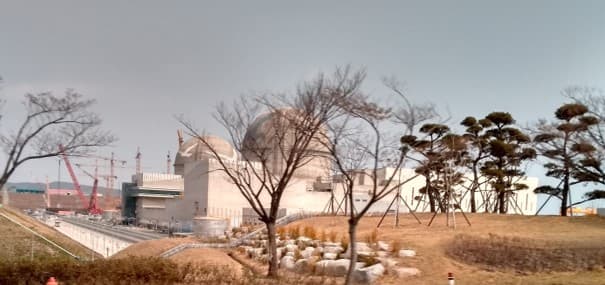
South Korea's main success in 2019 was the commissioning of its second Generation III APR1400 reactor as Shin Kori 4, which entered commercial operation in early September. Two more reactors of this type are being built as Shin Kori 5 and 6, while work is under way on two further reactors of this type at the Shin Hanul plant.
Four APR1400 units are under construction at the Barakah plant in the United Arab Emirates. Two are currently complete and the first is being prepared for start-up. The first unit should enter operation in 2020 and all four should be completed. The review by the United Arab Emirates nuclear safety authority, FANFR, reached its final stage for the first unit. A critical issue was recruiting employees with the necessary qualifications. This can partly be addressed by awarding work to Korean companies, for example. However, the United Arab Emirates would primarily like to have its own operators. Following three years of training, the first group of future nuclear plant operators received licences at the beginning of July. A second group received licences at the end of September 2019. There are now 53 qualified operators at the plant, exceeding the 32 required to operate the first unit. The first Barakah unit could therefore receive authorisation to load fuel in the first quarter of 2020.
In 2019, the APR1400 reactor obtained a licence in the United States. These units are not expected to be built in the US in the near future. However, a US licence may be an important signal for other parties interested in new reactors. It also already has a licence for the European Union for similar reasons. South Korea is discussing potential nuclear projects with a number of countries.
Nuclear energy in India
India is pursuing two tracks. Its domestic programme is based on heavy-water reactors, which in the future, together with fast reactors, would enable the use of the thorium fuel cycle. The three-stage project for gradually transitioning from uranium to thorium use is described in more detail in an earlier article. It continues to face problems that lead to significant delays. This is also evident from the article, which is ten years old. The two pairs of IPHWR-700 heavy-water reactors, Kakrapar 3 and 4 and Rajasthan 7 and 8, will therefore not enter operation until 2022. Construction of another two units of this type is being prepared at Kaiga, where four heavy-water reactors are already operating. The project was approved by the environment ministry in 2019.
The PFBR sodium-cooled fast reactor should finally enter operation in 2020, provided all difficulties can be overcome. These included a number of problems with pumps in the sodium circuits. The start-up of this prototype is critical to beginning construction of a pair of commercial units of this type.
The gradual construction of VVER1000 units at Kudankulam is progressing much faster, although the first two units also faced delays and problems during construction. Progress on the construction of units 3 and 4 and preparations for the final pair have already been covered.
Compared with the countries discussed earlier, India faces specific problems. Electricity was only recently brought to the last village in the country, yet it remains far from ensuring access to electricity for every resident. To address poverty and improve living standards for its continually growing population, it will need to significantly increase electricity generation.
Only part of India's nuclear technologies are under international safeguards. At the same time, it has only very limited uranium reserves, while it has large thorium reserves. Achieving self-sufficiency by implementing a closed thorium cycle is therefore extremely important for it. Although its implementation is now significantly delayed, I believe that, for the reasons mentioned, India will nevertheless be the first to implement a closed fuel cycle.
However, it faces major challenges. It must resolve problems with quality and efficiency in developing and building its own nuclear technologies. At the same time, it should accelerate the increase in nuclear capacity with the help of foreign partners.
Nuclear energy in Europe
In the European Union and the United Kingdom, nuclear power plants still supply almost a quarter of electricity and almost half of low-emission electricity. However, a number of countries have withdrawn or are withdrawing from nuclear energy. On the other hand, there is strong pressure to reduce CO2 emissions, and it is a question whether the situation will change once it becomes clear that this cannot be done without nuclear generation. New nuclear units are currently being built only in the United Kingdom, Finland and France, and these are French EPRs. Construction of one VVER1200 unit is being prepared at Finland's Hanhikivi plant and two at Hungary's Paks plant. In other countries, work is focused mainly on ensuring the longest possible safe operation of existing units.
The United Kingdom, which left the European Union last year, expects to use nuclear energy in the future as well. It needs to build replacements for units that it will have to shut down. After 2030, only one of its current 15 units will remain in operation. So far, however, it has not managed to find a suitable financing model for future reactors. This is also why Hitachi froze preparations for construction of its ABWR reactors at the beginning of 2019. The company planned to build four units in total at Wylfa Newydd and Oldbury. Company management has not ruled out resuming work on the project once its financing terms are clarified. Two months earlier, Toshiba cancelled its project to build AP1000 units at Moorside, originally proposed jointly with Westinghouse.
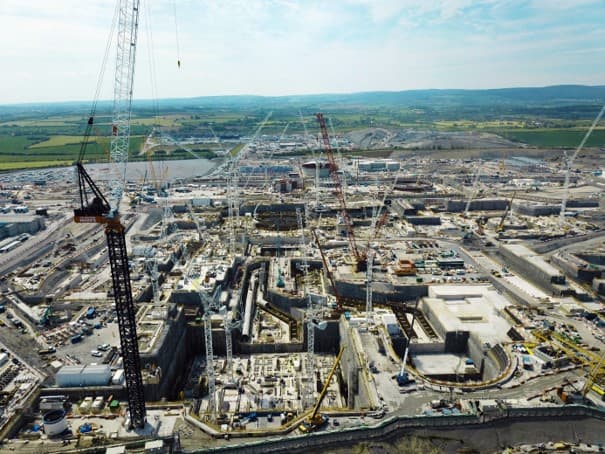
By contrast, the project to build two EPR reactors at Hinkley Point C is progressing roughly to schedule. The project's investors are France's EDF with 66.5 % and China's CGN with 33.5 %. Preparatory work is continuing at Sizewell C, where two EPR units are also planned. The same investors would also build two units at Bradwell. However, the Chinese partner would take the lead there and Hualong One reactors would be built.
The first French EPR unit began construction in Finland as early as 2005. At Olkiluoto 3, the date for beginning physical start-up was postponed again at the end of 2019. Although the unit received an operating licence in March 2019, it must still receive authorisation to load fuel from the nuclear safety authority STUK. Another delay was caused, for example, by the need to eliminate vibrations arising during the increase in pressure in the primary circuit. Liquid asphalt absorbers will be used for this. Fuel assemblies are therefore now expected to be loaded into the core only in July 2020. The unit should connect to the grid in November 2020 and enter commercial operation in March 2021.
In France, the EPR reactor is being built as Flamanville 3. After improperly made welds were discovered in the secondary circuit during the first comprehensive system tests in the first half of 2018, they had to be redone. This concerns 33 welds. Eight of them are in very difficult-to-access locations. In the end, even more welds will have to be redone. This means a dramatic postponement of the unit's completion until 2022.
Conclusion
Construction of Russian and Chinese Generation III reactors in particular is already beginning to gather pace, and their build times are starting to approach the planned five years. These reactors are being built both in their home countries and abroad, while subcontractors have secured continuous production of individual components, enabling them to capitalise on the experience gained. As early as this year, the total number of operating Generation III reactors could exceed 20. If China succeeds in overcoming the consequences of the trade war with the US, completing its transition to its own Hualong One reactor and once again rapidly starting new projects, a nuclear renaissance could truly get under way. There is interest in new nuclear units particularly in developing countries, where electricity generation will need to increase dramatically.
For the development of nuclear energy in Europe, the success of reactor projects at Hinkley Point C, Hanhikivi and Paks will be crucial. In the coming years, it will become clear what impact the German Energiewende will have. It is already clear that construction of new wind and solar sources is encountering limits that cannot be overcome without storage and long-distance continental transmission lines. In my view, the Energiewende is primarily leading to coal and nuclear being replaced by gas. Further developments will then depend greatly on attitudes towards gas, not only in Germany, once it is found that cutting greenhouse-gas emissions does not work particularly well with it. If the construction of the mentioned nuclear units is sensibly delivered, the stance of European countries and the European Union as a whole towards building new nuclear sources could change.
Globally, it will be particularly interesting to watch how attitudes towards nuclear power develop in South Korea and Japan. These are industrial countries that must import all fossil fuels and, because of their very high population density and specific conditions, have only limited options for using renewable sources. Japan already has to build new coal-fired plants. In both countries, it will therefore be very difficult to reduce CO2 emissions without new nuclear units.
The gradual deployment of small modular reactors could also help nuclear energy development. In this area, the commissioning of the Akademik Lomonosov floating nuclear power plant marks a certain turning point. Various models are currently being developed very intensively. However, I believe that the first commercial models will still require a few years, and in any case small modular reactors will not displace large Generation III reactors.
A highly detailed analysis of the state and development of nuclear energy in 2019, with far more details, is available in an article on the Osel website.
Translation disclaimer
This article is a machine translation of the Czech original and has not yet been fully reviewed. In case of any doubt, please refer to the Czech version.
Sdílejte článek prostřednictvím:
Topics:Opinion
You might also like
23 October 2026, 11:01
23 October 2026, 06:34