
23 October 2026, 14:38
Loading...
Potential for biomass use in Czechia and worldwide
Jan Kašinský
18 February 2019, 07:11
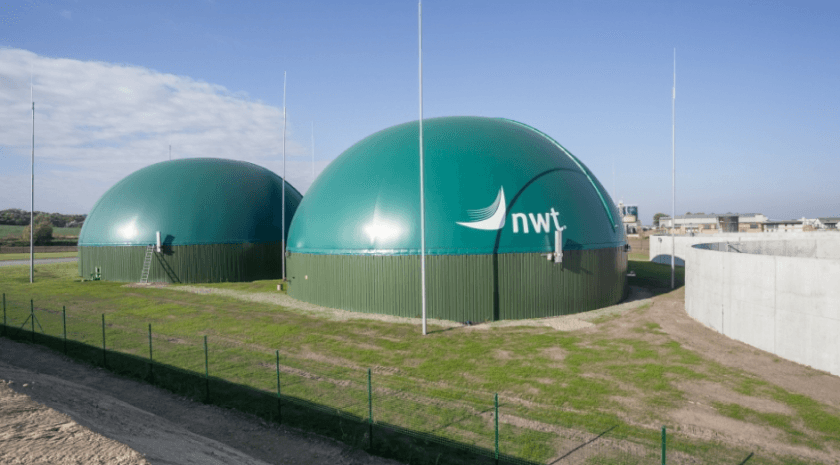
One of the most important sources envisaged in their energy plans for the Czech Republic by the Friends of the Earth Czech Republic and Greenpeace is biomass. It is therefore important to examine the real potential of this resource in greater detail.
Authors: Jan Kašinský and Vladimír Wagner
Biomass is one of the longest-used sources of energy. In the following text, this term refers to organic matter created through photosynthesis in green plants that can be used to obtain energy. To a small extent, this also includes animal raw materials, although photosynthesis is the basis here as well.
In this respect, biomass can be viewed as stored solar energy. Its advantage is that it can be stored relatively easily and used later. This also means independence from current weather conditions, the time of day and the season. It can be used to generate electricity, produce heat, in transport and in a range of industrial processes. It can be used locally in decentralised small-scale facilities based on local raw materials, but large plants are also built, to which raw materials are transported from very long distances.
The use of biomass is often portrayed as renewable and environmentally beneficial. Whether this is actually the case depends very strongly on the specific circumstances and implementation. From this perspective, the most problematic projects are precisely the large ones involving transport of raw materials over enormous distances. This is why the following analysis focuses heavily on environmental aspects. The article continues a series on Czech and global energy systems and potential energy sources, which has already described in detail wind, nuclear, photovoltaic, hydropower, geothermal sources as well as storage options, paths to low-emission energy and risks and potential scenarios. Various aspects of energy have also been discussed on the Osel website in the Zemský ráj to napohled series, in articles here, here, here, here and here.
Let us first look at the individual types of usable biomass. These may be waste from different types of agricultural and industrial production, or crops grown specifically to obtain energy.
Waste biomass
The energy use of waste biomass can be highly efficient and environmentally beneficial. There are several options.
Plant waste from primary agricultural production and landscape maintenance, including maize or cereal straw, hay, residues from clearing shrubs and self-seeded trees, orchard and vineyard waste, and waste from maintaining greenery and grassed areas.
Forest waste (dendromass) – after timber harvesting, a certain proportion of tree biomass remains unused in the forest (stumps, roots, bark, treetops, branches, cones and dendromass from initial thinning and pruning).
Organic waste from industrial production – combustible waste from wood-processing facilities (offcuts, sawdust, shavings, bark), waste from plants processing and storing crop production (sugar factories), and waste from slaughterhouses, dairies, distilleries and canneries.
Animal-production waste, including manure, slurry, feed residues and waste from associated processing facilities.
Municipal organic waste – sludge and organic municipal solid waste.
It should be stressed that waste biomass is often also used to improve agricultural soil quality or as animal feed. It is then important that its energy use does not reduce the scope for these applications, which are often very important from an environmental perspective.
Purpose-grown biomass
Another option is the deliberate cultivation of biomass for energy purposes. This may involve production of solid biomass for combustion in heat and electricity generation, as well as production of biofuels and biogas. We will return to the methods of use later; for now, let us list the possible types of cultivated energy biomass.
Lignocellulosic, namely woody plants (willows, poplars, alders), cereals (whole plants), grass stands (permanent grassland, bentgrass, miscanthus) and others (industrial hemp, knotweed, sorrel).
Oilseed crops, which in Czechia include rapeseed, sunflower, flax and soybeans, while globally they include the well-known oil palm and groundnuts.
Starch and sugar crops, including potatoes, sugar beet, cereals (grain), sugar cane and maize.
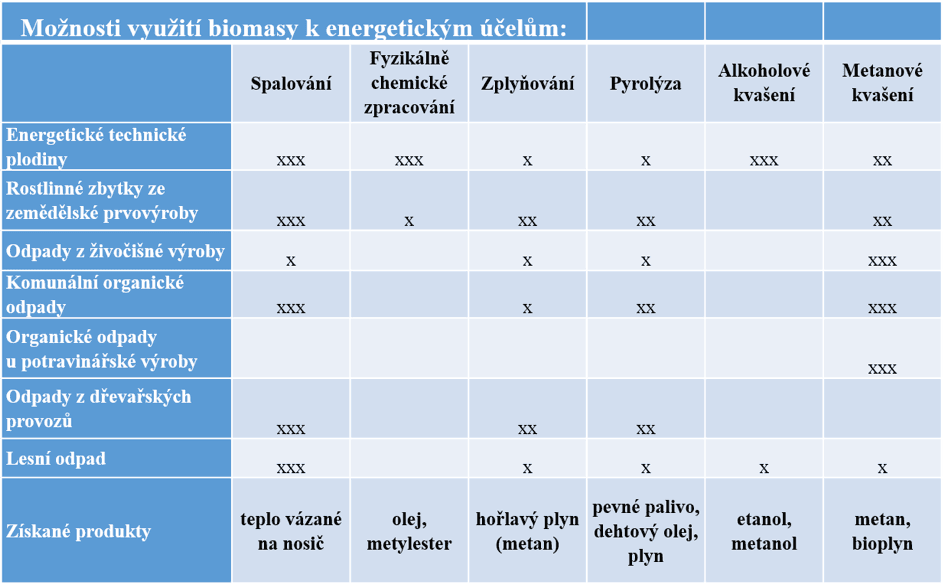
Direct combustion
Let us begin the overview of possible uses with direct combustion. This, followed by the use of low-grade heat for space heating and domestic hot water preparation, is the most efficient method of using biomass energy. This is particularly true when the fuel source is no more than several dozen km away. The source may be a nearby forest or wood-processing company producing offcuts, sawdust and similar material.
Wood can be burned as logs with minimal processing – i.e. cutting or splitting to a size suitable for the particular boiler. Another option is upgrading it through pelletisation.
Pelletisation is a process in which organic matter (wood, wood sawdust, straw, hay and their mixtures) is ground and then forced through a die using a powerful press. Compression heats the material to temperatures exceeding 100°C. The lignin contained in most of these materials acts at high temperatures as a plastic (liquid) binder, enabling solid pellets to be formed. The result is a durable, high-calorific fuel that enables convenient heating using automatic boilers. Another advantage is the ability to burn material that cannot be used in most boilers, such as hay, straw, shives or, only to a limited extent, wood chips.
Electricity generation from biomass
The two most common ways of converting biomass energy into electricity are burning dry matter in a thermal power plant and converting biomass into biogas, which is subsequently burned in an engine unit.
However, biomass is a more complex fuel than coal. Coal can be ground before combustion into powder with grain sizes below 1 mm (typically below 100 µm) and, after mixing with air, burned at high efficiency (around 90 %). The entire combustion process (heating – drying – ignition – combustion) typically takes place within 1 second. Biomass is difficult to convert into similarly small particles, and is therefore mostly burned in a fluidised-bed boiler, where the fuel and ash are suspended in a stream of air and flue gas. Biomass has a lower density than coal, so an equally sized fuel particle contains less energy. Larger particles are also more difficult to dry and burn more slowly. Biomass also contains a large amount of volatile combustible components, which have different gasification temperatures and other optimal combustion conditions. Biomass is therefore often co-fired with low-quality fossil fuel – lignite. If a boiler is operated on pure biomass, its output is lower – typically by tens of percent. At the Hodonín power plant, output when burning pure biomass is 75 % of nominal capacity.
The second method is essentially anaerobic fermentation under precisely controlled conditions, in which microorganisms convert organic matter into biogas. Biogas is a mixture of methane (CH4), carbon dioxide (CO2) and several other gases – N2, H2S, H2, NH3, O2, H2O.
Methane generally accounts for 50 – 55 %, CO2 for 40 – 45 %, and other gases for the remainder. The precise composition depends on the feedstock and exact fermentation conditions. The gas is most often burned in a combined heat and power unit, usually a spark-ignition internal-combustion engine driving an electricity generator, with residual heat utilised. Electrical terminal efficiency generally ranges from 33 – 45 % and thermal efficiency from 35 – 56 %. If waste of animal origin is used as feedstock, biogas contains a relatively high concentration of hydrogen sulphide (H2S). The biogas must therefore be desulphurised before combustion. This both prevents potential damage to the engine unit and reduces SO2 emissions to the atmosphere.
Fermentation itself takes place in a digester, an airtight tank with a volume of around 5000 – 8000 m3 in a biogas plant with capacity of 1 MWe. Digester contents typically have a dry matter content of around 15 %. At higher dry-matter content, the material could not be mixed and pumped. Before fermentation begins, solid biomass must be sufficiently pulped by mixing it with liquid, for example pig slurry. The process takes place under continuous stirring, most commonly in so-called mesophilic mode at temperatures of 37 – 40 °C (32 – 42 °C), with continuous substrate dosing. The entire process is highly sensitive to changing conditions, and raw materials must therefore be homogenised and preheated to the required temperature before entering. Part of the heat produced (around 20 %) is used to heat the feedstock, while part of the electricity produced is used to drive conveyors, agitators and pumps (10 – 20 % – the higher figure applies to biogas plants using food-industry waste as feedstock, where crushing, grinding, hygienisation and homogenisation processes are energy-intensive). Gas is produced continuously and must therefore also be consumed continuously. This makes output regulation difficult. Biogas plants are generally able to store production for only a few hours at most. If the CHP unit is shut down for longer, surplus gas must be burned by a flare, a simple gas burner. The heat is then released into the atmosphere without being used.
An idea of the sensitivity of the methanogenesis process can be gained from the start-up procedure for a new digester, when its contents (typically around 5000 – 8000 m3 at a biogas plant with capacity of 1 MWe) must be heated at a rate of no more than 1 °C per day so that the community of methanogenic organisms has time to adapt. In this respect, a biogas plant has less ability to regulate its output than a nuclear power plant (more detail here).
A higher level of biogas upgrading is its conversion into biomethane. Biogas is stripped of water vapour, CO2 and H2S, and the resulting biomethane then has virtually identical properties to natural gas and can be used to power motor vehicles, for direct combustion and for any other application using natural gas. It can also be injected directly into the natural gas distribution network. If produced from biological waste, it is an effective substitute for natural gas.
Liquid biofuels
Another widely used option is liquid biofuels, for example those currently blended into petrol and diesel. Let us look at the individual options.
Bioethanol (bioalcohol) is created through fermentative processing of simple sugars from sugar cane, sugar beet, cereals and potatoes. Feedstocks for bioethanol are predominantly crops also used as food and feed. Their advantage is that cultivation and harvesting technologies are generally very well established, including widespread equipment for all cultivation operations. A serious problem, however, is direct competition with food and feed, which can ultimately reduce the availability of certain foods and increase their prices.
Transesterified oils and fats (biodiesel) – these are esterified fatty acids obtained as vegetable oil by pressing or extracting the seeds of certain plants – rapeseed, sunflower, oil palm, soybeans, groundnuts and so on. Transesterified oils and fats (biodiesel) are produced through esterification of oil (in Czechia generally rapeseed oil). During esterification, the oil is mixed with ethanol and alkaline catalysts (sodium hydroxide). The result is a fuel very similar to diesel and pure glycerine, which can be used, for example, in cosmetics. The fuel is called FAME (Fat Acid Methylesther, i.e. fatty acid methyl esters) or MEŘO, i.e. rapeseed oil methyl esters. Vegetable oils can be used as a direct replacement for automotive diesel with minimal modification of the power unit. Compared with diesel, vegetable oils generally have higher viscosity and related better lubricating properties, but also poorer atomisation when injected into the combustion chamber. They have higher density but lower calorific value and, consequently, higher consumption to maintain the same engine output. Vegetable oils substantially shorten the life of engine oil and therefore require more frequent replacement.
Butanol, bioethanol and transport biofuels obtained through so-called F-T (Fischer-Tropsch) synthesis account for only a small share, and will not be considered further in this text.
Generations of biofuels
Biofuels – here meaning any biomass used for energy purposes, including substances derived from biomass – i.e. solid fuels (wood, chips, straw, …), liquid fuels (biodiesel, bioalcohol, …) and gaseous fuels (biogas, biomethane, hydrogen) – can be divided into first-generation and second-generation, or potentially later-generation, biofuels.
First-generation biofuels are those originating from plants also cultivated as food and feed. A serious objection to them is their competition with food. This is both because we are essentially burning food for people and animals, and because the area suitable for food cultivation is reduced. This leads both to rising prices and pressure for the often criticised intensification of agriculture. Put simply, it becomes necessary to produce as much biomass as possible from as little land as possible, at the cost of massive application of fertilisers and pesticides.
Second-generation biofuels use non-food biomass as feedstock, such as forest biomass, inedible parts of agricultural crops (straw, hay, maize and rapeseed excluding grain), purpose-grown energy crops (knotweed, sorghum, miscanthus, sorrel and so on) or household biological waste.
The conversion technology is much more demanding than for first-generation crops. It includes, for example, hydrolysis of cellulose and hemicellulose into simple fermentable sugars followed by fermentation. The outcome may be ethanol or biogas.
Pellets at Drax power plant (source: Drax).
The future of biomass energy use
Biomass is often presented as a promising resource for several reasons. It is a domestic source, it is renewable, it is a sustainable source, it is environmentally friendly, and it is CO2-neutral. Let us consider whether each of these claims actually holds true.
It is clearly a domestic source in the Czech Republic. There is no known large-scale import of energy biomass into Czechia, either taking place or planned. Conversely, more than 200 000 tonnes of wood pellets and an unquantifiable amount of wood chips are exported. The situation differs in countries that have decided to replace coal-fired electricity generation on a massive scale with biomass combustion. Denmark and the United Kingdom, which have converted some large coal-fired power plants to burn woody biomass, import it on a massive scale from the Baltic states, Russia and the Americas. Assessing this aspect is by far the simplest task; analysis of the other environmental aspects is much more complex.
Environmental friendliness
Environmental friendliness is closely linked to the efficiency of using the primary resource. In the case of energy biomass, the primary resource is solar radiation captured by green plants through photosynthesis. The efficiency of photosynthesis – the ratio between captured energy and the energy of glucose obtained by synthesising water and carbon dioxide while releasing oxygen – is 34,2 %. However, chlorophyll captures only around 43 % of the solar spectrum, and a substantial part of captured energy is consumed in respiration, which produces energy by oxidising sugars. This energy is used for all internal processes in the plant – uptake of nutrients from the soil, synthesis of higher organic compounds, their transport within the plant, and so on. Overall theoretical photosynthetic efficiency, after deducting respiratory losses, is around 4% of incoming solar radiation. Intensively managed crops with sufficient water and nutrients can achieve average efficiency of 2%, while the most productive temperate and tropical forests achieve around 1,5 % on average.
This figure alone suggests that a large area will be needed to obtain sufficient energy and that efficiency in using the resource – sunlight – is, to put it mildly, dismal.
One hectare can yield around 10 tonnes (5 to 15) of dry biomass per year, representing around 100 – 200 GJ, i.e. 28 – 56 MWh of primary energy annually. If electricity is produced from biomass, we obtain around 10 MWh from 1 ha. For comparison, the much criticised solar power plant on arable land produces around 500 MWhe/ha.
The best use of captured biomass energy is simply to burn it as close as possible to where it originates and use the low-grade heat. In short, if you live close to a forest, it is best to use the wood for heating. Any other method brings losses and/or the need to put additional energy into the process, which may be significant. Moreover, sophisticated processes are very expensive.
Let us examine some methods of obtaining energy from biomass in more detail. As noted above, the most efficient use is firewood from a nearby forest, where additional energy requirements are low. Felling and extracting wood from the forest and transporting it to the place of use account for at most single-digit percentages of the energy obtained. Modern wood boilers can actually utilise around 85 % of the energy. Total losses plus energy inputs do not exceed 20 %. The ratio of energy obtained to energy invested is 5:1.
One of the most common biomass-upgrading methods is wood pelletisation. A pellet line grinds dried wood and then compresses it into pellets. A pellet boiler has manufacturer-declared efficiency of around 90 %.
However, material for pellet production must have moisture content of around 15 %, so artificial drying is almost always necessary. The pellet production line itself (crushing, pressing, …) consumes up to 150 kWh of electricity per tonne of pellets. If electricity is obtained from a biomass power plant, an additional around 170 – 190 kg of biomass (chips, …) per tonne of pellets is needed. (1 tonne of dry biomass/1 MWhe). For pellet transport to the customer, we can assume an optimistic diesel consumption of around 15 ml/tkm (millilitres per tonne-kilometre) – i.e. a truck carrying 20 tonnes of pellets and consuming 30 l/100km. Transporting 1 tonne of pellets over 100 km requires 1,5 l of diesel. Automatic pellet boilers can have their own electricity consumption of up to around 1 kWh per day (control electronics, extraction fan, circulation pumps). Additional energy for pellet use amounts to 20 – 40 % plus 10 % for the boiler’s own losses. The ratio of energy obtained to energy invested is 3:1 to 2:1.
View of the South Bohemian landscape with Temelín nuclear power plant and fields of flowering rapeseed (source: www.mapy.cz – https://mapy.cz/s/3oECX).
In 2015, more than 200 000 tonnes of pellets were exported from the Czech Republic. Of these, more than 100 000 tonnes went to Italy, a distance of around 1000 km. Transporting 1 tonne of pellets therefore consumed around 15 litres of diesel. Automotive diesel has a calorific value of around 42,6 MJ/l = 11,8 kWh/l. Transporting 1 tonne of pellets over 1000 km consumes around 640 MJ or 177 kWh. This is nearly 4 % of the energy contained in pellets (17 GJ/tonne).
If the feedstock for pellet production is waste from the wood-processing industry (sawdust, offcuts and so on), even substantial additional energy inputs can be regarded as a sensible investment, because the result is an easily stored fuel enabling convenient use.
If purpose-grown biomass is the feedstock, additional energy inputs may be much higher. Agronomic operations for cultivation require 5 – 10 litres of diesel per tonne of biomass. Wood chips from fast-growing trees have relative moisture content of around 50 % at harvest. Chips can be burned even at this high moisture level, but at the cost of lower calorific value (8 MJ/tonne) and limited storage options. Wet chips are an excellent substrate for wood-decomposing organisms – bacteria, fungi, insects and so on. If chips are stored outdoors, after one year they tend to resemble compost.
For pelletisation, artificial drying to around 15 % moisture content is necessary, with corresponding energy consumption. The crops requiring relatively the least additional drying are cereals harvested fully ripe in summer, which under good conditions may have moisture content below 20 %. Many other species, however, are harvested in late autumn, winter or even early spring (miscanthus). At this time, climatic conditions generally do not permit adequate natural drying and artificial drying is necessary.
The highest-yielding crop under Czech conditions is miscanthus of the Miscanthus genus, specifically the Giganteus hybrid, a cross between Miscanthus sachariflorus and Miscanthus sinensis. It achieves high yields of around 15 t/ha and also has high calorific value. Its problem, and even more so that of other energy crops, is high cultivation costs and extreme land requirements (more detail here). The price of purpose-grown biomass is around 120 Kč/GJ (90 – 150 Kč/GJ), i.e. around 0,4 Kč/kWh (0,3-0,5Kč/kWh). When biomass is burned in a thermal power plant with efficiency of 30 %, fuel costs are around 1,4 Kč/kWhe (0,8 – 1,8 Kč/kWhe). The ratio of energy obtained to energy invested is around 2:1.
At a biogas plant, the biogas obtained is most often burned in an engine CHP unit. Of total inputs (energy in feedstock and energy for cultivation), after deducting the plant’s own technological consumption, 23 % is delivered to the grid as electricity and around 30 % is also available as heat. However, only 12 % of biogas plants use more than half of their heat, while 64 % have utilisation below 25 %. Thirty percent do not use waste heat at all. Producing 1 MWh of electricity requires feedstock (silage) to be harvested from an area of around 0,1 ha (more detail here).
Biogas – a mixture of methane, carbon dioxide and other minor gases – can be upgraded by purification into (almost) pure methane, which can then be used in the same way as natural gas. From the energy stored in feedstock harvested from 1 ha (maize for silage), i.e. 190 GJ (53 MWh), we obtain 66,8 GJ (19MWh) in biomethane.
Maize cultivated over large areas has very little ability to protect soil. The image shows a maize field after a cloudburst lasting around 20 minutes. The plants have exposed roots. The original maize seeding depth is around 5 cm. More than 5 cm of soil disappeared from this site within minutes. The estimated rate of soil formation is around 1 cm per 100 years.
Erosion of a maize field. Photograph by Jan Kašinský
Land take and its cost
As described in the previous section, production of the necessary biomass is highly land-intensive. One hectare can yield 100 – 200 GJ, i.e. 28 – 56 MWh annually. Heating a family house (50 GJ) requires biomass to be harvested from at least 0,25 – 0,5 ha. If we produce biomethane from biomass – i.e. a natural gas substitute – we obtain 67 GJ and need 0,74 ha to heat a family house. Electricity consumption in the Czech Republic (2016) is 5,7 MWh/person. Producing electricity from biomass requires around 0,6 ha/person, meaning approximately 64 000 km2 for the entire Czech Republic.
For power plants with total capacity of 1000 MWe producing 7 000 GWhe annually, biomass must be harvested from an area of around 700 000 ha. A good impression of the size of this area can be gained when rapeseed, cultivated on 400 000 ha, is in flower. When rapeseed is flowering, it can seem as if it is flowering everywhere.
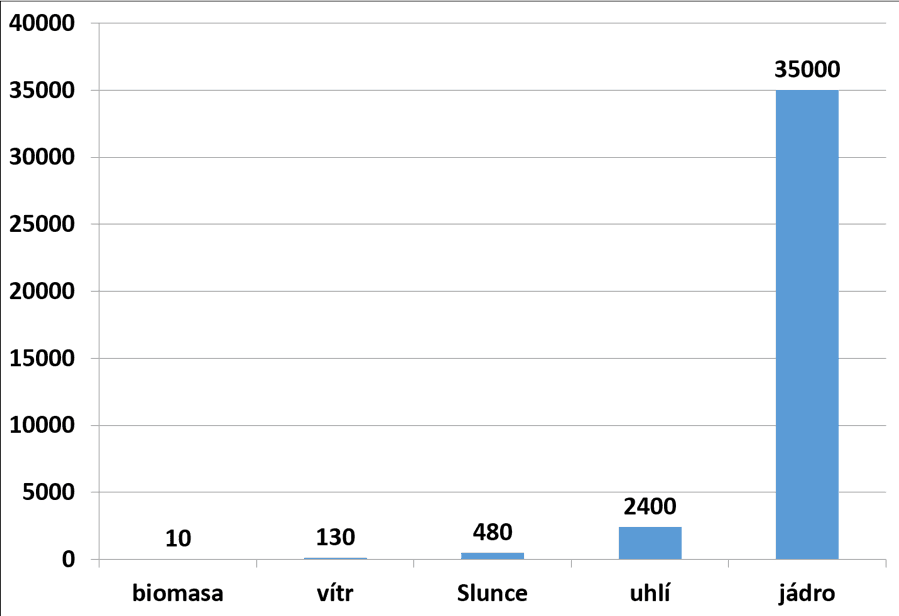
Chart 1: Energy yield of different sources from an area of 1 ha in MWhe
The question is how to value the landscape area occupied for energy-biomass cultivation. The average price of agricultural land is around 230 000,- Kč/ha. The cost of land to secure biomass (cultivation only) for power plants with total capacity of 1000 MWe is therefore around Kč 161 billion.
For a specific comparison: the Temelín nuclear power plant site covers 160 ha, contains 2 units of 1050 MW each, and has space for another two. The 160 ha can be valued at 38 000 000,-Kč. The area of land for uranium mining, processing and fuel production, the power plant itself and spent-fuel storage is around 200 ha/1000 MW of capacity. The cost of occupied land is therefore around 46 000 000,-.
Investment costs for biomass power plants are around 100 – 120 million Kč/MWe. Fuel costs are around 800,- Kč/MWh (net). Of this, around 0,48 MWhe and 0,52 MWht are produced. If the plant does not have heat offtake secured, fuel costs are 1600 – 1700,-Kč/ MWhe, higher than the market, unsubsidised electricity price. Total operating costs for a biomass steam power plant are around 2 100,- Kč/ per MWhe, falling to 890 Kč/MWh if heat is used.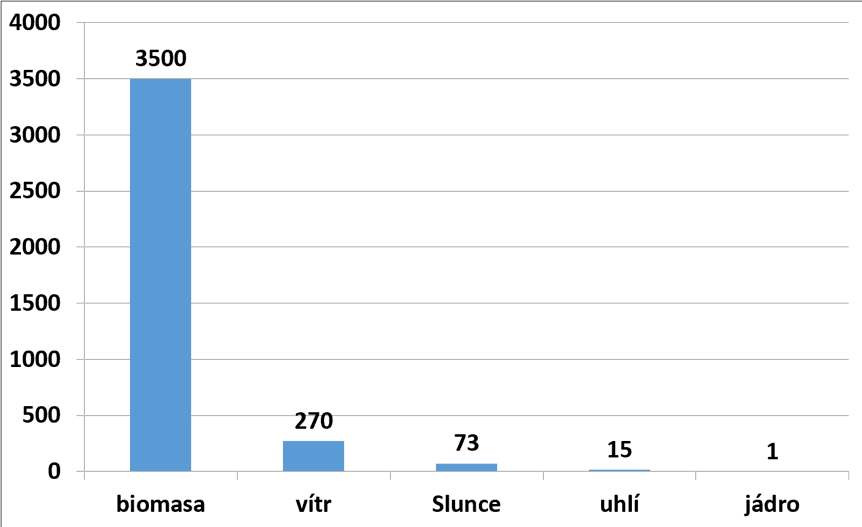
Chart 2: Area required to obtain 3500 MWhe in ha
Sustainability
Sustainability is important for assessing the environmental impacts of biomass energy use. It concerns the ability of biological systems to maintain diversity and productivity under a given regime indefinitely. In a broader context, sustainability is the persistence of systems and processes.
In connection with biomass energy use, discussion generally concerns only carbon, or CO2 , and biomass use is presented as CO2-neutral. This is explained by saying that the amount of CO2 released during biomass combustion is equal to the amount of CO2 that plants absorbed from the atmosphere in the preceding period. This status is even defined in legislation as an emissions factor of “0”. Yet CO2 emissions from fossil fuels (especially diesel) released during cultivation and transport, or energy used to produce fertilisers and pesticides, are not taken into account at all. This embedded energy can account for a substantial share of the energy in some types of biofuel. For production of MEŘO (rapeseed oil methyl ester, or rapeseed biodiesel), the ratio of energy obtained to energy invested is 1,4. For some other liquid biofuels, such as ethanol from maize, energy inputs may even be higher than the energy gained from the biofuel.
The opposite of sustainability is a situation in which – to quote: “...society... depletes and degrades resources faster than they are regenerated...” The sustainability and renewability of biomass as an energy source may be substantially limited.
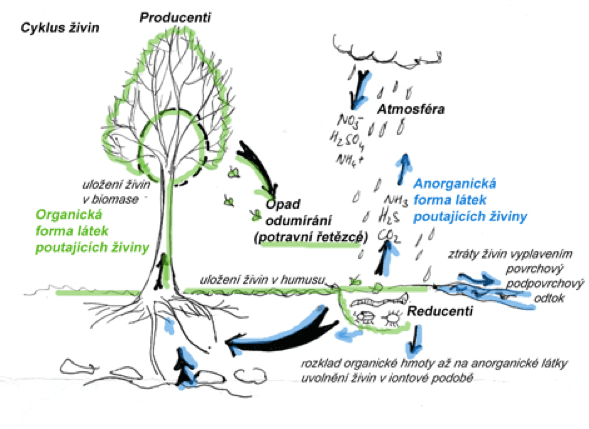
Figure 1 Cycle of matter in nature. Similarly brief descriptions of the cycle of matter in nature can be found in natural science textbooks at primary schools. (source: http://r.fld.czu.cz/vyzkum/nauka_o_lp/ekologie/ekosystemy.html )
Biomass is not only carbon. Cultivated plants remove a whole range of other elements primarily from the soil, impoverishing the agricultural land used. Let us look at the elemental composition of biomass. Dry matter (wood) contains 45 – 50 % carbon (C), 43% oxygen (O), 6% hydrogen (H), 0,6% nitrogen (N), and 0,2% sulphur (S). The remaining components are phosphorus (P), potassium (K), sodium (Na), magnesium (Mg), calcium (Ca), iron (Fe) and trace elements, usually at levels of no more than several ppm.
In a natural or near-natural ecosystem, these elements are mineralised after plants die (or are consumed by herbivores) and reused by subsequent generations of plants. Some are released into the atmosphere (C and N), while some are washed by rain into surface and groundwater. In a climax biotope (one whose composition and condition correspond to local and climatic conditions – in Czechia, generally deciduous forest in lowlands, mixed forest at higher elevations and coniferous forest dominated by spruce in mountain areas), leached substances are replenished through weathering of parent rock, carbon is bound again through photosynthesis, and nitrogen is fixed from the atmosphere by soil bacteria and bacteria living symbiotically with certain plants.
If most of the grown biomass is harvested and removed, this cycle is significantly disrupted. Available nutrients decline in the soil, their mutual ratios change, pH often declines, and all this results in lower soil fertility and reduced yields.
A mature forest at felling age contains around 400 – 500 m3 of wood – trunks, i.e. around 150 – 250 tonnes of dry matter depending on tree species – spruce 400 kg/m3, beech 600 kg/m3. Branches, treetops and other harvesting residue account for a further 300 – 400 m3 of material. The remainder consists of stumps and root systems. Harvesting removes 150 – 250 tonnes of dry matter in trunks from one hectare of forest and, if chips are also processed, a further 100 – 150 tonnes.
Purpose cultivation of energy crops, whether fast-growing trees or perennial herbs (Chinese miscanthus, forage sorrel, tall bentgrass), gradually causes significant nutrient losses in the soil that can only be replaced through intensive fertilisation.
One tonne of biomass (dry matter) contains, among other things, approximately 6 kg N, 2 kg S, 2 kg P, 10kg K, 5kg Ca, 2 kg Mg, etc. (more detail here).
The actual content of individual elements can differ considerably depending on plant species, part of the plant, soil conditions, nutrient reserves in the soil and season. To get an idea of the total quantity of nutrients removed, it is enough to multiply nutrient contents by the quantity of harvested material. In a forest, this is around 200 tonnes per rotation (100 years); if branches and treetops – slash – are also removed, it totals around 300 tonnes, equivalent to a yield of 3 tonnes annually. For purpose-grown species on agricultural land, a fairly optimistic average of 10 tonnes of dry matter per ha annually can be assumed.
The forest as a whole is a significant carbon reservoir. In a climax forest where no harvesting takes place, the carbon balance is even. This means that the amount of carbon captured by photosynthesis is, on average, equal to the amount of carbon released through respiration by the plants themselves and by organisms feeding on them – consumers at all levels. For 10 – 20 years after harvesting, the forest is a CO2 producer. Residues on the soil surface, stumps and organic matter in soil disturbed by machinery decompose. If harvested wood is used in construction, furniture production or other durable objects, carbon remains bound in them for decades or centuries. If wood is used for energy purposes, the bound carbon is converted into CO2 (more here).
Farmers are often criticised for poor soil management, manifested among other things in declining humus content. Humic acids, together with clay particles, form the so-called humus-clay soil sorption complex. This is a complex of clays and organic (humic) acids that significantly influences soil physical properties, both its structure and its ability to retain water and nutrients. The only way to maintain or even increase humus content in soil is consistently to return as much organic matter as possible to the soil. Yet in discussions of biomass energy use, we see that as much material as possible is supposed to be converted into dust and ash. At least some mineral nutrients can partly be returned to the soil in the form of ash or digestate from a biogas plant. However, these are only mineral nutrients in inorganic form. If we stress the need to fertilise fields with farm manures – farmyard manure, slurry, liquid manure and so on – it is necessary to realise that these very substrates are feed for methanogenic bacteria in a biogas plant.
A large share of especially dry biomass is used relatively far from where it originates, and nutrients are not returned. See the aforementioned export of more than 200 000 tonnes of pellets abroad.
Biodiversity
It is also very important that the cultivation of crops for energy purposes does not threaten biodiversity conservation. According to the Convention on Biological Diversity, this term means the diversity of living organisms on Earth, encompassing both species diversity and ecosystem diversity.
When cultivating energy crops for energy use, it is desirable to secure an adequate fuel source for a given energy facility – a biogas plant, steam power plant and so on. Therefore, the appropriate species needs to be grown over a sufficient area. A power plant based on a biogas plant with capacity of 1 MW requires fuel to be cultivated on an area of around 700 ha. These are generally pure monocultures, where any admixture of other species (weeds) is highly undesirable. To secure long-term high yields, fertilisation with artificial fertilisers and use of pesticides are therefore necessary. Crops are cultivated on the same area for several consecutive years, or included in crop rotation more frequently than is desirable for maintaining good soil condition.
There is, of course, a hypothetical possibility of persuading farmers, including under threat of penalties, not to grow the same crops repeatedly and to leave sufficient intervals between the same crop on a plot. However, this means cultivation areas will on average be much farther away, collection distances will increase, and energy inputs and financial costs will rise.
Monocultures have a highly adverse effect on biodiversity and the landscape as a whole, as described under this term on Wikipedia:
“Some artificial monocultures (spruce and pine forests, field crops), particularly when cultivated over large areas, show low resistance to disruption caused by disturbing influences (pest outbreaks and disease development, climatic extremes…)
In its management, humankind creates artificial monocultures because its objective is generally the cultivation of one crop, one species. Negative effects of monoculture farming include reduced biodiversity, greater susceptibility to pests and diseases, risk of erosion, nutrient depletion from the soil horizon and lower ability to retain rainwater (greater flood risk). Negative effects increase with the higher share of such monocultures in a given landscape. Conversely, a mosaic of smaller, even monocultural fields with numerous edges and transition zones reduces or completely eliminates the negative ecological effects of artificial monocultures.”
Let us consider the idea of using so-called forest dendromass for energy generation. This is a situation in which, in addition to trunks, all slash is removed from the forest – i.e. branches including needles, treetops and damaged trunks. Consistent removal of all grown biomass results in losses of especially base elements and thus soil acidification. Let us quote part of a detailed description in the journal Vesmír: “Removing woody material … causes a further loss of nutrients from the ecosystem. If wood were left in place, it would decompose and the missing base nutrients would be slowly released into the soil. Of course, this does not mean that a decomposing dead forest would provide sufficient nutrients for a new forest, but it is even less reasonable to expect a young forest to be healthier if we deny it access to the nutrients that its predecessor obtained from poor soil.”
Between 30 – 50 % of all forest organisms depend on dead wood. In addition to nutrient losses, forest soil also loses its ability to bind water, while its overall physical and chemical properties deteriorate significantly. Not only microscopic unicellular organisms, bacteria, protozoa and saprophytic fungi disappear, but also nematodes and insects linked to them. Ultimately, a large proportion of insect-eating organisms, spiders, birds and so on disappear as well (more detail here and here).
Another problem is waste. In the combustion of dry biomass, this is ash. In biogas production, it is digestate. Both ash and digestate can be used as fertiliser, returning part of the nutrients to the soil (excluding N and C). However, ash is almost never returned to the place where the combusted material originated. It is also necessary to pay attention to where the fuel comes from. Particularly where fast-growing energy trees are cultivated on soils burdened by industrial activity or naturally elevated levels of heavy metals and other toxic elements (Cd, Pb, As), their contents may exceed by multiples the limits allowing, for example, ash from chips to be used as fertiliser. Yet such soils are often presented as promising for energy-crop cultivation (more detail here).
The situation is similar for digestate, the liquid waste from biogas production. It contains around 6 % dry matter, with the rest being water. By dry-matter composition, digestate is classified as a mineral fertiliser with high nitrogen, phosphorus and potassium content. Undecomposed organic matter still accounts for around 70 % of dry matter, but this is predominantly a fraction that is difficult to decompose (it did not decompose in the digester and will be difficult to decompose in soil). Given that it is essentially a mineral fertiliser, organic matter must be added to the soil in the form of compost or straw. Complications arise if digestate needs to be spread on the same field at shorter intervals (1 year or less). Experiments found changes in soil physical properties (deterioration) after only three years when digestate was applied once annually, and significant deterioration with twice-yearly application (more detail here).
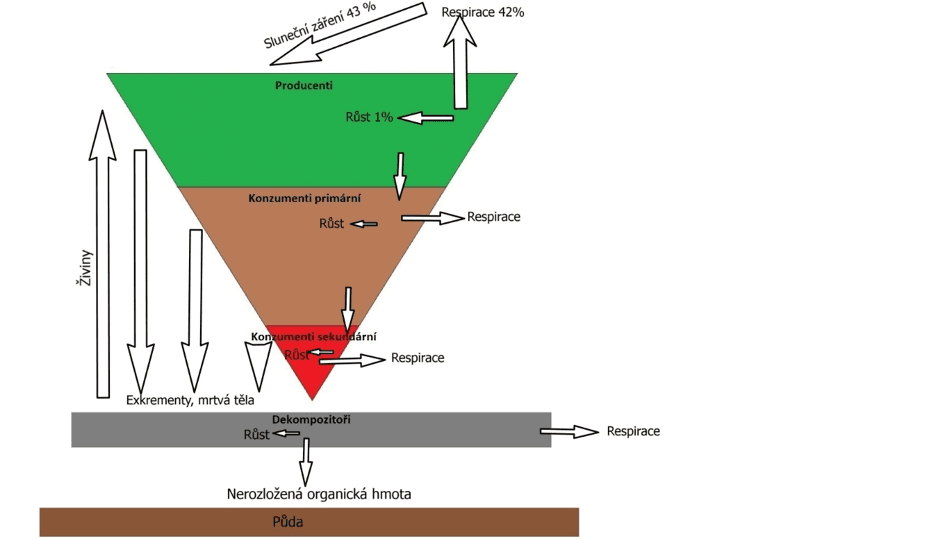
Energy flow in a normal ecosystem
The first image describes energy flows in an ecosystem based on green plants – producers. Of total incoming solar energy, only around 1 % remains for growth, i.e. biomass formation. The remainder is used for respiration, meaning all internal plant processes – uptake of nutrients from soil, synthesis of higher organic compounds, their transport within the plant, and so on. The entire ecosystem depends on this single percentage point.
The following image shows the situation in which most organic matter is removed for energy use. Most organisms at all levels simply disappear because they have no energy – in other words, no food.
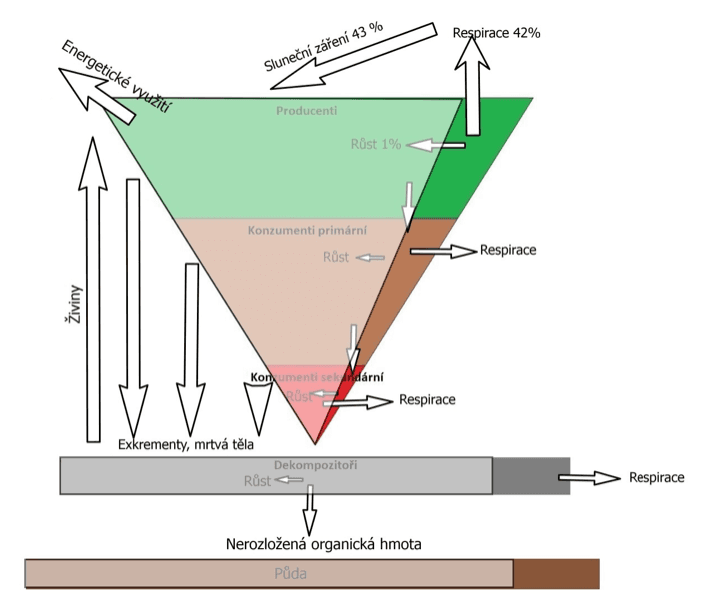
Energy flow in an ecosystem depleted by removal of biomass for energy use.
The very fact that the life of perennial energy-crop plantations generally does not exceed 20 – 25 years indicates a very limited ability to maintain the resource over a longer period. After this period, substantial changes occur in the physical and chemical properties of the soil, associated with the fact that plants – here a strict monoculture – remove elements from the soil in specific ratios. Remediation is possible through radical alteration of the stand and intensive fertilisation. Moreover, energy gain is generally calculated over the life of the plantation, i.e. from establishment to removal. However, a plantation can be established only on weed-free land. Either arable land is used, where weeds have already been suppressed in the preceding period – then it competes with food production. Or it is established on hitherto “unused” land, which is (usually) not a lunar landscape but has something growing on it. This “cheeky nature” needs to be removed – in other words, the plot must be weeded. This can be done chemically – for which the final several months of the preceding year are enough – or mechanically using soil tillers and cultivators, which requires one to two years.
The image shows a model field prepared for cultivation of fast-growing trees – without weeds or anything green. (Source: http://www.smacr.cz/data/soubory-ke-stazeni/RRD.pdf)
After the plantation reaches the end of its life, the land can be left to its fate for several further decades – in which case permanent sustainability is contradicted – or it can be fertilised with mineral fertilisers and sown with a reclamation crop. An idea of what a fast-growing-tree plantation looks like can be gained here and here.
Maintenance of a fast-growing-tree plantation in the first year – weeding (Source: http://www.vypestujsiles.cz/udrzba-plantaze/ )
Replacing coal with biomass combustion
In recent years, using biomass combustion as an “environmental” replacement for coal-fired electricity generation has gained ground in several European countries. This involves large plants with capacity of hundreds of megawatts and combustion of large volumes of mainly woody material. Formally, it is a low-emission source, but the actual environmental impacts are far more problematic. As already mentioned, biomass combustion also produces various pollutants. As with fossil fuels, their emissions can be filtered at large facilities. For carbon dioxide emissions, it is assumed that an equivalent amount will be absorbed during subsequent plant growth. However, in the case of forests growing over decades, this can take a considerable time. This may be a problem if rapid emissions reductions are needed. Over the short term, carbon dioxide emissions in this case are similar to those from other combustion processes. Another environmental problem is that such massive electricity production from biomass requires its sources, such as pellets, to be imported over very large distances, often even across oceans. Considerable emissions are therefore also produced during transport.
Large coal-fired power plants have been converted to biomass combustion in Denmark, the United Kingdom and the Netherlands. Conversion of one of the last large coal units to biomass combustion is also being considered in France. Sources of woody material are mostly in northern Europe, the Baltic states, Russia and the Americas. An example is the large UK Drax power plant. Its total capacity is 4000 MWe. It will not operate continuously at full output, but it will nevertheless require around 7,5 million tonnes of biomass in pellet form.
For illustration and comparison: average annual timber harvest in the Czech Republic is around 16 million m3. Fresh wood at 50 – 60% moisture has average density of 0,9. Around 14,4 million tonnes of fresh wood are therefore harvested annually. Pellets have moisture content below 10 %. All wood harvested in Czechia would produce around 7,9 million tonnes of pellets at 10 % moisture.
The United Kingdom already has little forest left, so large storage facilities were built at the power plant and millions of tonnes of pellets are imported from abroad. Danish company DongEnergy is taking the same approach at its Herning, Avedøre and Asnæs power plants. France’s EDF has recently also considered converting its 1,2 GW Cordemais coal-fired power plant.
On paper, these are zero-emission sources, but in reality importing woody material across oceans and burning it for electricity generation is not environmental. If Germany also adopted such a solution, it could lead to even worse environmental problems than the decision to mandate biofuel blending in diesel and petrol. The risk of such an approach also exists in Czechia, because the massive share of biomass in electricity generation envisaged by some energy plans of green organisations could not otherwise be achieved. The risks of shifting electricity generation from coal to biomass combustion, mostly in the form of pellets, are described in detail in an article in the journal Vesmír, or more briefly on the oenergetice website.
Biomass combustion at Drax power plant (source Drax).
Example of a self-sufficient municipality – Kněžice
Let us now look at a smaller project that is certainly not as problematic environmentally and is often cited as a highly positive example of a self-sufficient solution for a small settlement. The municipality of Kněžice in the Nymburk district has 500 inhabitants. It is described as the only energy self-sufficient municipality in the Czech Republic. The municipality has a biogas plant using organic waste as feedstock – animal droppings, manure, contaminated straw, food-industry waste, sludge from septic tanks and wastewater treatment plants. No purpose-grown biomass is used. The biogas plant produces more electricity than the municipality itself consumes, and heat from the CHP plant is used in a central heat and domestic hot water system. During winter, heat is supplemented by a biomass boiler house. There is no sewerage system in the municipality and septic-tank contents are processed by the biogas plant; there is no gas network, while district heating is provided to 149 buildings in the municipality (95 % of heat consumption).
However, there are two ambiguities. The first is “energy self-sufficiency”. An “energy self-sufficient” entity (a building, municipality or country) can be considered one that meets its energy needs from resources within its own territory. However, Kněžice imports more than 90 % of its feedstock – i.e. fuel for the biogas plant – from distances exceeding 20 km. The greatest distance to minor suppliers exceeds 60 km. Essentially, the Kněžice biogas plant can be regarded as a facility for disposal of organic waste from a broad surrounding area, where waste heat is utilised (more detail here).
The second ambiguity is classifying animal faeces, urine, manure and straw (representing more than 50 % of feedstock) as – quote: “waste” – end quote. This is very odd at a time when farmers are criticised for poor soil management, manifested especially in the continuously declining content of organic carbon in soil, which can only be replenished by returning organic matter (including manure and straw) to the soil. Prices of these materials are around 200 Kč/tonne. (60 – 350,-Kč depending on type)
A typical feature of a biogas plant is relatively high own energy consumption, both thermal and electrical. The Kněžice biogas plant consumes around 40 % of its heat to heat its own buildings and especially to heat the digester to 40°C. Operating the equipment – pumps, agitators and so on – consumes 17 % of electricity. The municipality is relatively “compact”, meaning houses are relatively close together and total heating-pipeline length may be shorter than in other rural settlements. Nevertheless, it is around 6 km and total energy losses are substantial. Heat losses in the heating network reach 38 %, and the overwhelming majority of heat from the biogas plant is used to cover those losses. The biogas plant can provide domestic hot water heating, but during winter the heating is supplied by a biomass boiler house with two boilers of 400 kW and 800 kW.
Biogas production is continuous, and a biogas plant is essentially almost impossible to regulate, operating in baseload mode. The CHP unit is sized to consume the biogas produced (here around 150 m3 per hour). A gas holder is intended to balance fluctuations, but can hold only around 3 – 4 hours of production. If the CHP unit is shut down, the gas produced must be burned. In Kněžice, this takes place in a gas boiler and the heat is used in the district heating system. At other biogas plants, a flare serves the same purpose. A flare is a simple burner that combusts surplus biogas, with the heat freely escaping into the atmosphere.
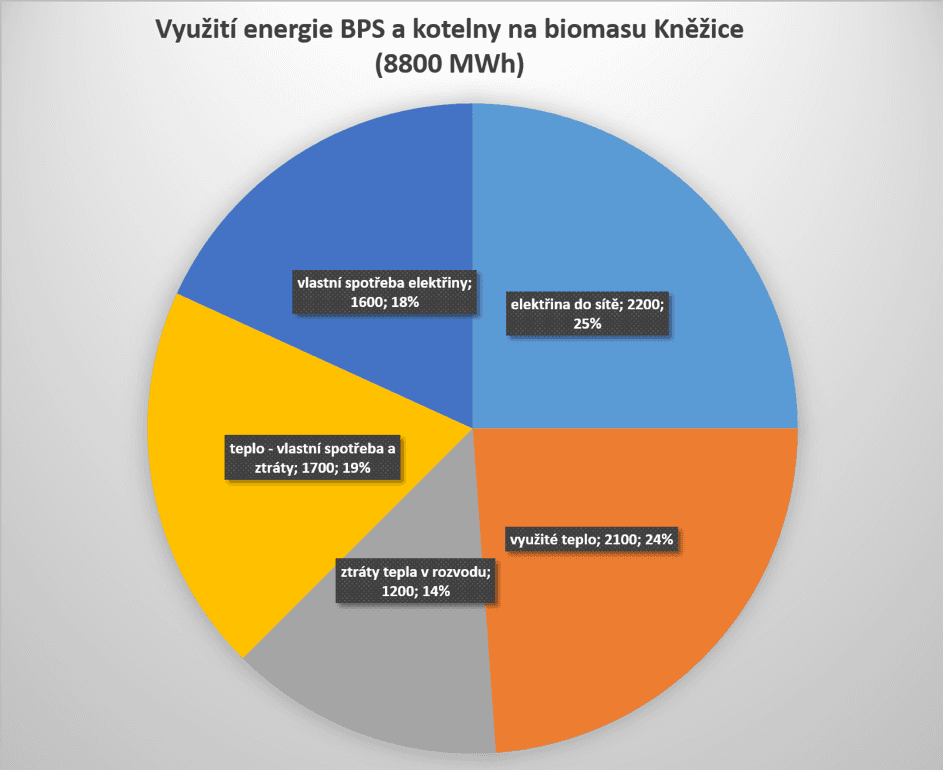
Use of the biogas plant and biomass boiler house in Kněžice.
Of 6900 MWh of biogas energy, 78 % is utilised in the CHP unit: specifically, 38 % (2600 MWh) for electricity and 42 % (2900MWh) for heat. Own consumption and transformer losses account for just under 20 % of generated electricity (1400 MWh), while 40 % of heat (1200 MWh) is used internally. Therefore, 2200 MWh of electricity and 1600 MWh of heat are supplied to the public network, corresponding to 57 % of the biogas input energy. Most heat (1200 MWh), however, is used to cover distribution losses. This leaves 400 MWh for use. The overall balance must also include the biomass boiler house, which provides heat during winter. The boilers operate at 85 % efficiency and therefore deliver 1600 MWh to the network from total biomass input energy of 1900 MWh. Total biogas and boiler-biomass input energy amounts to 8900 MWh. Actual use amounts to 2200 MWh of electricity and 2100 MWh of heat – 4300 MWh in total – i.e. 49 %. The remainder is losses and own consumption. Further energy costs include energy for transporting around 2000 tonnes of feedstock from distances exceeding 20 km – around 1500 – 2000 litres of diesel – and spreading digestate on fields.
The life of biogas plant technology is roughly 20 years, and total investment costs in the case of Kněžice were Kč 138 million. Kněžice made intensive use of subsidies for both investment and the price of generated electricity. Such a level of subsidies would probably be difficult to implement on a larger scale. Residents pay around 300 Kč/GJ for heat and purchase electricity from the grid at normal market prices depending on their individual supplier. As already mentioned, Kněžice uses biomass from a much wider area than the area it supplies with electricity and heat. This also shows that its model cannot be adopted everywhere. At the same time, it helps the wider area process and dispose of, for example, septic-tank waste, thereby saving it costs. If a similar system and its design take account of returning necessary organic matter to the soil and focus predominantly on the use of biowaste from a not-too-distant surrounding area, such heat production and, through CHP, electricity production can be environmentally beneficial. Even then, however, the potential for using biomass to produce heat and electricity is relatively limited.
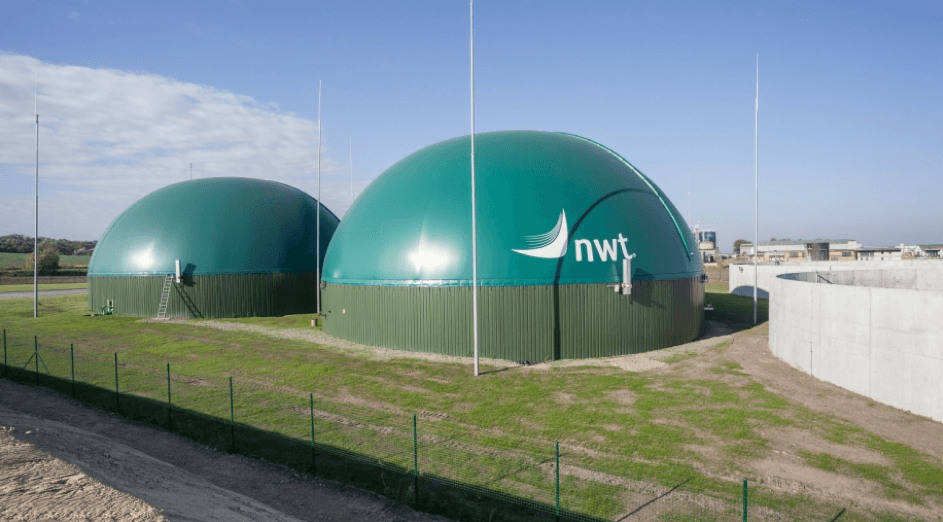
The construction part of the biogas plant in Uherčice was carried out by Navláčil (source Navláčil)
Conclusion
Leaving aside simple combustion of biomass from local sources, any other method of using biomass for energy purposes is considerably costly, requires additional energy inputs that may account for a substantial share of, or equal, the energy obtained, and makes substantial demands on the landscape. Moreover, intensive “harvesting” of energy biomass undermines claims of source renewability and permanent sustainability. Restoration of soil quality and plant communities is a long-term process, and binding an equivalent amount of CO2 likewise occurs only over a long time horizon. If biomass energy use is not approached cautiously, removing most biomass from an ecosystem can result in the collapse of many natural food chains. Since it also competes with food production and the ecological function of the landscape, biomass use must be approached very responsibly.
Mass combustion of woody material transported over enormous distances for electricity generation is, from an environmental perspective, highly negative, as is large-scale cultivation of crops for biofuels. The same applies to dedicated cultivation of maize and similar crops for biogas plants.
If biomass is used predominantly for heat production and, where appropriate conditions exist, for cogeneration in a gentle manner, it can be a suitable decentralised resource. In that case, however, its contribution to electricity generation will only be on the order of single-digit percentages. This is also evident from examples of biomass electricity generation in various European countries in 2018. In Czechia, biomass accounted for 2,7 % of electricity. In Germany, it was 7,5 %, in a situation of very intensive subsidies in the sector. Even so, this value has been stable for years and has not increased. In the United Kingdom, it was 6 %, and in Denmark 13,1 %. Here, however, it is necessary to recall the already mentioned fact that combustion of imported biomass is also used very intensively. Denmark also faces strong pressure to produce and use biogas. Finland also has a high biomass share in electricity production, but it is still only 10,1 %. These figures also show the real potential in this field. Biomass certainly has a place in the energy mix, but all of its environmental constraints need to be reflected.
Further recommended reading:
Zdeněk Strašil and Josef Šimon: Status and potential for using plant biomass in the Czech energy sector
Translation disclaimer
This article is a machine translation of the Czech original and has not yet been fully reviewed. In case of any doubt, please refer to the Czech version.
Sdílejte článek prostřednictvím:
You might also like

23 October 2026, 11:01

23 October 2026, 06:34