Three million litres of fuel from one Czech wind turbine – dream or reality?
Recent events have once again laid bare the fragility of oil dependence, as instability in the Middle East sent oil prices soaring on global markets, with prices exceeding the symbolic threshold of $100 per barrel on 9 March 2026.
Article
When oil was last at similar levels, around the summer of 2022, petrol in Czechia cost around CZK 47 per litre and diesel was roughly CZK 48 per litre.
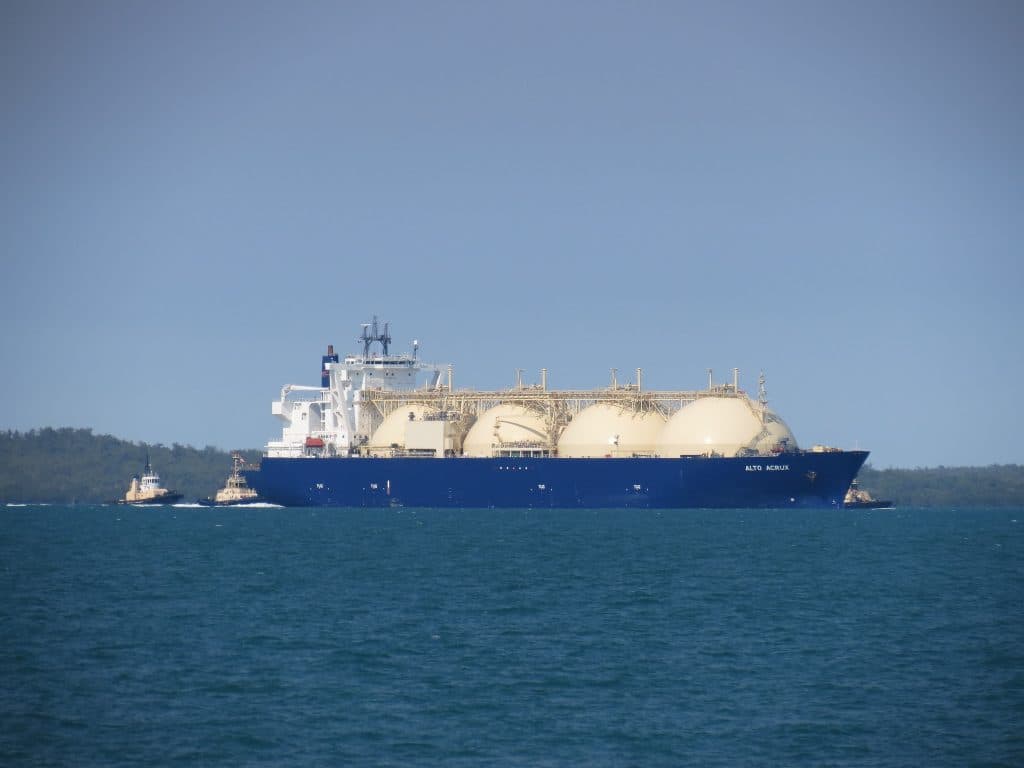
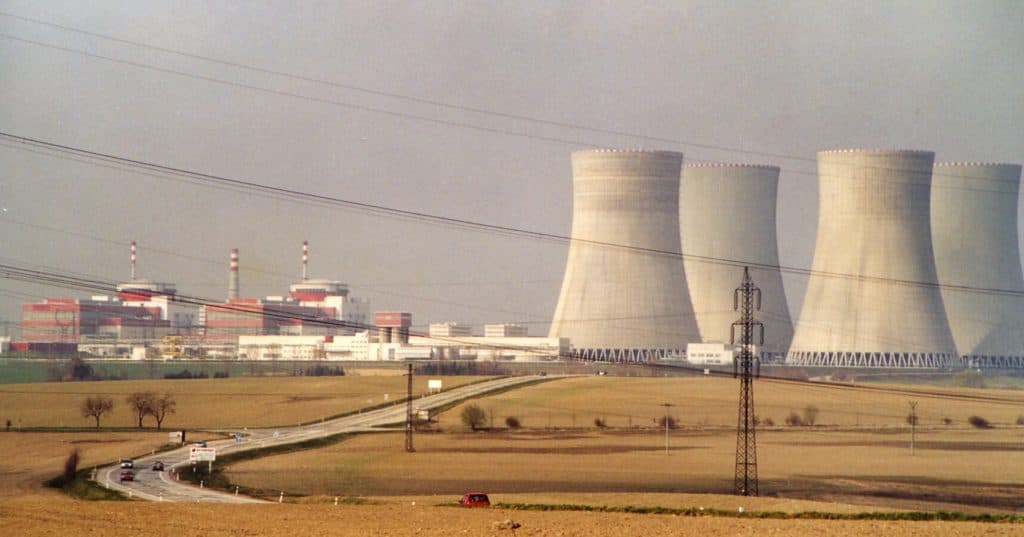
In the case of oil, Czechia imports around 7 million tonnes annually, equivalent to around 70 TWh of energy. By comparison, total electricity consumption in 2025 was roughly 60 TWh. The consumption of petroleum fuels in transport thus exceeds final electricity consumption, equivalent to the output of nine new Dukovany nuclear power plant units (around 8 TWh/year). At a price of around $80/barrel, we therefore import oil worth roughly CZK 100 billion annually.
Biofuels
To the energy contained in fossil fuels, biofuels with a 5% share must be added. In Czechia, biofuels are produced primarily from rapeseed and account for roughly 5% of transport consumption. From an energy perspective, however, this is a highly inefficient process. Rapeseed must be grown and treated, then its seeds processed to produce oil, which is converted into biofuel. Even if we ignore losses during cultivation and production, the oil and subsequent biofuel contain around 10 kWh of energy per litre. This litre of fuel must then be burned in an engine that is not particularly efficient – with the result that one hectare of rapeseed produces around 5 MWh of energy per year, which we then use to turn the wheels of our cars.
By contrast, if we installed solar PV panels on the same one-hectare field, we would obtain around 520 MWh of electricity per year under Czech conditions. That is 100× more.
I am certainly not suggesting covering fertile land with panels; this merely shows how desperately inefficient growing energy rapeseed is as a means of converting solar radiation into motive power. Moreover, it is a highly controversial way of obtaining fuel: on the one hand, food is being burned, while in other countries people have nothing to eat.
Electric mobility
To the above, we must add the low combustion efficiency of conventional engines, where roughly two-thirds of expensively purchased and energy-intensively refined fuel turns into waste heat. In other words, we release energy equivalent to the output of six new Dukovany nuclear units into the air through car exhausts and radiators. If we want to compare the consumption of combustion-engine and electric cars, we need to use the same units. From the calorific value and density of fuel, the energy content can be easily calculated at roughly 9 kWh per litre of petrol and 10 kWh per litre of diesel. With typical cars consuming between 5–7 litres of fuel per 100 km, this amounts to 50-60 kWh per 100 km. Thanks to the high efficiency of electric motors and their ability to store braking energy back in the battery, an electric car performs significantly better: a comparable vehicle can operate on up to 20 kWh per 100 km, including charging efficiency, meaning around one-third of the consumption.
How much one wind turbine can generate
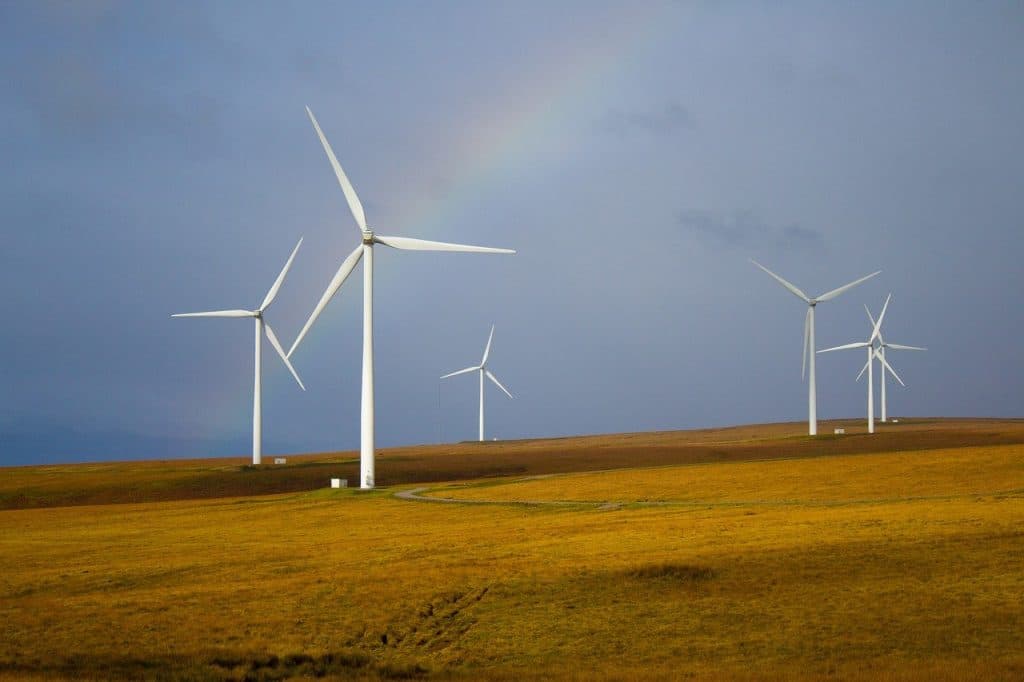
Wind turbines commonly installed today have capacities of 4–6 MW. A turbine does not operate at full output all the time, and annual generation is determined by the capacity factor, or utilisation factor. This expresses the ratio between actual electricity generation and the electricity that would hypothetically be generated by continuous full use of installed capacity over a given period. The average annual capacity factor for wind power plants in Czechia is 23%, roughly double that of solar power plants. A 5 MW plant can therefore generate around 10 GWh (10 million kWh) per year. That corresponds to the consumption of around 5,000 households. The Motorists party has recently been particularly vocal in opposing wind power plants. So let us also convert the output into cars. The average car in Czechia drives around 10,000 km per year, which at consumption of 20 kWh/100 km amounts to around 2 MWh. One wind turbine thus generates enough energy each year for 5,000 cars to drive their annual mileage. The generated energy is even more apparent in the case of train travel. Long-distance train consumption is around 20 kWh / 1,000 gross tonne-km. With a train weight of around 400 t, capacity of more than 400 seats and 50% occupancy, consumption per passenger is around 4 kWh / 100 km. Transport performance would therefore be around four times higher than for an electric car with average occupancy of 1.3 people per vehicle.
With a view to a degree of self-sufficiency, conversion to an equivalent amount of fuel is also interesting. For an efficient car consuming around 6 l / 100 km, annual consumption for 10,000 km comes to 650 l. Five thousand such cars therefore consume more than 3 million litres of fuel per year, which does not have to be extracted, transported, stored, refined and then irreversibly burned in cars. By contrast, we can manufacture a large share of wind turbine components domestically, particularly the steel tower, generator, gearbox and so on.
All in all, over its lifetime, one wind turbine can generate the equivalent of 75,000,000 litres of fuel. Just two wind turbines generate over their lifetime the equivalent of the giant fuel storage facility in Loukov, in the Kroměříž region, with a capacity of 140,000,000 l, completed there in 2011 by state-owned company Čepro at a cost of CZK 1.4 billion (by comparison, one turbine costs around CZK 150-300 million).
A study by the Institute of Atmospheric Physics of the Czech Academy of Sciences estimates that by around 2040, wind power plants could generate up to 18.8 TWh of electricity in Czechia, equivalent to covering roughly 28% of the country’s 2019 consumption. On an annual basis, the generated energy would cover the entire consumption of all passenger cars, amounting to 14 TWh, with almost 5 TWh still left over.
Solar power generation
Of course, it is not possible to build the entire energy system solely on wind power plants, not least because they generate mainly in winter and more often at night. But this apparent disadvantage combines very well with solar PV. To give an idea, a 10 kWp solar power plant commonly installed today can generate enough energy annually for a typical car to travel 50,000 km. I described the possibilities of charging an electric car from a solar power plant in detail in previous articles, so I will not elaborate further here.
However, I would like to address the necessary imports of panels, especially from China. Many claim that replacing oil with renewables merely replaces one dependency with another. But it is important to realise that this is a dependency of an entirely different nature and, above all, on an entirely different scale. To give an idea, one panel priced at around CZK 2,000 can generate around 13.5 MWh of electricity over its lifetime under Czech conditions. An electric car could travel almost 70,000 km on that energy. If we wanted to cover the same distance in a combustion-engine car, we would need around 4,000 l of fuel costing around CZK 80,000 (excluding taxes), or 20× more. Nearly 6 GW of solar power plants are currently installed in Czechia, covering just under 10% of our consumption. The energy generated corresponds to the consumption of around 3 million passenger vehicles, almost half of the vehicle fleet. Even if panel imports were restricted or stopped altogether, existing panels would continue generating as normal. This is an entirely different type of dependency than direct fuel imports, of which only limited quantities can be stored and where even the slightest uncertainty leads to market volatility within days, as we can observe this week.
As for the possible domestic production of some components, it is also easier, if necessary, to establish their manufacturing capacity – albeit likely at a higher cost – than to find the fuel itself within one’s own territory.
Conclusion
Designing the energy system as a whole is naturally more complex, with other sources such as nuclear, hydroelectric and combined-cycle gas power plants also coming into play, but the aim was to highlight the volume that wind power can generate in relation to oil imports.
An analysis by Fakta o klimatu also shows that, alongside energy savings and European interconnection, the expansion of wind power is particularly important for achieving low electricity generation costs.
The approach of the Motorists for Themselves party is therefore downright ridiculous. The party aims to reduce energy costs and support people’s mobility. If it is to live up to its name, it should surely lobby for the cheapest possible energy for cars – and that is unquestionably electricity, whether from wind, solar or a nuclear power plant. This is particularly true in an automotive powerhouse where every fifth car currently produced has external charging capability and 40% of vehicles manufactured are electrified in some way. Paradoxically, however, they are doing the exact opposite.
Equally sad is the approach of Motorists MP Matěj Gregor from the Ostrava-Vítkovice city district, where a steel plate rolling mill is based that can produce steel plate, among other things, for wind turbine towers. Rollers from the Vítkovice “quartet” could ask in Gregor’s parliamentary office why he is fighting so hard against utilising a domestic factory, or indeed against utilising the automotive sector based in the same region.
Naturally, wind power plants also have their drawbacks. Like motorways, they are a source of noise and, from an aesthetic perspective, they create artificial features in the landscape, much like electricity transmission towers. However, based on experience abroad, it can be concluded that the benefits outweigh the drawbacks, and wind power plants are being built, for example, along motorways to Vienna, Nuremberg and Katowice. Unfortunately, instead of a substantive and constructive debate, we are currently seeing rather artificial dissemination of disinformation, as shown for example in this report.
Translation disclaimer
This article is a machine translation of the Czech original and has not yet been fully reviewed. In case of any doubt, please refer to the Czech version.