
23 October 2026, 14:38
Loading...
What are the possibilities for using geothermal energy in Czechia?
Jan Šafanda
21 December 2018, 08:19
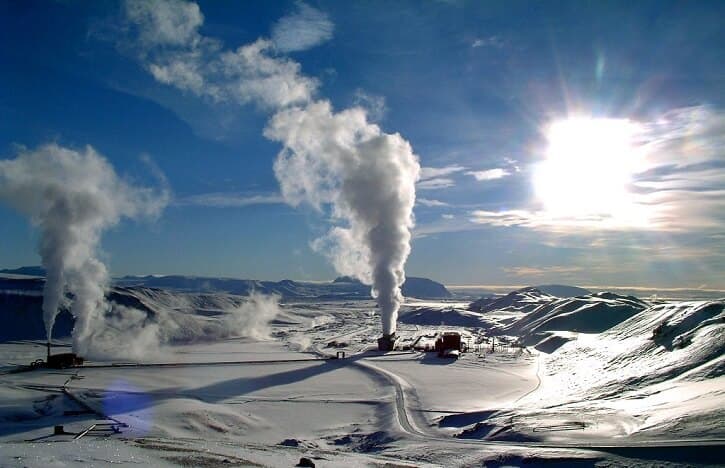
One potential way of obtaining energy is to use heat from the Earth’s interior. Unlike Iceland, the Czech Republic has limited opportunities in this area. Nevertheless, it is important to make effective use of them.
An assessment of the potential of geothermal energy is part of a series of articles on the development and prospects of global, and above all Czech, power generation. Previous parts of the series examined the potential of individual low-emission sources (wind energy, nuclear power, photovoltaic power plants, hydropower and energy storage options), various pathways that can be used for the transition to low-emission power generation, and scenarios for the direction of the power sector in Czechia.
Geothermal energy is thermal energy generated in the Earth’s interior. It heats underground rocks and water to different temperatures depending on the depth and geological conditions at a given location. Geothermal energy is used either directly for heating or cooling, industrial processes, recreation and spa treatments, or for electricity generation.
High-temperature resources, with rock and groundwater or steam temperatures well above 100 °C (in some cases exceeding 300 °C), are primarily used for electricity generation or for industrial processes requiring such high temperatures. Residual heat can be used for heating.
Resources with lower temperatures are used for the direct use of geothermal energy and are of two types. The first type comprises very low temperatures, ranging from the average annual surface temperature at a given location to approximately 30 °C. It is based on extracting heat from groundwater and soil or rock at relatively stable temperatures at shallow depths (roughly up to 400 m). Heat pumps are most commonly used to raise this heat to the temperature required for heating. For cooling, this zone of shallow depths and relatively low temperatures is used as a heat sink.
The second type of direct resource uses low to medium-high temperatures ranging from 30 °C to more than 100 °C, mostly from depths below 400 m.
Geothermal power plants
Let us first look at electricity generation in geothermal power plants. In this case, these are thermal power plants using heat from the Earth’s interior. Hydrothermal systems, which pump naturally occurring hot underground water, are predominantly used. This water occurs especially in sufficiently porous rocks in sedimentary basins that are extensive both laterally and in depth. Hydrothermal systems with the highest temperatures are found at convergent lithospheric plate boundaries, in rift zones or in areas of mantle hot spots. The geographical extent of these areas is therefore very limited. The advantage of this system is its simplicity, which is precisely why it dominates worldwide. The largest exploited hydrothermal field is The Geysers in Napa Valley in northern California, near San Francisco. It was discovered in 1847. It currently has 22 power plants with a total capacity of 1517 MWe and an annual capacity factor of roughly 63 %.
Given the limited occurrence of conditions suitable for electricity generation using hydrothermal systems, the concept of generating electricity from hot dry rock (Hot Dry Rock System, HDR) emerged in the 1970s. HDR power plants are based on using heat extracted from hot rocks without sufficient groundwater reserves, located at depths still accessible to drilling technology. At present, this is generally considered to be a depth of around 5 km. The most commonly considered configuration for obtaining geothermal heat for an HDR power plant consists of one injection well and two production wells, often drilled from a single platform, with the production wells diverging in their lower sections in opposite directions so that their bottoms are several hundred metres from the bottom of the injection well. It is assumed that hydraulic stimulation, in which water is forced at high pressure into the deepest section of the injection well, will increase hydraulic permeability along naturally occurring fractures and faults. The production wells must then be directed so that they are hydraulically connected to the injection well through this stimulated system of fractures and faults. The size of the fault surfaces along which water circulates between the injection and production wells is decisive for the performance of the heat exchanger created in the rock. If hydraulic stimulation does not result in sufficient connection between the wells, hydraulic fracturing based on a similar principle to hydraulic stimulation is envisaged.
In recent years, alongside the term hot dry rock (HDR), terms such as enhanced geothermal systems (EGS – Enhanced Geothermal Systems), hot fractured rock (HFR – Hot Fractured Rock) and hot-wet-rock (HWR – Hot-Wet-Rock) have also been introduced. These describe subtle differences in geological formations potentially suitable for building an underground heat exchanger, but essentially they remain the same concept of using heat stored in hot rocks with low hydraulic permeability.
So far, however, these have only been test and prototype projects, with results that remain inconclusive. The first prototype project, with a capacity of 1,5 MWe, began operating in 2010 in Soultz-sous-Forêts in Alsace, France. The Cooper Basin project in northern South Australia was recently closed. Wells were drilled to a depth of 5 km, and hot water was successfully extracted and electricity generated on a small scale. However, it proved that industrial continuation of the project would not be economically sustainable, and it was therefore terminated. Other projects around the world have likewise made little progress towards the deployment of a commercial power plant. Improving economic parameters remains the main challenge. Earthquakes that may accompany such projects are also a risk. A new hope is the recently launched project to build a prototype 3 MWe plant in Cornwall, UK. Drilling of a 4,5 km-deep well began in 2018.
Geothermal power plants use either dry or wet steam systems, or hot-water systems. The temperature of both dry and wet steam must be at least 180°C. Dry-steam power plants have capacities ranging from 35 MWe to 120 MWe, most commonly 55 – 60 MWe, and rank among the cheapest and simplest geothermal power plants. The oldest geothermal power plant, in Larderello, Italy, also operated on this principle; it began operating as early as 1913 and had a capacity of 250 kWe. For almost half a century, it was the only one in the world.
For power plants operating with wet steam, the situation is complicated by the presence of liquid water. In this case, water that is under high pressure underground is usually pumped. When the pressure falls at the surface, it turns into steam. These power plants have capacities ranging from 5 MWe to 100 MWe, though most commonly around 20 MWe.
Electricity can now also be generated using hot-water systems at temperatures between 73 – 200°C if a binary-cycle turbine is used, in which water arriving from the well transfers heat to a fluid with a lower boiling point, whose vapour then drives the turbine. Either the organic Rankine cycle or the Kalina system is used. Binary power plants most commonly have capacities ranging from several hundred kWe to the low single-digit MWe range. Their deployment has substantially expanded the number of locations where the Earth’s heat can be used to generate electricity.
The efficiency of converting extracted geothermal heat into electricity is around 12% on the global average. It depends strongly on the temperature of the available water or steam. It is highest, at around 20%, for hot-steam systems. Efficiency declines as the temperature of the geothermal resource falls. At a temperature of 200 °C, conversion efficiency reaches 17%, while at 150 °C it is just under 13 %. A binary system operating in Alaska at a temperature of 73 °C has a conversion efficiency of around 1 %.
Current status of geothermal power plants worldwide
According to the latest overview, total installed capacity of geothermal power plants worldwide reached 12 729 MWe at the end of 2015, with an average annual increase of 350 MWe between 2010 – 2015. The capacity factor was around 70 %. Geothermal power plants were operated by 25 countries. The United States ranked first with 3450 MWe, followed by the Philippines with 1980 MWe, Indonesia with 1340 MWe, Mexico with 1058 MWe, New Zealand with 1005 MWe and Italy with 916 MWe. Italy leads Europe by a wide margin, followed at a distance by Iceland with 665 MWe. Excluding Russia, with 82 MWe in Kamchatka, and Portugal, with 29 MWe in the Azores, the only other European countries generating geothermal electricity in 2015 were France with 16 MWe (although 15 MWe of this was on the island of Guadeloupe), Germany with 27 MWe, Austria with 1 MWe and Romania with 0.1 MWe. With the exception of the described case in France, all geothermal power plants use hydrothermal systems. This is also the case for the two newest geothermal power plants in Europe, commissioned in 2017 – 2018 in Hungary (3 MWe) and Croatia (10 MWe). Where suitable geological conditions exist, this approach is much simpler.
Globally, geothermal power plants accounted for just under half a percent of electricity generation in 2015. A forecast for 2020 based on projects under preparation or development predicted total installed capacity of 21 000 MWe. An optimistic scenario for geothermal power plant development expects capacity of 140 000 MWe by 2050 and an approximately 8% share of global electricity generation.
Geothermal power plants in the Czech Republic
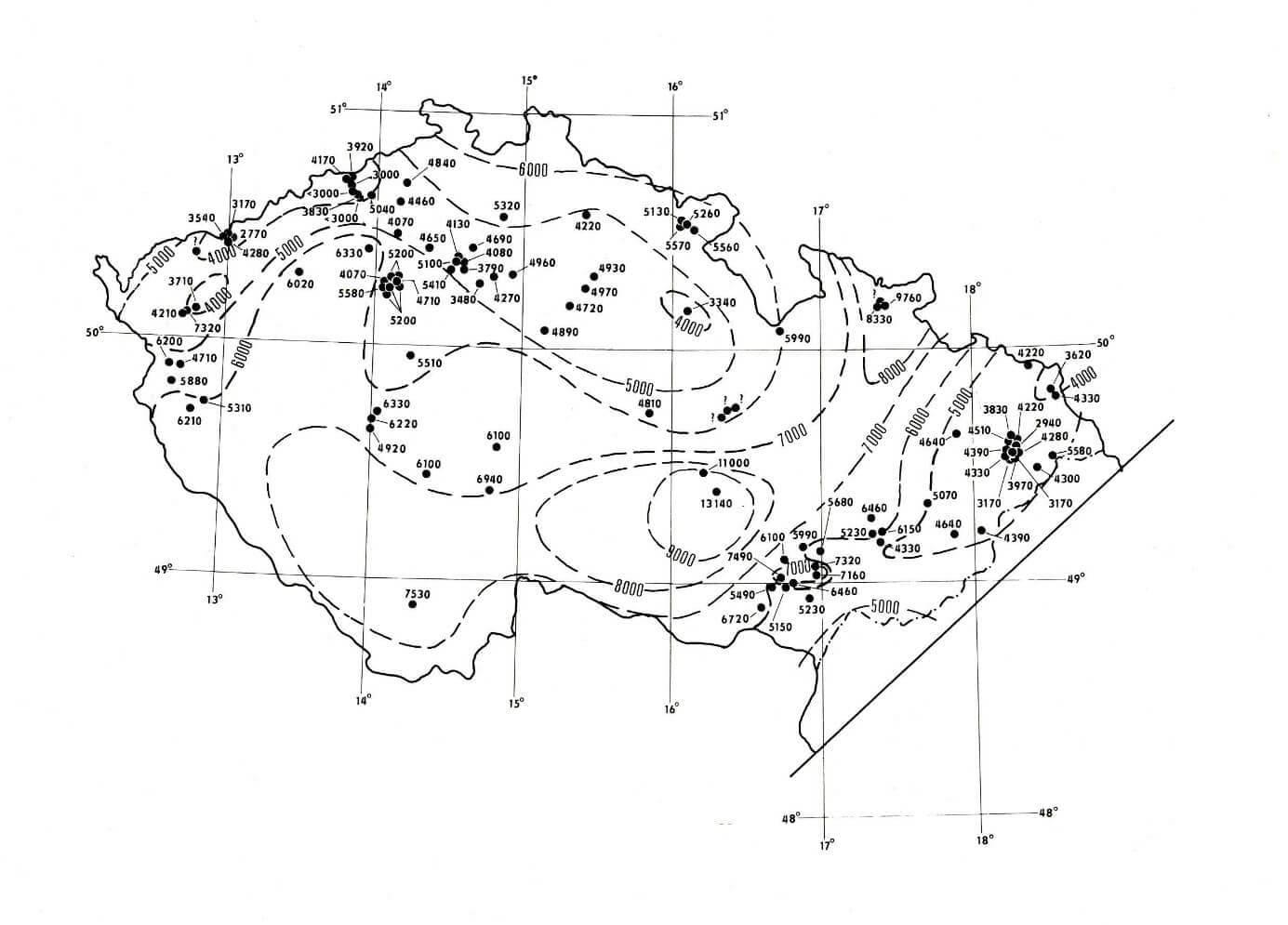
There is currently no geothermal power plant in operation in the Czech Republic (as of the end of 2018), nor is any under construction. The scenario for the development of electricity generation from geothermal resources published in the report of the first Independent Energy Commission (NEK I, 2008), which envisaged commissioning the first geothermal power plant in the Czech Republic in 2011 and annual production of 0,29 TWh in 2018, was therefore not fulfilled. Nor was the revised scenario in the National Action Plan for Renewable Energy of the Czech Ministry of Industry and Trade from the end of 2015, which expected the first geothermal power plant to start up in 2018 and annual generation of 0,04 TWh that year.
It is almost certain that no geothermal power plant will be operating in 2020 either, for which the latter scenario projected annual production of 0,111 TWh and installed capacity of 15 MWe. So far, a test well to a depth of 2,1 km has been drilled in Litoměřice, where the final temperature was 63˚C, while a test well was also drilled in Liberec. The well in Litoměřice will be used by the new RINGEN research centre, whose construction has begun.
The main reason for this situation is that, under the geological conditions of the Czech Republic, only a geothermal power plant using hot dry rock, i.e. an HDR system, at depths of around 5 km is feasible, where temperatures of 140 – 160 °C can be expected in favourable locations. Only the two aforementioned geothermal power plants of this type have been built worldwide: one in France with a capacity of 1.5 MWe and one in Australia with a capacity of 1 MWe, which has already been closed. These are projects that are highly demanding both technologically and in terms of investment. Building an HDR power plant is technologically far more demanding than building a plant using a natural hydrothermal system. In particular, creating a deep underground heat exchanger with sufficient performance and permeability for circulating water will always involve a certain degree of risk (insufficient hydraulic permeability, unintended creation of a thermal short circuit between the injection and production wells, induced seismicity), which discourages potential investors. Moreover, according to a 2006 study by P. Heidinger and colleagues, for an investment in an HDR power plant with one injection and two production wells drilled to a depth of 5 km, a 20-year lifetime, and an initial temperature and capacity of 200 °C and 7 MWe respectively to be profitable, the electricity generated would need to be sold for 3 – 4 Kč/kWh.
Compared with electricity generation from wind and solar energy, the main advantage of geothermal power plants is their independence from weather conditions and the time of day. Their disadvantages, on the other hand, are the high investment costs of construction and a decline in their “competitiveness” in light of falling costs for other renewable energy sources. For these reasons, the forecast of annual electricity generation from geothermal resources (NEK I, 2008) for 2030 and 2050, namely 1.6 TWh and 10 TWh respectively, also appears unrealistically optimistic. A realistic forecast could envisage the construction of 10 geothermal power plants with total capacity of 30 MWe and annual output (at a 70% capacity factor) of around 0.3 TWh, which would amount to fractions of a percent of total annual electricity generation in Czechia.
Direct use of geothermal energy
At the end of 2014, total installed capacity for direct use of geothermal energy worldwide was 70 885 MWt, up 46 % from 2010. Geothermal energy was used in this way in 82 countries, and the total amount of energy obtained in 2014 reached 165 TWh. The most energy was used in heat pumps (55 %), direct heating of swimming pools including balneology (20 %), building heating (15 %, of which the majority, 89 %, was for district heating), greenhouses and heating of outdoor spaces (5 %), while the remaining 5 % was used for other purposes (aquaculture, industrial processes, snow melting, drying, etc.). China leads the ranking of countries in direct use of geothermal energy (48 TWh/year), followed by the US (21 TWh/year), Sweden (14 TWh/year), Turkey (13 TWh/year) and Iceland (7 TWh/year). Per capita, Iceland is the undisputed leader, followed by Sweden, Finland, New Zealand and Norway. The figures are taken from an overview by J. W. Lund and T. L. Boyd in the journal Geothermics in 2016.
The use of geothermal energy as a heat source for heat pumps is experiencing the strongest growth. Worldwide use of the Earth’s heat for this purpose rose by 52 % between 2010 and 2015, while the energy obtained amounted to 91 TWh/year. This is mainly due to the ability of heat pumps to extract geothermal heat even from depths just below the surface, essentially regardless of geological conditions and the temperatures prevailing below ground at the point of use. The two most commonly used methods of extracting geothermal heat for heat pumps are vertical heat exchangers in boreholes 50 – 150 m deep and horizontal ground heat exchangers consisting of pipes laid in trenches 1 – 2 m below the surface. Per capita, Sweden is the leading country in the use of heat pumps. In 2015, 500 thousand heat pumps connected to underground heat exchangers were operating in the country, and the annual volume of geothermal heat obtained reached 14 TWh. One-fifth of homes in Sweden are heated by heat pumps of this type.
The estimated number of heat pumps connected to underground heat exchangers (ground-source heat pumps) in the Czech Republic at the end of 2012 was 18 thousand. Significantly more heat pumps, 28 thousand, used outdoor air heat (air-to-water heat pumps) at the same date. According to a survey by the Ministry of Industry and Trade, annual deliveries of ground-source heat pumps to the Czech market have been around 1.5 thousand in recent years and their numbers have stagnated, while deliveries of air-to-water pumps have grown, reaching almost 14 thousand in 2017. The number of ground-source heat pumps at the end of 2017 can be estimated at 26 thousand, and annual geothermal heat output at 0.7 TWh. Compared with Sweden, mentioned above, this is a vast difference for a comparable population: the number of installations in Czechia is twenty times lower. The system with the largest heat pump capacity, 2 x 3.28 MWt, operates in Děčín. It uses 30 °C geothermal water flowing from an aquifer at a depth of 550 m at a rate of 54 l/s and serves as a district heat source for the right-bank part of the city. One of the largest ground-source heat pump installations in the Czech Republic will be at ČSOB’s building in Prague-Radlice. The system, which will operate in a bivalent heating and cooling mode, is based on 179 boreholes, each 150 m deep. The heat pumps will have capacity of 1300 kW for heating and 1220 kW for cooling.
In terms of primary energy consumption, the benefit of using heat pumps to heat buildings depends on their coefficient of performance, i.e. the ratio between thermal energy supplied to the heated building and the energy consumed to power the heat pump. The average coefficient of performance of currently operated ground-to-water systems is estimated at 3,5. In the case of by far the most widespread form of heat pump drive, namely electric drive, this means that 71 % of the heat supplied to the building comes from the geothermal exchanger and 29 % from the electricity consumed for operation. If the heat pump replaces an electric boiler with 100 % efficiency, primary energy savings amount to this 71 %. If it replaces a fossil fuel boiler, the efficiency of both thermal power plants and the boiler must be taken into account when calculating savings. If, for simplicity, we assume power plant efficiency of 1/3 and boiler efficiency in the range of 80 % (coal-fired boilers) to 100 % (gas condensing boilers), replacing them with a heat pump results in primary energy savings of 14 % – 31 %. Primary energy savings would be even more significant if the heat pump were powered, for example, by a gas internal combustion engine. Assuming a gas engine efficiency of 35 %, driving a heat pump with a coefficient of performance of 3,5 and simultaneously operating as a boiler with 50 % efficiency, total utilisation of exhaust heat is 3,5 x 35 + 50 = 172,5 %. In that case, primary energy savings compared with boilers with efficiency of 80 % – 100 % amount to 42 % – 54 %. Heat pumps of this type are available on the market, but their deployment is very limited.
During operation of a vertical exchanger, only the immediate surroundings of the borehole (within a radius of up to 5 – 10 m) below the depth reached by seasonal changes from the surface (the first 10 – 15 m) cool significantly, by up to several degrees Celsius. A pseudo-steady state is created in which the temperature of the surrounding rock falls only slightly year after year, system performance practically does not decline, and it can be operated over the long term.
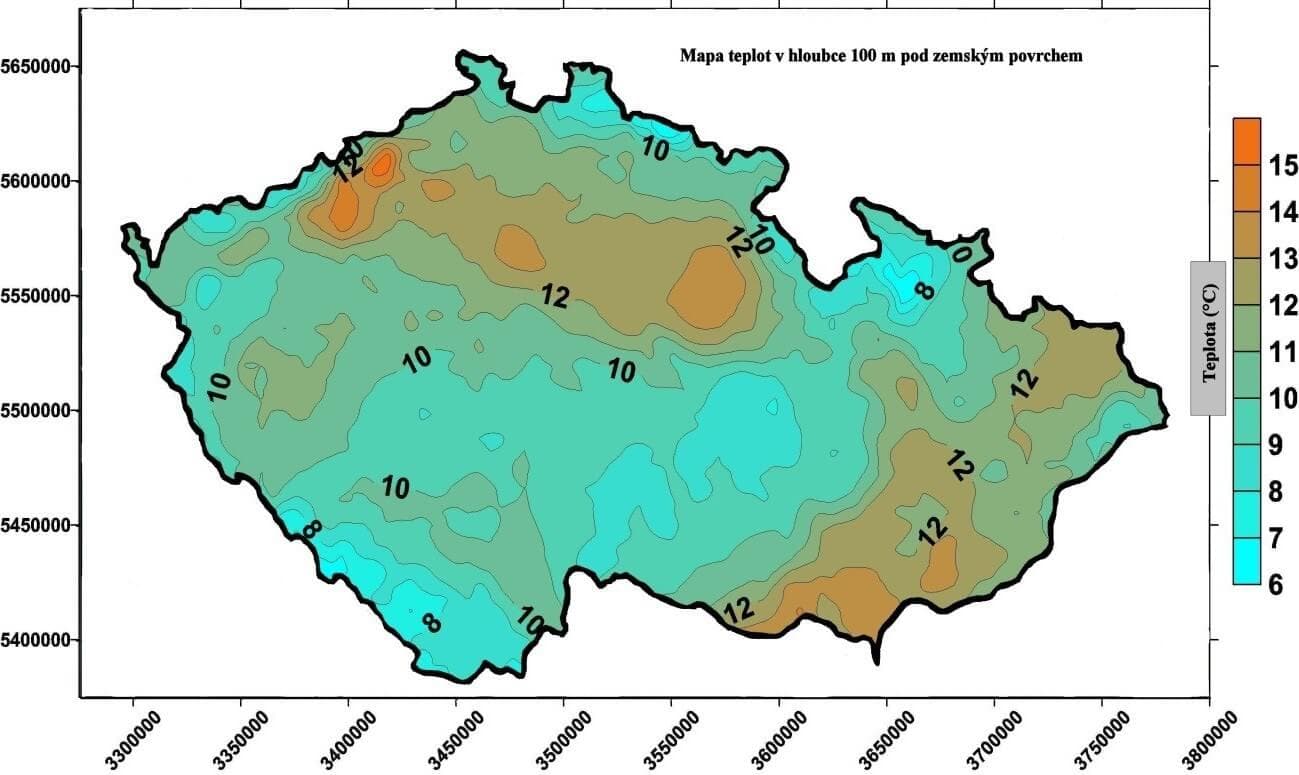
Using vertical shallow boreholes for cooling is unequivocally beneficial in terms of primary energy savings. Given subsurface temperatures in the Czech Republic, most commonly ranging from 9 – 13 °C at depths of 20 – 100 m below the surface, direct cooling is also possible. Using correctly sized vertical shallow boreholes for cooling in summer and heating in winter significantly improves system efficiency and extends its lifetime. Underground heat exchangers used for cooling in summer are generally not considered to be a use of geothermal energy. However, their use results in significant savings in energy consumed for air conditioning.
As with geothermal power plants, direct use of geothermal energy without heat pumps in Czechia will depend decisively on creating underground heat exchangers, as hydrothermal resources are very limited and shallow, and thus at relatively low temperatures. Compared with the difficulties associated with building HDR geothermal power plants, however, using geothermal heat for heating appears more feasible in that underground exchangers could be located at shallower depths. The temperature required for direct heating or hot water preparation, 60 – 80 oC, is reached in some locations in Czechia at a depth of 2 km and virtually everywhere at depths of up to 3 km. The technical difficulty and risk of failure in creating an underground exchanger at these depths could be lower due to lower pressures and generally more fractures compared with the depths relevant for geothermal power plants.
If any geothermal power plants are built in the Czech Republic, then given their low thermal-to-electric conversion efficiency of 10 – 15%, each plant, probably with a typical capacity of several MWe, will have tens of MWt of thermal capacity available that could be used for heating. However, as with unused waste heat from existing coal and nuclear power plants, the question arises whether individual towns and municipalities would be interested in such a heating method and, if so, whether they would be capable of building the required infrastructure.
Conclusion
As can be seen, in areas with suitable geological conditions, geothermal energy can already be used very efficiently for heating and a range of other applications requiring hot water, as well as for electricity generation. Iceland is one example. However, the number of such suitable locations is very limited. Results have so far been worse in areas with ordinary geological conditions from this perspective. This is the case in Czechia, for example. Here, only heat pumps have so far seen broader deployment. Efficient extraction of both heat and electricity would require wells at least 4 km deep and the injection of water into them. Not a single commercial HDR power plant has yet been built, and the question of its competitiveness remains entirely open. The purpose of existing or planned wells several kilometres deep is to obtain sufficient information needed to assess the actual costs of both construction and operation of geothermal power plants. For now, geothermal power plants therefore remain projects with highly uncertain outcomes.
The use of heat pumps is developing intensively in the Czech Republic. Opportunities in this field also have major future potential, although their efficiency and environmental benefits depend strongly on how the electricity they consume is generated.
On the other hand, it is difficult to expect the contribution of geothermal power plants to become noticeable in Czechia in the coming years or decades. Such a change would require a technological breakthrough worldwide that could be built upon. And this currently appears unlikely. In any case, it would be good to be prepared for it, and Czechia should implement a prototype project, perhaps in Litoměřice. Even if its benefits would be primarily scientific and technological.
Opening photograph: French pilot HDR geothermal power plant project with a capacity of 1,5 MW in Soultz-sous-Forêts, Alsace (source: GEIE Exploitation minière de la chaleur).
Authors: J Šafanda, V. Wagner
Note: The text is preparatory material for a publication on energy being prepared for the Akademia publishing house.
Written for the oEnergetice and Osel websites.
Translation disclaimer
This article is a machine translation of the Czech original and has not yet been fully reviewed. In case of any doubt, please refer to the Czech version.
Sdílejte článek prostřednictvím:
You might also like
23 October 2026, 11:01

23 October 2026, 06:34