23 October 2026, 14:38
Loading...
What date should the Czech Coal Commission choose for the coal phase-out?
Vladimír Wagner
4 December 2020, 07:45
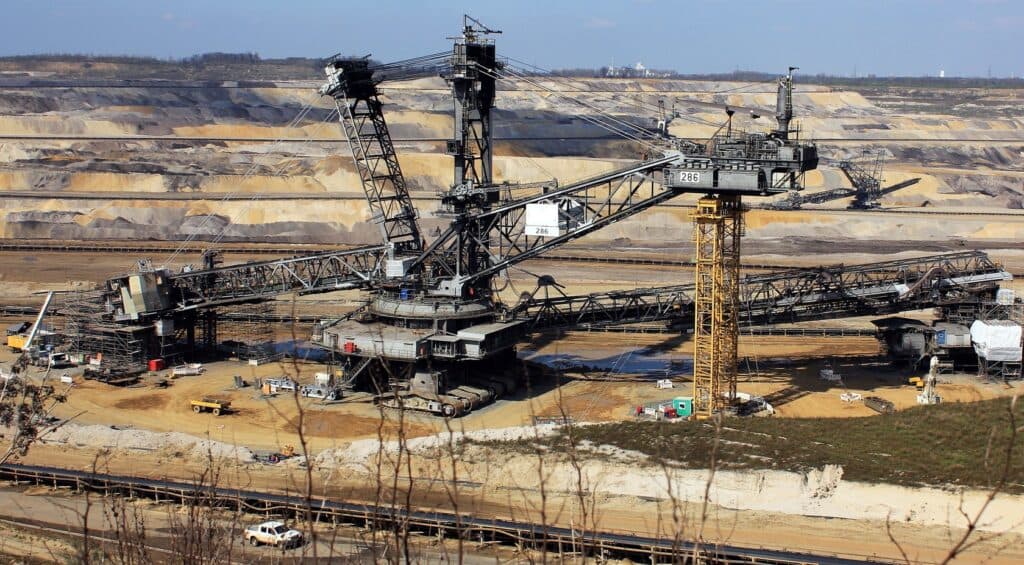
In connection with the Coal Commission's deliberations, journalist Šárka Loukotová asked me several questions related to my views on the possibility of the Czech Republic moving away from coal-fired sources. She then used some parts of my answers in a ČTK report. Some readers may find it interesting to read the full answers.
Answers to questions from ČTK journalist Šárka Loukotová:
Which of the three coal phase-out scenarios currently under discussion do you consider the most appropriate?
The coal phase-out scenario should be phased in line with the replacement of coal-fired sources. It must be said that the capacity of coal-fired sources affects not only total electricity production, but above all is an important tool for grid regulation and ensuring electricity supplies when there is no wind or sunshine. Some reduction in total electricity generation from coal-fired sources is possible already now; we do not need to export it. However, capacity can only be reduced to an extent that ensures we have the necessary generating capacity available during winter temperature inversions.
Environmental organisations focus solely on closing coal units and pay far less attention to the possibilities of replacing them with low-emission sources. At the same time, they are vigorously opposing a stable low-emission source that could be a natural, reliable replacement for large coal units. It should be recalled that no major low-emission capacity has been built here for many years. Nor can this be expected to change in the coming years. I therefore believe that an earlier phase-out scenario than 2038 (which is, incidentally, also the date in Germany) is not possible. By then, the new unit at Dukovany could already be in operation, along with some wind and photovoltaic capacity and sources and systems for storage and grid regulation. It will then be clear what we are able to deliver in this area and what we can actually afford to shut down.
In your view, would a coal exit in Czechia before 2033 be possible?
In my view, it is not possible while maintaining security, industrial operations and living standards. By then, only a minimum of low-emission sources capable of replacing coal will have been built. The new nuclear unit certainly will not be operational. But there will also be very few wind turbines. Individual turbines may be built quickly, but certainly not enough capacity to significantly replace coal-fired sources.
Construction sites at both Dukovany and Temelín are prepared, and people living nearby support construction. By contrast, no realistic sites for wind turbines have yet been selected, and local residents are strongly opposed to construction near them or in environmentally valuable areas. At the same time, it should be recognised that the service life of the old Dukovany plant and all current photovoltaic and wind sources will end at the turn of the 2030s and 2040s. They will also need to be replaced.
Even the potential construction of gas-fired sources, including site selection, permitting and implementation, will take time. Moreover, gas-fired sources are not low-emission, and carbon neutrality certainly cannot be achieved with them. And gas will have to be imported from Russia, even if via Germany.
Do you think it is necessary, or realistic, to start shutting down coal-fired power plants already now, as some environmental organisations are calling for?
The question is what to focus on. Total electricity generation from coal can certainly be reduced already now. We do not need to export this electricity. Another question is how much capacity we can afford to shut down while still getting through winter inversion periods. So the number of coal-fired power plants that can be completely shut down is not very large. However, some of the least environmentally friendly and efficient plants could certainly be placed in a capacity reserve and operated in that regime. But conditions for this would need to be created, as they have been in some other countries.
What do you think will be the biggest pitfalls in this area in the coming years? What important steps will need to be taken?
The biggest pitfall is a rather highly irrational approach not only to energy. Very often, dreams and visions are presented as reality, and energy strategies are devised on the basis of campaigns without knowledge of the subject matter and real-world conditions. In Europe and our immediate neighbourhood, this is leading to a shortage of stable and reliable sources needed not only during winter inversions.
Germany will shut down all its nuclear sources and a number of coal-fired ones as early as 2022, without having real replacements for periods when there is no sunshine or wind. All our neighbours assume that they will import electricity from abroad at such times. The huge problem is that every energy mix and energy strategy has its advantages and risks. If we agree on a given energy strategy—as we have an approved state energy strategy and its update—then agreement and compromise are also needed on how to implement it. We can see that we are failing to achieve this, for example, in discussions on building the new unit at Dukovany or on how to support renewable sources.
And the easiest thing is to throw a spanner in the works. For politicians, the easiest and least risky approach is to promise everything vaguely, then ultimately do nothing in practice and postpone everything. In that case, they please—or at least do not alienate—the largest number of voters. That is why no low-emission sources have been built here for a long time. If we truly want to replace coal-fired sources and build a low-emission energy sector, we need to begin actually constructing the low-emission sources that would replace them, and also create a new regulation system to replace the role they play.
Translation disclaimer
This article is a machine translation of the Czech original and has not yet been fully reviewed. In case of any doubt, please refer to the Czech version.
Sdílejte článek prostřednictvím:
Topics:Opinion
You might also like
23 October 2026, 11:01
23 October 2026, 06:34