23 October 2026, 14:38
Loading...
What is the Chernobyl series about in Czechia?
Vladimír Wagner
10 June 2019, 15:17
Mr Josef Patočka wrote an article in Deník Referendum inspired by the Chernobyl series. Somewhat paradoxically, even according to the director of the series, his work is not so much about nuclear power as it is about the need not to conceal facts, not to withhold them, and to openly discuss all aspects from different perspectives. And this message is aimed above all at people such as those in the editorial office of Deník Referendum.
The editor-in-chief of Deník Referendum is Jakub Patočka, who is the father of the author of the aforementioned article. He takes a strongly anti-nuclear stance and, in a number of other areas, strictly imposes his personal view as dogma on this newspaper. As it features highly one-sided articles with a number of omissions of facts in the energy sector, I once tried to publish a somewhat different perspective here and present those missing facts. However, on the editor-in-chief's orders, I was told that nothing that did not fully correspond to the most dogmatic views of Greenpeace would ever be published here. This attitude of turning a blind eye to what they do not like and censoring everything that does not correspond to their ideological dogmas is precisely what the Chernobyl series criticises and what was also one of the causes of this accident.
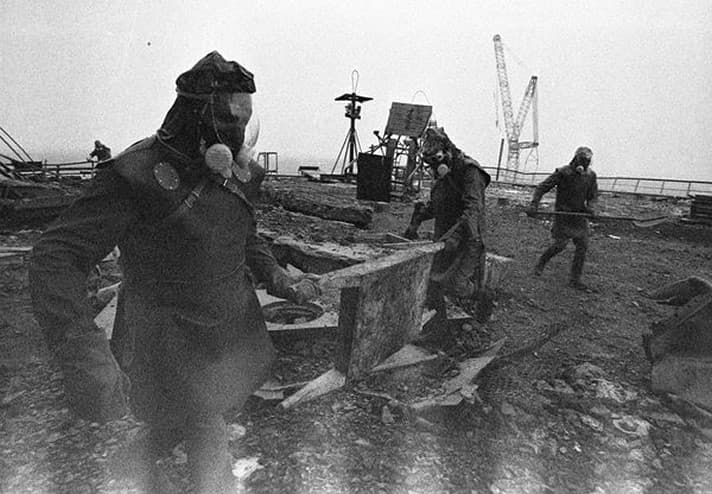
I do not consider it particularly useful to comment on Mr Patočka, but he mentioned me in the article and attacked me personally. I would therefore nevertheless like to respond to the article. In my view, the Chernobyl series is a very good and successful work. I have been dealing with nuclear accidents and the events at Chernobyl and Fukushima for many years. So it is clear to me that not everything in it is exactly as it happened or could have happened. A film has to contain simplifications in order to be understandable and watchable for viewers. Thus, although radiation-sickness burns appear only after a number of hours, in the film they arise immediately. A number of events have to be shortened and simplified, and many details must be omitted. The actions of a number of people have to be condensed into a single character with whom the viewer can then identify. On the other hand, one of the film's strongest moments, in my view, is the 90 seconds for which groups of soldiers, referred to as biorobots, are sent onto the roof to clear graphite fragments from the reactor core. It lasts exactly the aforementioned 90 seconds.
Another source of inaccuracies is the conflicting information that can be found not only on the internet. An example is the three power plant employees commonly referred to as divers, who waded through radioactive water in the basement. Their task was to open valves and allow the water that had accumulated beneath the reactor to drain away. If the corium formed by the melting of the reactor core had melted through into this area, there was a risk of another steam explosion and a further increase in radioactive releases. At the end of the fifth episode, it is explained that for a long time it was believed that these real heroes had died shortly after the accident. A great many sources on the internet also describe such an end for them. Yet in reality they lived long after these events, and two are said to still be alive today. In my lecture on the Chernobyl accident and on the current situation at these sites, which I gave three years ago for Pátečníci, I too subscribed to the incorrect version.
Personally, I believe that these inaccuracies in no way diminish the quality of the series. I strongly recommend that everyone watch this cinematic portrayal of the Chernobyl accident. In my view, especially in the fifth episode, both the technical and social causes of the accident are explained very well and clearly. Some inaccuracies can also be criticised here, but they can be corrected, if one is interested, by studying other sources of information. It is very interesting to read what the creator of the series says about its message. His other views can also be found in other appearances. He considers the main message to be the harmful effect of turning a blind eye to facts for various reasons because they are inconvenient. And even of concealing and censoring them, and suppressing discussion of them. The author demonstrates that this is not only an issue of the former Soviet Union by noting that, in the same year as Chernobyl, the Challenger space shuttle accident also occurred. And here too, turning a blind eye to indications warning of potential problems contributed significantly to the fatal accident.
However, Messrs Patočka absolutely do not understand or accept this message of the television series and of the Chernobyl accident itself. They regard turning a blind eye to facts that do not fit their ideological outlook as something natural. They consider the censorship of information and bans on its publication or presentation, wherever they can achieve it, to be useful and very positive.
Nuclear technologies have their drawbacks and risks, just like other energy sources. It is important to know about them and analyse them. That is also why it is very useful that a series about Chernobyl was made and sparked such interest. It is also why I give lectures and write articles on these subjects and discuss them openly. By contrast, Jakub and Josef Patočka not only do not want to discuss the risks and problematic aspects of other sources, but even ban such discussion and censor information in places where they are able to do so.
Views on a suitable energy strategy and the options available for the transition to low-emission energy may differ. I may have incorrect information and I may be wrong. As I was in the case of the three Chernobyl “divers”. Others may be wrong. However, it should be natural to present, compare and discuss the facts about problems. So that everyone can consider them and form their own opinion.
Josef and Jakub Patočka promote the German path of replacing nuclear and coal sources with gas, hydropower, biomass, photovoltaics and wind turbines. Let us look at the risks associated with these sources, which Deník Referendum is not allowed to write about.
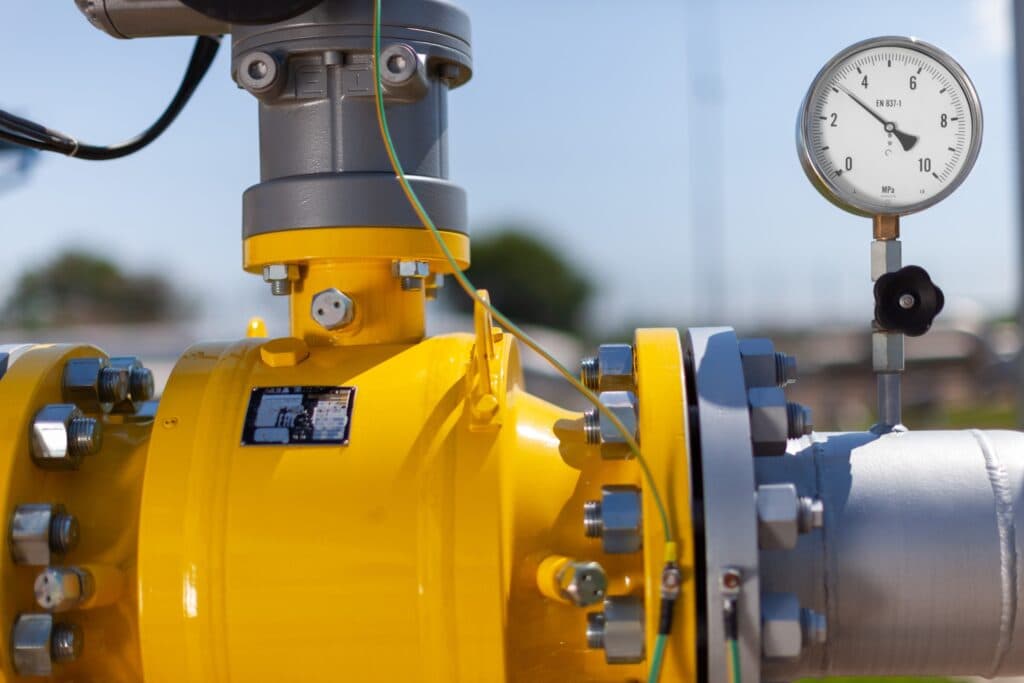
Germany is working intensively to implement the Nord Stream 2 pipeline, and gas will replace a large part of its nuclear electricity generation. Green activists also promote this replacement in Czechia. We are currently marking the 30th anniversary of the so-called Ufa disaster, also known as the explosion of the gas lake of death. This occurred in the Soviet Union three years after Chernobyl. Around 50 km from Ufa, Bashkiria's largest city, a huge pool of gas spread over a wide area through a crack in a gas pipeline. Its pipeline had originally been intended to transport oil and could not withstand the pressure needed to transport liquefied gas. By an unfortunate coincidence, two long passenger trains, each consisting of 38 carriages and providing services between Novosibirsk and the resort of Adler, met at an inopportune time on the Trans-Siberian Railway line, whose embankment was roughly one kilometre from the pipeline. They carried 1284 passengers, including 383 children. As they passed each other, they began braking and ignited the gas lake. The force of the explosion was comparable to that of the largest bombs. A total of 575 people died and more than 800 were injured. It was the worst rail disaster in Europe since the end of the First World War. Many other gas pipeline accidents or gas explosions, although not with such catastrophic consequences, could be listed. Explosions or other accidents connected with the production of biogas are also relatively common (see, for example, here).
Dam failures with large numbers of fatalities are not such exceptional events either, and the death toll can exceed a thousand. Nor need it be the greatest disaster, associated with the collapse of a cascade of dams in China. For example, more people died in the Fujinuma dam failure, triggered by the same natural disaster as the Fukushima accident, than in the power plant accident.
Czech green activist organisations promote biomass as the most important source for replacing coal and nuclear power. Yet increasing biogas production and the massive replacement of coal with biomass in electricity generation lead to the intensification of agriculture and the import of timber in large volumes over enormous distances. From an environmental perspective, however, the landscape should be protected from intensive agriculture and forests from extensive logging.
The transition to intensive use of wind power does not lead to the decentralisation of electricity generation in Germany, but rather to its even greater centralisation and transmission over far longer distances. Central authority of an equivalent scale is needed not only to push through the necessary high-voltage lines. Onshore, the density and size of wind turbines in suitable locations are already becoming so great that people are beginning to strongly object to them and they are very difficult to implement. Similarly, the main growth in solar panel capacity in Germany is now in large farms covering extensive areas, including agricultural land.
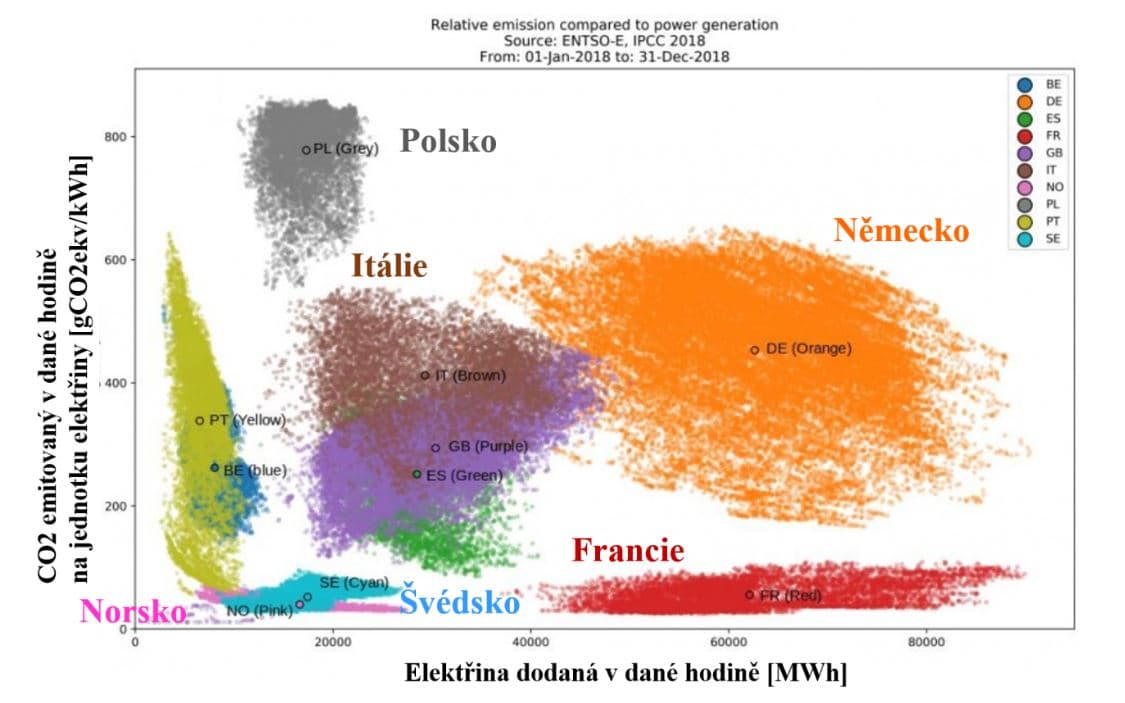
Despite the enormous effort and costs Germany has invested in its Energiewende, it is failing dramatically on emissions reductions compared with countries that have chosen a mix of nuclear and renewable sources. Even at France's worst times in terms of emissions and Germany's best, France has many times lower CO2 emissions per unit of electricity generated.
These are just a few of the facts that must not appear on the pages of Deník Referendum. As I wrote, every energy source has its positives and negatives. And it has its risks. Only if we know about them, analyse them and discuss them can we mitigate these risks. That is why facts should not be censored and we should not turn a blind eye to them. This is also why I discuss them in the aforementioned lecture on Chernobyl and lecture on Fukushima for Pátečníci.
In his article, Mr Josef Patočka reproaches me for writing about China's success in nuclear power: “Czech nuclear physicist Vladimír Wagner recently published an almost celebratory article on oEnergetice.cz entitled ‘At least in China, nuclear reactors are finally being built without delays’. Although he aptly chose the 30th anniversary of the massacre of protesters in Tiananmen Square for it, he did not ask why it is precisely one of the least free countries in the world where his beloved technology is doing best.” The fact that I see China as successful in a number of areas, not only in building nuclear facilities, certainly does not mean that I agree with the undemocratic practices of its leadership. If, through an ideological prism, I fail to see the successes of my ideological opponent and cannot learn from them, I may get into really serious trouble. I will get into even greater trouble if I obscure problems on my own side and cannot learn from them. And it is precisely through their thinking and outlook that Messrs Patočka resemble the Soviet apparatchiks described by the creator of the Chernobyl series in his work. If they could introduce censorship and a one-sided view according to their own ideas not only in Deník Referendum, it would inevitably lead to tragic outcomes. That is precisely what Craig Mazin seeks to warn against.
Opening photograph: Decontamination of the roof and removal of graphite remains from the reactor core in reality (source: Igor Kostin, http://www.chernobylgallery.com)
Translation disclaimer
This article is a machine translation of the Czech original and has not yet been fully reviewed. In case of any doubt, please refer to the Czech version.
Sdílejte článek prostřednictvím:
You might also like
23 October 2026, 11:01
23 October 2026, 06:34