23 October 2026, 14:38
Loading...
Will decommissioned nuclear reactors be restarted?
Vladimír Wagner
27 September 2024, 11:30
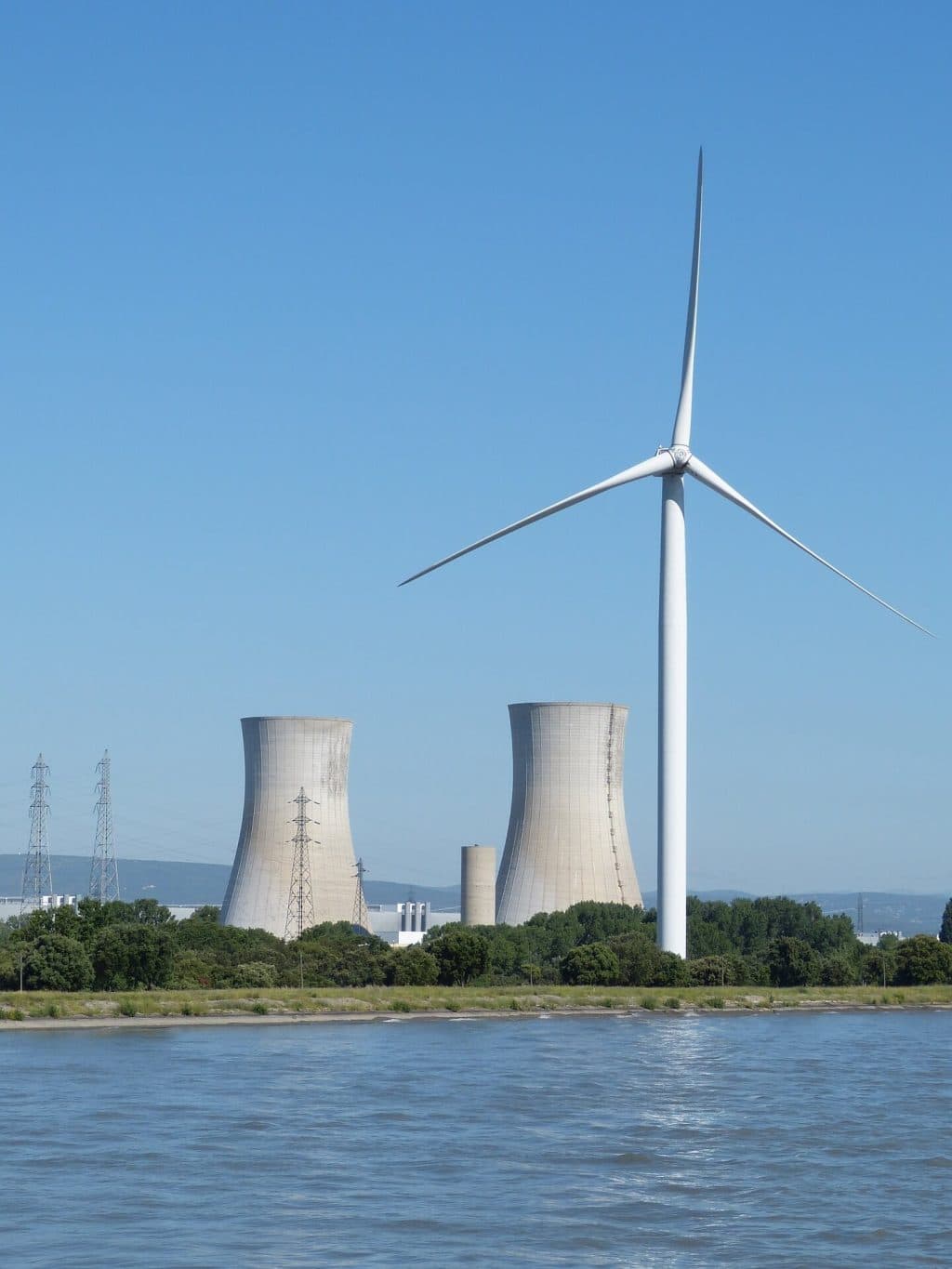
The electrification of transport and industry, and above all rising electricity consumption by data centres linked to the deployment of artificial intelligence, are driving growth in electricity demand that will accelerate further in the future. At the same time, a number of fossil-fuel plants are being shut down, and there is a dramatic emerging shortage of stable sources that do not depend on the weather. Data centres in particular need stable electricity supplies. As a result, there are growing numbers of cases in which the restart of already decommissioned nuclear units is being considered.
In the United States, Canada and the European Union, it is currently expected that, despite significant efforts to save electricity, the ongoing electrification of transport, industry and heating, together with rising consumption by data centres not only in connection with the development of artificial intelligence, will lead to a fairly dramatic increase in electricity consumption. A wide range of industrial processes, as well as the aforementioned data centres, require stable electricity supplies.
At the same time, these regions are beginning to face a shortage of stable electricity sources as fossil-fuel plants are shut down and reliance on weather-dependent renewable sources increases. While nuclear reactors were being shut down during the first two decades, including for economic reasons, there has been growing pressure in recent years to extend their safe operation for as long as possible.
Intensive programmes are under way to refurbish and upgrade existing older units. An example of such a successful project is the gradual refurbishment of the entire fleet of Canadian CANDU heavy-water reactors. This involves replacing fuel channels and steam generators, as well as improving and modernising a range of auxiliary systems to bring them into line with current standards, including safety standards. Refurbishment enables a reactor to operate for a further 20 to 30 years. It has been completed, is under way or is being prepared at the Bruce nuclear power plant (refurbishment of units 1 and 2 was completed in 2012, that of unit 6 in 2023, and work on the other units is being carried out or prepared; the plant has eight units in total), Darlington (refurbishment of unit 2 was completed in 2022, unit 3 in July 2023, unit 1 is to be completed in the final quarter of 2024, and work on the final unit, unit 4, is now roughly halfway complete), Pickering (units 2 and 3 of this eight-unit plant have been shut down, while the remaining units are in operation and units 5 to 8 are expected to undergo refurbishment and have their operation extended in the future) and Point Lepreau (refurbishment was completed in 2012).
Palisades reactor
In the United States, several nuclear reactors were shut down for economic reasons, as they could compete only with great difficulty against cheap shale gas and subsidised renewable sources. As already mentioned, the situation has changed dramatically in recent years, and the resumption of operation at some of these recently shut-down nuclear reactors is now being considered.
The single-unit Palisades plant in Michigan is closest to a possible restart. It is an 805 MWe pressurised water reactor cooled by water from Lake Michigan. It entered operation at the end of December 1971. It was permanently shut down for economic reasons after more than 50 years of operation. The reactor was initially operated by Nuclear Management Company and owned by CMS Energy. It was sold to Entergy in 2007. Entergy decided to shut it down for economic reasons as early as 2016, with the shutdown carried out in May 2022. It subsequently transferred the plant, along with its operating licence, to Holtec International, a company active in the nuclear industry that also deals with the decommissioning of nuclear facilities. Fuel assemblies were removed from the reactor in June 2022.
However, Holtec's objective changed in this case. It decided to return the reactor to service. Shortly after taking over the Palisades nuclear power plant, Holtec applied for support from the US Department of Energy (DOE). Its first application was unsuccessful, but the next one succeeded. Given the importance of this low-emission source for the state of Michigan, the company also received financial support for restarting the unit from the state. A preliminary agreement with Wolverine Power Cooperative to purchase two-thirds of the reactor's output for several decades was also crucial to the decision to operate the nuclear plant. The agreement would also cover two small modular reactors that Holtec would like to build at the plant site in the future. These would be a type of small modular reactor being developed by the company.
The company has managed to secure a substantial amount of funding to carry out the reactor restart, is working intensively on it and is in talks with the US Nuclear Regulatory Commission (NRC). Chemical cleaning of the primary coolant circuit and detailed inspections of the internal parts of the reactor vessel have been carried out at the plant site. At the same time, refresher training and licence renewals are under way for 26 of the unit's original operators, while new staff are being recruited and trained. In mid-September, inspections of the steam generators, turbine and electrical systems were being completed. Buildings are being reviewed and a gradual refurbishment programme is under way.
The restart is expected to take place at the end of 2025. It is not yet clear how long the reactor will be able to operate, but some reactors in the United States already have licences for 80 years of operation.
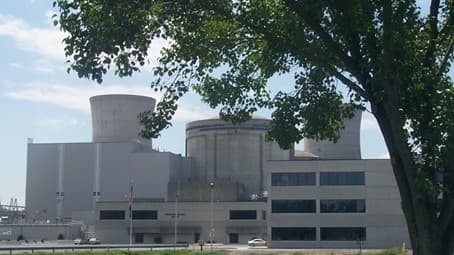
The Three Mile Island reactor could restart in 2028 (source: NRC/Exelon).
Three Mile Island reactor
Another reactor that could return to operation after permanent shutdown is unit 1 at the Three Mile Island plant in Pennsylvania. Constellation has signed a 20-year electricity offtake agreement with Microsoft, which will use it to supply its data centres. This was already reported in yesterday's article.
It is an 837 MWe pressurised water reactor that was commissioned in 1974 and shut down in September 2019 for economic reasons. However, in September 2024, Constellation, which has owned the unit since 1999, decided to return it to service. This is expected to take place in 2028. As with Palisades, a range of refurbishments and checks will need to be carried out before the restart, covering the reactor vessel, primary coolant circuit and a range of support systems. A number of inspections will also need to be carried out under the supervision of the US Nuclear Regulatory Commission (NRC), and the necessary permits obtained. This reactor could also then operate for several decades.
Interestingly, there is a second unit at the site, known for the 1979 accident involving a core meltdown. Its impact on the surrounding area was minimal, but the reactor was destroyed and heavily contaminated. The clean-up of the accident and decontamination of the reactor were completed in 1993. The full decommissioning of the Three Mile Island reactor was postponed for economic reasons until the end of operation of unit 1, so that they could be decommissioned together. More detail on the decommissioning of retired and damaged nuclear units was provided in an earlier two-part article (here and here).
Conclusion
The possibility of restarting some recently shut-down nuclear units is a very attractive option. Naturally, it is associated with a range of questions concerning not only the economics of refurbishment and continued operation. It will be very interesting to see whether this can be achieved in at least one of the cases described. At a time when the future growth in electricity consumption and the need for stable low-emission sources are becoming evident in an extreme form, these cases will be watched very closely not only in the United States.
Lecture on the future of nuclear energy at Brno University of Technology:
Translation disclaimer
This article is a machine translation of the Czech original and has not yet been fully reviewed. In case of any doubt, please refer to the Czech version.
Sdílejte článek prostřednictvím:
Topics:Opinion
You might also like
23 October 2026, 11:01
23 October 2026, 06:34