
23 October 2026, 14:38
Loading...
EU resource adequacy outlook: Europe needs new dispatchable generation and grid development
Klára Čeperová
11 April 2025, 06:49
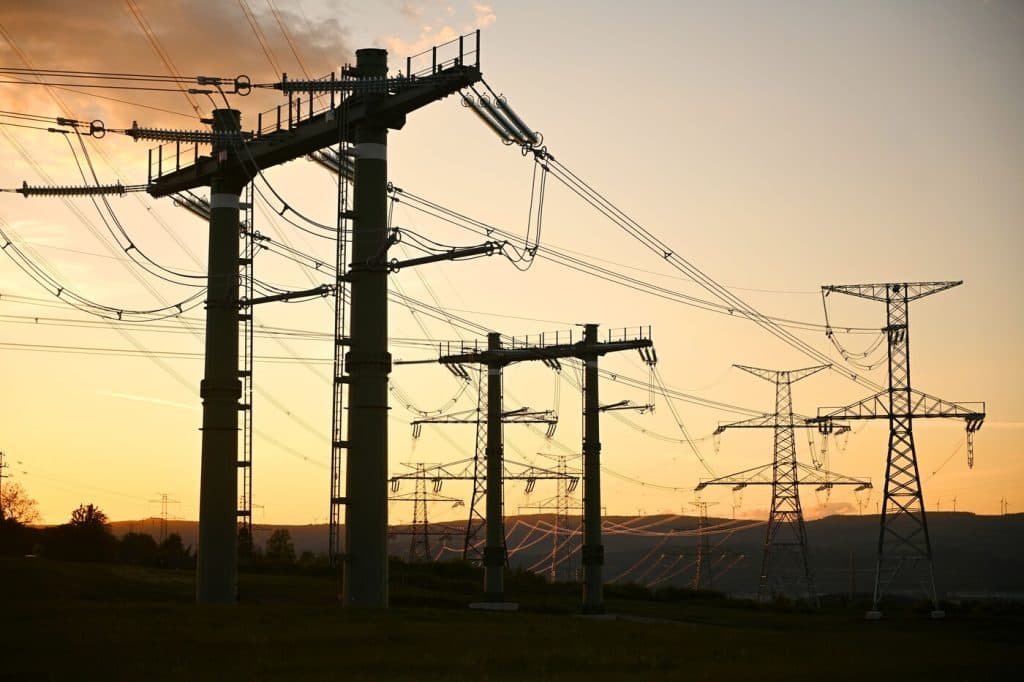
The European Network of Transmission System Operators for Electricity (ENTSO-E) has published its annual assessment of electricity supply security in Europe for the next ten years. The assessment provides an integrated pan-European perspective for 2026, 2028, 2030 and 2035, showing that several European countries face or will face challenges in maintaining reliable electricity supplies.
The decarbonisation of the European economy also means that the electricity generation mix must be rebuilt. However, ENTSO-E warns in its resource adequacy report that, over the medium term, it expects dispatchable power plants using fossil fuels to be retired.
Although the association expects renewable capacity to increase, it says this will not be enough to offset the expected decline in dispatchable capacity and growing electrification by 2035.

ENTSO-E: Renewable energy development
Need for new dispatchable generation
The modelling showed that more than 50 GW of new flexible gas-fired capacity would be needed to ensure sufficient capacity during peak periods or when renewables are not generating enough electricity.
There are two challenges, however. The first is the decarbonisation targets already mentioned, which envisage replacing fossil fuels with renewables. The second is that investing in new capacity that would generate electricity for, say, only a few hundred hours a year is likely to be too risky for investors.
One solution to the first challenge is to develop infrastructure, including cross-border transmission networks that can deliver electricity from where it is generated to where it is consumed, and to increase the capacity of grid flexibility and storage resources.
Targeted interventions and long-term market mechanisms could help reduce risks for investors. “Support mechanisms and capacity markets need to be accelerated,” the report says.
Meeting demand
The report also provides forecasts for the LOLE reliability indicator for individual European countries. LOLE represents the number of hours per year during which electricity generation is statistically expected to fall short of demand.
For the Czech Republic, the model forecasts the highest LOLE value in 2028, at up to 19,9 hours. By comparison, the Czech National Energy and Climate Plan from 2024 states that annual LOLE should be below 15 hours. However, according to both ERAA and the latest Resource Adequacy Assessment of the Czech electricity system through 2040 (MAF 2023), prepared by Czech transmission system operator ČEPS, a. s., the current reliability standard for the Czech Republic is 6,7 hours.
ERAA simulations also show that the Czech Republic will not meet its current reliability standard in 2030, when LOLE is forecast at approximately 11 hours, or in 2035, when LOLE falls to 7,4 hours.

ENTSO-E: LOLE indicator in 2028
Translation disclaimer
This article is a machine translation of the Czech original and has not yet been fully reviewed. In case of any doubt, please refer to the Czech version.
Sdílejte článek prostřednictvím:
You might also like


23 October 2026, 11:01


23 October 2026, 06:34