25 September 2026, 09:51
Loading...
Environmental groups challenge lawsuits against emissions standards for large combustion plants

David Vobořil
20 March 2018, 06:41
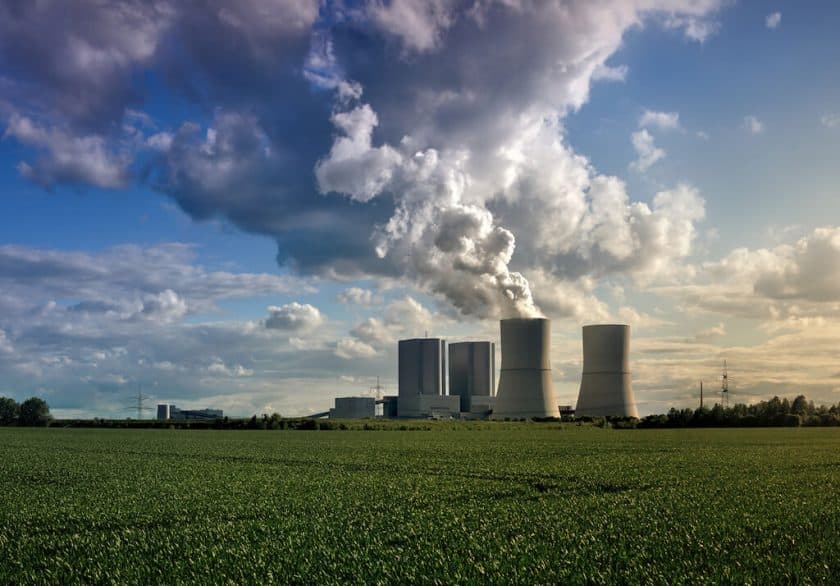
Lawsuits against the European Union's new emissions standards for large combustion plants (Large Combustion Plants BAT reference documents – LCP BREF) are now being challenged by environmental non-governmental organisations, which have decided to join the proceedings and defend the European Commission's approach.
In November last year, coal power plant operators and lobbying groups launched legal action against the European Commission over the revised LCP BREF air quality standards, which EU Member States approved in April.
Environmental groups the European Environmental Bureau (EEB) and ClientEarth have now decided to intervene. They challenge the coal industry's claim that the European Commission failed to follow the proper procedures when setting the standards, arguing that the updated limits are no more than a „modest step forward“, requiring power plants to reduce pollution in line with tried-and-tested techniques that have been used for decades.
„Pollution from European coal power plants contributes to 20,000 premature deaths, 458,000 childhood asthma attacks and healthcare costs exceeding EUR 50 billion per year, yet the coal lobby's case argues that the new measures place a disproportionate burden on plant operators,“ the EEB says.
The court will now have to rule on the matter.
Nitrogen oxide emissions are the main subject of the disputes
LCP BREF is part of the EU's 2010 Industrial Emissions Directive and applies to power plants with a thermal input exceeding 50 MW. National authorities may grant eligible plants a derogation from the new stricter standards, assessed on a case-by-case basis and subject to public scrutiny. Otherwise, if limits are exceeded, power plants must be closed or their operating time reduced to a maximum of 1,500 hours per year.
Particularly controversial is the annual average NOx emissions limit of 175 mg/m³ for coal-fired power plants with a thermal input of 300 MW or more, fitted with fluidised-bed boilers commissioned before 7 January 2014 or pulverised-fuel boilers burning lignite. This standard is likely to require many lignite-fired power plants to install equipment to reduce NOx levels in flue gas.
Power plants in Central and Eastern Europe are the most at risk, where around 25 GW of installed lignite-fired capacity exceeds the NOx limits. In Germany, an estimated 10 GW of installed lignite-fired capacity lacks NOx emissions control equipment, of which 2.8 GW will be transferred to the lignite reserve.
European Commission sued by coal associations and Poland
Euracoal, the European association representing the European coal industry, backed by the German lignite industry, has filed a lawsuit against the standards for nitrogen oxides and mercury emissions from European lignite-fired power plants.
The lawsuit focuses on alleged procedural errors made by the European Commission before Member States voted on the revised limits. The case, which was published in the Official Journal of the EU in January, claims that the Commission failed to comply with binding deadlines by introducing an amendment to the draft decision and calling for an immediate vote, thereby „breaching its obligation“ to gather the maximum support in an „objective manner“.
„The substantive decisions, in particular the [emission limits] for NOx and mercury, fundamentally fail to take into account the requirement of technical and economic availability, which follows directly from Directive 2010/75/EU, and thereby place a disproportionate burden on the operators of the plants affected by these rules. This situation inevitably creates the impression that the content of the contested rules was based on political decisions, which are unacceptable in the drawing up of BAT conclusions,“ the lawsuit states.
„In this way, the Commission once again abused its position and exceeded its powers,“ the lawsuit further states.
While the case focuses on emissions limits for NOx and mercury, it seeks the annulment of the entire decision, which applies to approximately 2,900 large combustion plants using various types of fuel.
Poland, supported by Bulgaria, is also challenging the updated standards in a separate case filed in October last year. The Czech Republic also considered joining the lawsuit, but the government ultimately decided at its meeting not to join it.
Like the Euracoal case, Poland focuses on alleged procedural errors before the limits were adopted. Poland claims that the European Commission used an „inappropriate method for calculating the qualified majority“ when adopting the challenged decision, set the new limits „on the basis of inaccurate and unrepresentative data“, and failed to carry out an impact assessment before setting „excessively high“ limits.
The Polish Electricity Association (PKEE), which brings together four vertically integrated state-owned energy companies, estimates that 23 GW of coal-fired power plants, nearly all of the country's installed capacity, require additional investment to comply with the revised limits.
Translation disclaimer
This article is a machine translation of the Czech original and has not yet been fully reviewed. In case of any doubt, please refer to the Czech version.
Sdílejte článek prostřednictvím:
You might also like
24 September 2026, 11:23

24 September 2026, 10:30
24 September 2026, 06:56