
17 October 2026, 13:09
Loading...
Czech gas consumption rose at double-digit rate in first quarter, largest distributor data show

Martin Voříšek
14 April 2021, 10:00
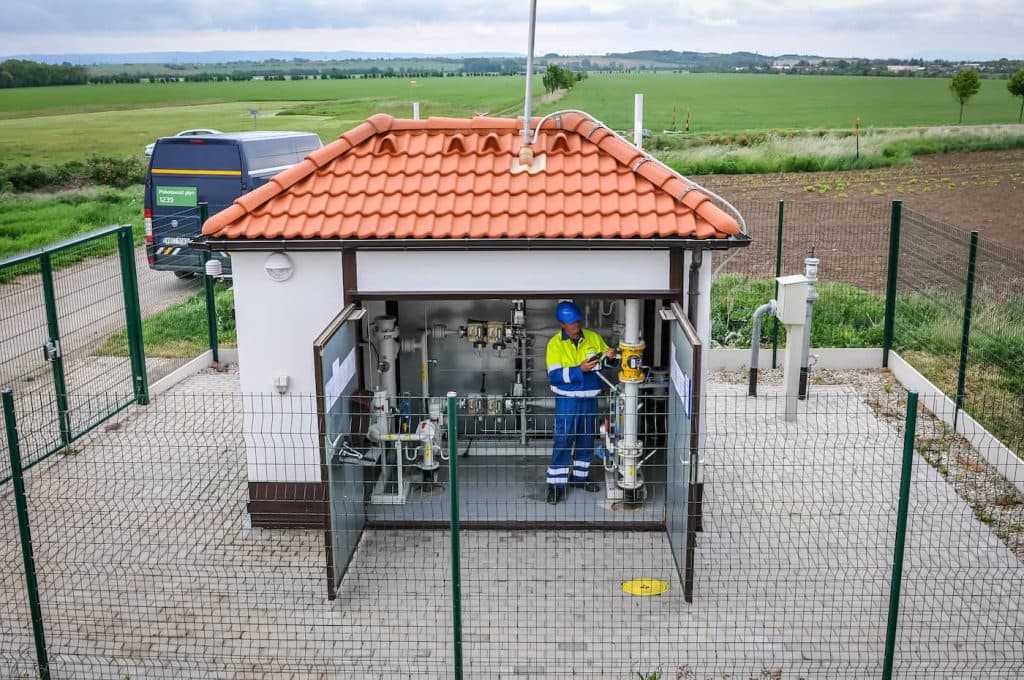
Gas consumption in the Czech Republic rose sharply in the first quarter, according to statistics from distribution company GasNet. According to the company’s data, gas consumption in its service area increased by approximately 14%. This was primarily due to lower average temperatures at the start of the year and the associated higher energy consumption.
Relatively cold weather compared with last year made a significant contribution to increased natural gas consumption in the first three months of this year. While the first two months of 2020 were assessed as warmer than average, temperatures returned to normal levels this year.
The most significant temperature shift was seen in February, when the year-on-year temperature difference was 4.5 ˚C. This was reflected in the substantially higher volume of gas distributed that month: while 764 mil. m3 of natural gas passed through the company’s pipelines last year, this year the figure was 930 mil. m3, around one-fifth more.
March was also significant for natural gas distribution in GasNet’s network, which distributes natural gas across approximately 80% of the Czech Republic’s territory, with the volume of gas distributed increasing by 19%. In March alone, 839 mil. m3 of natural gas flowed through GasNet’s network, an increase of 132 mil. m3 compared with 2020.
“Over the past 10 years, we have recorded higher distribution volumes in March only twice. Between January and March 2021, we distributed 2.783 billion m3 of natural gas. That is 340 million m3 more than last year. Colder weather had an impact, with the first half of February already being very cold,” says Jiří Zdvořáček, director of distribution dispatching at the GasNet Group.
Boiler subsidies support gas consumption, while district heating plants’ switch to natural gas will also have an impact
GasNet’s statistics also point to a clear increase in interest in gas among households. Boiler replacement subsidies have boosted interest in natural gas heating. The statistics show that more than 60,000 households have stopped heating with solid fuels and switched to natural gas.
Natural gas consumption is also expected to increase in future as coal-fired district heating plants switch to natural gas. The main reason for the transition is the continually rising price of emissions allowances. Reducing emissions by switching to natural gas is therefore a logical step towards saving costs in heat production.
Translation disclaimer
This article is a machine translation of the Czech original and has not yet been fully reviewed. In case of any doubt, please refer to the Czech version.
Sdílejte článek prostřednictvím:
You might also like

16 October 2026, 10:16