
23 October 2026, 14:38
Loading...
Czech state to lend Orlen Unipetrol up to 330.000 tonnes of oil for its refineries

oEnergetice.cz, ČTK
5 March 2025, 21:12
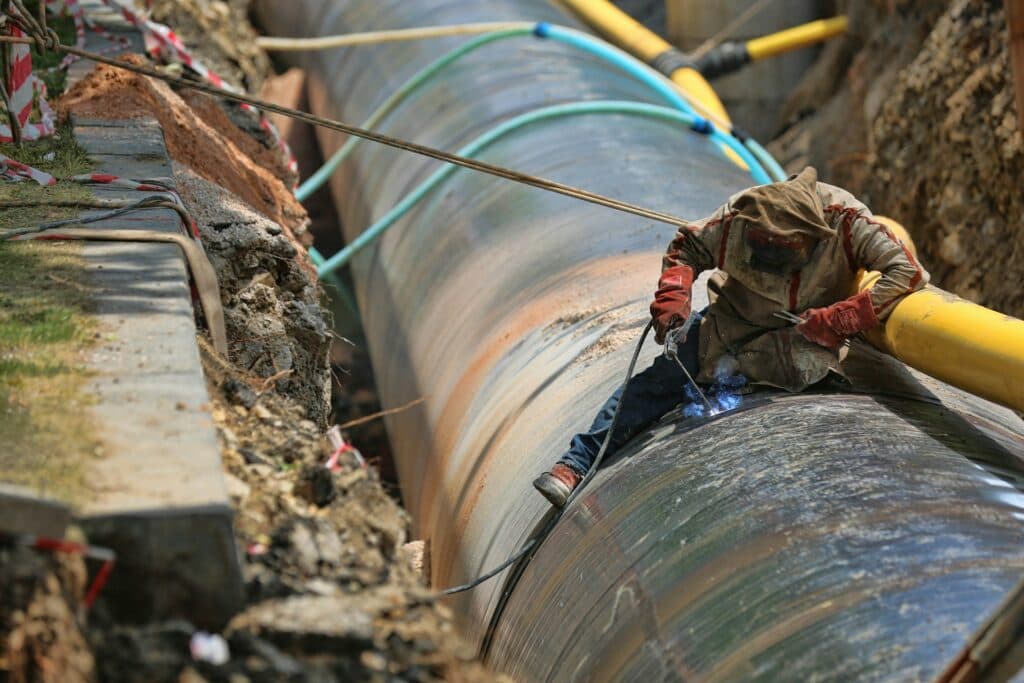
If supplies through the Russian Druzhba oil pipeline are disrupted for a longer period, the state will lend Orlen Unipetrol up to 330.000 tonnes of oil from its emergency reserves, enough to keep the refineries running for more than a month. The loan, which represents a third of the state’s reserves, is intended to ensure an adequate supply of oil on the Czech market. The government made the decision today, Pavel Švagr, head of the Administration of State Material Reserves (SSHR), told reporters. He said there was no risk of an oil shortage on the domestic market.
Oil stopped flowing through the Druzhba pipeline to the Czech Republic on Tuesday morning. Supplies via the western route continue through the IKL and TAL pipelines. The head of the SSHR did not comment on why oil deliveries had been halted. Industry and Trade Minister Lukáš Vlček (STAN) said on Tuesday on Czech Television (ČT) that the halt in supplies to the Czech Republic was due to payments between Orlen Unipetrol and Russian suppliers not going through. Payments were stopped because of problems arising from the latest package of sanctions imposed on Russia by the United States, the Reuters news agency reported today, citing two sources.
„This is a standard loan that will ensure a stable supply of fuels to the Czech market. If supplies through Druzhba are not restored, we will switch to supplies from the TAL pipeline, which is already technically ready. Czech households and businesses therefore do not need to worry that the situation will affect them,“ Minister Vlček said.
According to Švagr, the refineries can draw on the loan almost immediately, although Orlen Unipetrol will probably use its own reserves first. The loan agreement is expected to be signed by the end of the week. If the refineries do use the loan, the company will later return non-Russian oil of the type currently used by the Kralupy refinery. The refineries will draw the loaned oil from the reserves gradually through the end of June and should return it by the end of August, the Industry Ministry said.
„In practice, this means that the Czech market will continue to receive a steady supply of fuels and other petrochemical products, so there is no reason for any speculative increase in fuel prices,“ Švagr stressed.
He said the administration was ready to discuss releasing further reserves if the loan proved insufficient. Even after the initial loan, the SSHR’s storage facilities will still hold enough oil for around 60 days of operations.
According to Švagr, Orlen Unipetrol is also already taking steps to secure alternative types of oil that could reach the Czech Republic through the IKL pipeline and the expanded TAL pipeline from Italy, which connects to it.
Oil from Druzhba is still processed at the Litvínov refinery. In recent months, Orlen Unipetrol has said it had modified the technology and that the Litvínov refinery was technically ready to process other oil blends. The Kralupy refinery has not used Russian oil for some time.
Oil deliveries through the Russian Druzhba pipeline were also interrupted for several days last December. The government then also decided as a precaution to lend Orlen Unipetrol oil from emergency reserves to cover supplies in the event of a longer disruption. After supplies through Druzhba resumed, the emergency reserves ultimately did not need to be used.
Until now, oil has reached the Czech Republic from two main sources. One is the Druzhba pipeline, which carries oil from Russia. It accounted for 42 percent of supplies last year. The rest of the oil arrives via the German IKL pipeline, which connects to the Italian TAL pipeline.
The state plans to increase supplies through the TAL pipeline in the future. The state-owned pipeline operator Mero completed technical work on its expansion at the end of last year and finished testing it on Tuesday. According to Vlček, it could be fully operational within weeks. Under current plans, the project, costing approximately 1.6 billion crowns, is expected to increase capacity for the Czech Republic by four million tonnes of oil a year from around the middle of this year, allowing up to eight million tonnes a year to be delivered to the country through the pipeline. The government says this could enable the Czech Republic to completely cut itself off from Russian oil.
The TAL pipeline begins in Trieste, where oil is imported from several countries and continents. The largest share comes from areas around the Caspian and Black seas, the United States and Africa.
Translation disclaimer
This article is a machine translation of the Czech original and has not yet been fully reviewed. In case of any doubt, please refer to the Czech version.
Sdílejte článek prostřednictvím:
You might also like


23 October 2026, 11:01


23 October 2026, 06:34