11 October 2026, 08:24
Loading...
Germany needs a plan to phase out gas and oil, government advisers say

David Vobořil
15 December 2025, 10:56
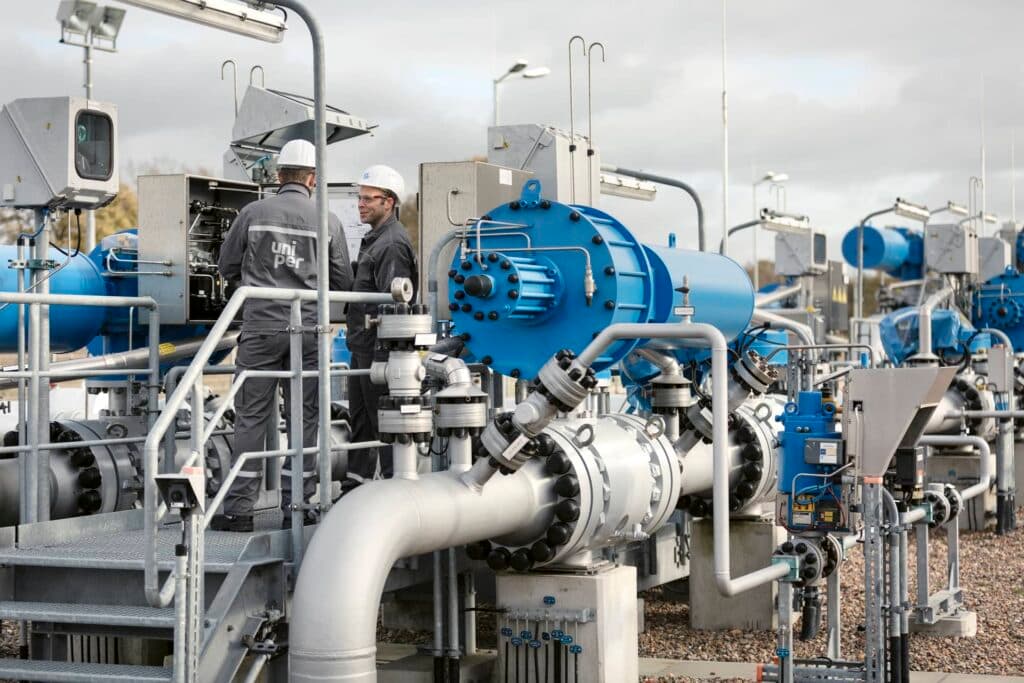
Germany lacks a strategy for ending the use of natural gas and oil, warns the government’s expert commission tasked with monitoring the energy transition. While the coal phase-out is on track, according to the advisers, there are no binding milestones or mechanisms for a managed reduction in gas and oil consumption. If the government does not promptly present a concrete plan, experts warn, this could lead to economic losses, infrastructure problems and risks to the security of energy supplies during decarbonisation.
In its new report, the German government’s independent expert commission on monitoring the energy transition points out that while the coal phase-out is enshrined in law and progressing as planned, there is no strategy at all for gradually ending the use of natural gas and oil. The commission says the government must immediately draw up phase-out scenarios for both energy sources, or the energy transition will be uncoordinated and exposed to significant risks.
Germany plans to achieve climate neutrality by 2045, meaning fossil fuel consumption is expected to fall sharply over the next two decades, government advisers said. Reducing fossil fuel consumption will have a significant impact on infrastructure, the security of energy supplies and German companies in the sector, such as refineries.
Coal phase-out on track
According to the assessment report, Germany’s coal phase-out, currently planned for no later than 2038, is on the right trajectory. After a brief increase in coal-fired power generation during the energy crisis in 2021 and 2022, both generation and the installed capacity of power plants are falling again.
The advisers criticise the complex and partly inconsistent system of reserve capacity, under which power plants are not fully taken out of service so they can be used if needed. This is very costly and should be reformed, they said.
At the same time, the commission warns that Germany must ensure sufficient dispatchable power plant capacity. Without it, demand may not be met securely during periods of low renewable energy generation. This includes new gas-fired power plants capable of switching to zero-emission fuels later, battery storage and other technologies for balancing supply and demand.
“Given the slow pace of network and infrastructure expansion and the slow growth in dispatchable capacity, such as gas-fired power plants, it remains unclear to what extent the coal phase-out can be achieved without extensive accompanying measures, such as placing coal-fired power plants in high-cost reserves,” the report says.
What next for gas?
According to the report, the government must establish a clear trajectory for the use of natural gas in heating, power generation and industry. Such a plan is also necessary because the expected decline in consumption could undermine the economics of existing gas infrastructure.
The commission’s warnings are part of a broader European debate. In its 2025 assessment of German energy policy, the International Energy Agency (IEA) also recommended a clearly defined plan for gradually phasing out natural gas, to give the energy sector stable investment signals.
According to government experts, falling consumption could threaten infrastructure operators, but above all, prolonged uncertainty puts investors and households at risk. Without a clear strategy, companies are delaying investment in low-emission solutions, municipalities and cities do not know how to adapt their district heating systems, gas distributors have no plan for how their networks will be used, and consumers have no clear signals on when to switch to alternative heating.
The commission says climate neutrality by 2045 is possible only if the phase-out of coal, natural gas and oil proceeds in a coordinated way, with clear timelines, investment incentives and social measures that enable a just transition across social groups.
Translation disclaimer
This article is a machine translation of the Czech original and has not yet been fully reviewed. In case of any doubt, please refer to the Czech version.
Sdílejte článek prostřednictvím:
You might also like

10 October 2026, 13:19

10 October 2026, 07:37

10 October 2026, 07:02