LNG imports to Europe fell last year, but a record amount was traded worldwide
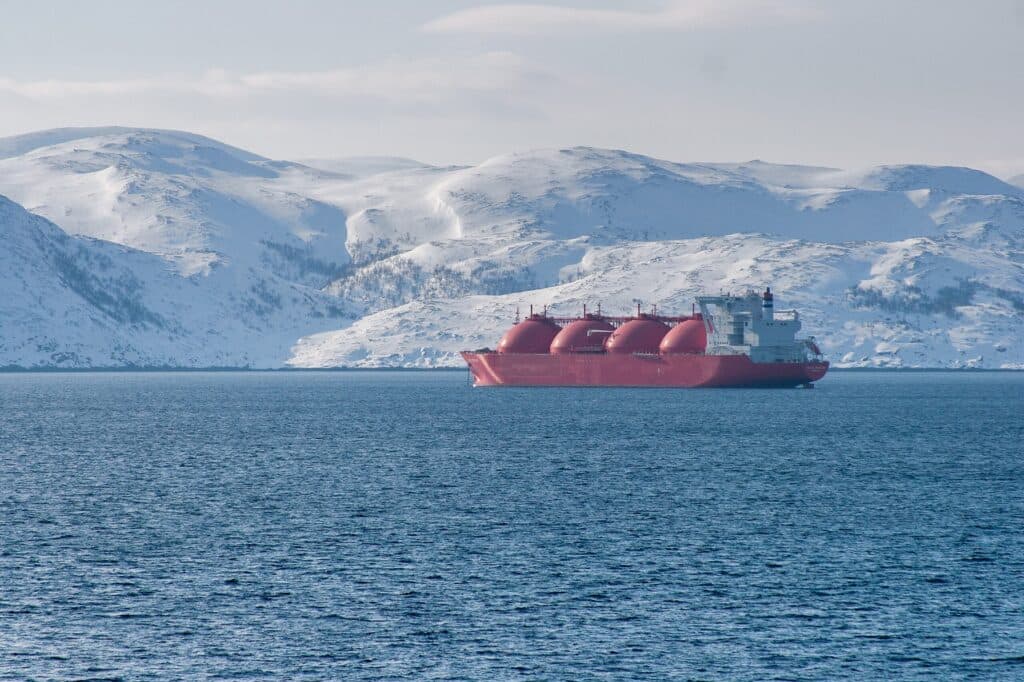
Global LNG trade grew by 2.4% last year. The Asia-Pacific region remains the largest exporter and is also the biggest importer. Total imports to Europe fell to their lowest level since 2021.
The International Gas Union (IGU) has published its LNG report, which says global LNG trade grew by 2.4% in 2024 to 411.24 million tonnes (MT). Despite subdued spot demand at the end of 2024, LNG trade expanded thanks to increased liquefaction capacity and rising exports from several key producers, including the United States, Russia, Indonesia and Australia.
European imports fell by 21.22 MT year-on-year to 100.07 MT, due to full storage facilities at the start of the year, stable pipeline flows and lower demand. The largest individual decline was recorded by the United Kingdom, where imports fell by 6.48 MT to 8.03 MT. Imports to France fell by 3.75 MT, Spain imported 3.49 MT less, while the Netherlands received 2.98 MT less LNG than in 2023.
However, this does not mean Europe has abandoned LNG. According to the outlook published in April by the European Network of Transmission System Operators for Gas (ENTSO-G), supplies of liquefied natural gas will be key to ensuring security of supply.
The decline in European LNG demand was more than offset by Asia, where imports rose by 12.48 MT to 117.97 MT, followed by the Asia-Pacific region, where they increased by 9.77 MT to 165.09 MT. The rise in supplies reflects demand for gas-fired electricity generation to power cooling during heatwaves, as well as lower LNG prices in early 2024, which encouraged more spot purchases in price-sensitive markets.
China remained the largest importer, with imports rising by 7.45 MT to 78.64 MT. India imported 26.15 MT in 2024, compared with 21.96 MT in 2023, an increase of 4.19 MT (19.1%). Japan and South Korea imported 67.72 MT and 47.01 MT, respectively, with both countries recording modest increases.
However, Asian demand is price-sensitive, said Cederic Cremers, president of Shell Integrated Gasses.
The Asia-Pacific region remained the largest exporter, shipping 138.91 MT, 4.10 MT more than in 2023. The Middle East followed with 94.25, up 4.11 MT from 2023.
The LNG market as a whole brought together 22 exporters and 48 importing markets. Since 2023, however, voices have been raised warning of a risk of market oversupply from 2027, with supply exceeding demand.
The trend is also expected to intensify towards the end of the decade as new liquefaction projects add to existing capacity. Several factors are contributing to this expected supply surplus, including an increase in new LNG export capacity and slower-than-expected demand growth in key importing regions.
However, Cremers told Reuters that he expects some current exporters to become importers in the longer term. These include Indonesia, Malaysia and Algeria. Their domestic demand for gas is expected to grow while production declines. The countries are therefore likely to join Egypt, which became a net LNG importer last year.
“Our forecast is that LNG demand will increase by 50 million tonnes between now and 2040,” Cremers said.
Fewer FID projects
The number of final investment decisions (FIDs) for the construction or expansion of liquefaction capacity also fell significantly in 2024. Projects with liquefaction capacity of 14.8 million tonnes per year (MTPA) reached FID, the lowest annual volume of approvals since 2020 and far below the 58.8 MTPA approved in 2023.
LNG projects are also being delayed, Reuters reports, due to problems stemming from the COVID-19 pandemic, which constrained new supplies in 2023 and 2024, bottlenecks in global supply chains and a labour shortage on the US Gulf Coast.
“Net production capacity growth in 2024 was only about 2 million tonnes per year, as a number of projects scheduled to come online were delayed,” Cremers said.
Projects that will boost LNG production include QatarEnergy’s North Field East natural gas expansion, which is due to start production in mid-2026. Companies in the US, which is the world’s largest LNG exporter according to IGU, plan to approve more than 90 million tonnes per year of new LNG production capacity this year, Reuters reports.
Cremers said latent demand and increased investment in infrastructure in Asia would help absorb the new supply.
Shell forecasts that global LNG demand will rise by around 60% by 2040, driven primarily by economic growth in Asia, energy-hungry artificial intelligence, and efforts to reduce emissions in heavy industry and transport.
Translation disclaimer
This article is a machine translation of the Czech original and has not yet been fully reviewed. In case of any doubt, please refer to the Czech version.




