
22 September 2026, 14:20
Loading...
People in Czechia’s Ústí Region support local lithium mining, survey commissioned by ČEZ finds

Lukáš Lepič
31 October 2023, 06:54
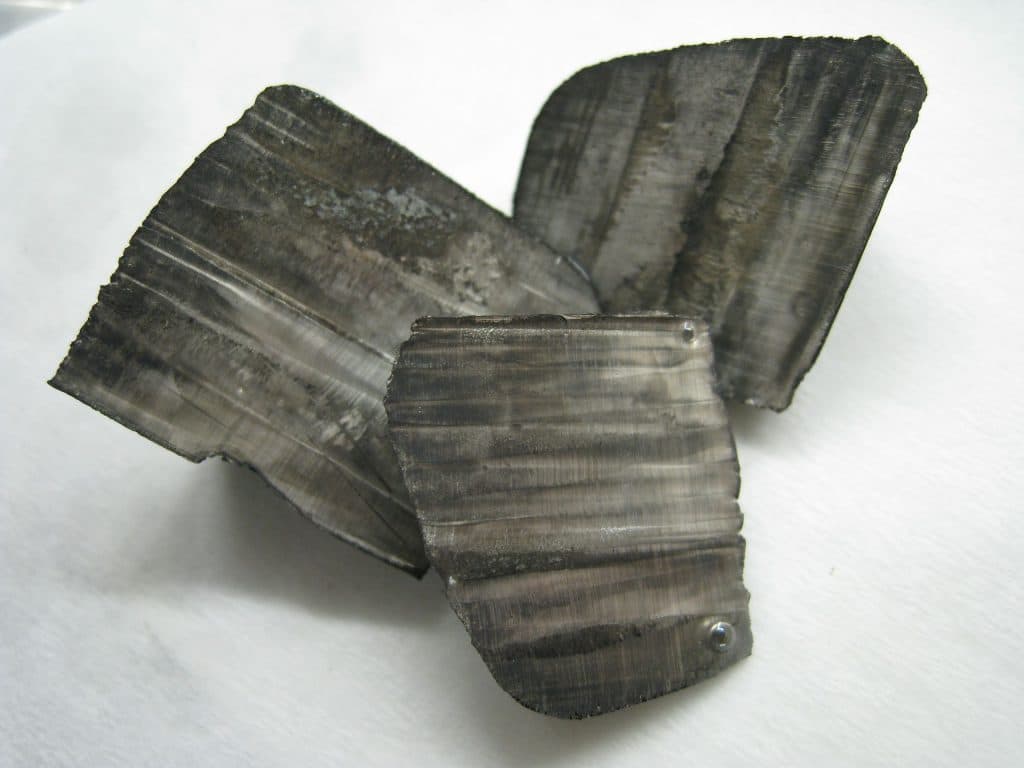
According to a survey conducted by the marketing agency International Business and Research Services (IBRS) among 700 people in the Ústí Region, the view that lithium mining could be beneficial slightly prevails. A total of 52% of respondents expressed this view. Support for the project is higher in the Teplice district, where an underground mine and processing plant are to be built. Prime Minister Petr Fiala also expressed support for the project during a visit to the Ústí Region at the end of September this year.
Underground mining at Cínovec is being prepared by Geomet, which is majority-owned (51%) by Severočeské doly, a member of the ČEZ Group. Based on the current state of work, mining is estimated to be able to start between 2026 and 2027. Timely receipt of a construction permit is crucial.
Given concerns over the negative impacts of mining and processing, ČEZ is holding ongoing talks with mayors of nearby municipalities. The survey also found that people in the region are most concerned about the impact on the environment and landscape in connection with lithium mining and processing. Company representatives are seeking to address these concerns by informing people about the future form of mining and its potential benefits for residents of the region.
Although one part of the Cínovec deposit could also be mined by open-pit methods, under the plans to date mining is to take place at a depth of 200 to 500 metres underground. Opening an open-pit mine does not appear feasible under current conditions.
Mining should therefore not leave traces on the character of the landscape, as is the case with coal mines, which represent a significant intervention in the local landscape in the region. “Before implementation begins, the project will undergo detailed approval processes that will ensure it meets the strictest environmental requirements,”said Martin Pohlodek, director of Geomet. Under current plans, most mining-related activities, such as separating ore from waste rock, will also take place underground.
In addition to ensuring compliance with all environmental requirements, possible compensation for local residents is also being considered. According to the mining company, surrounding municipalities will benefit from the mining itself and related economic activity, and will indirectly share in mining proceeds. The ČEZ Group says it intends to allocate substantial financial resources for the region and affected municipalities.
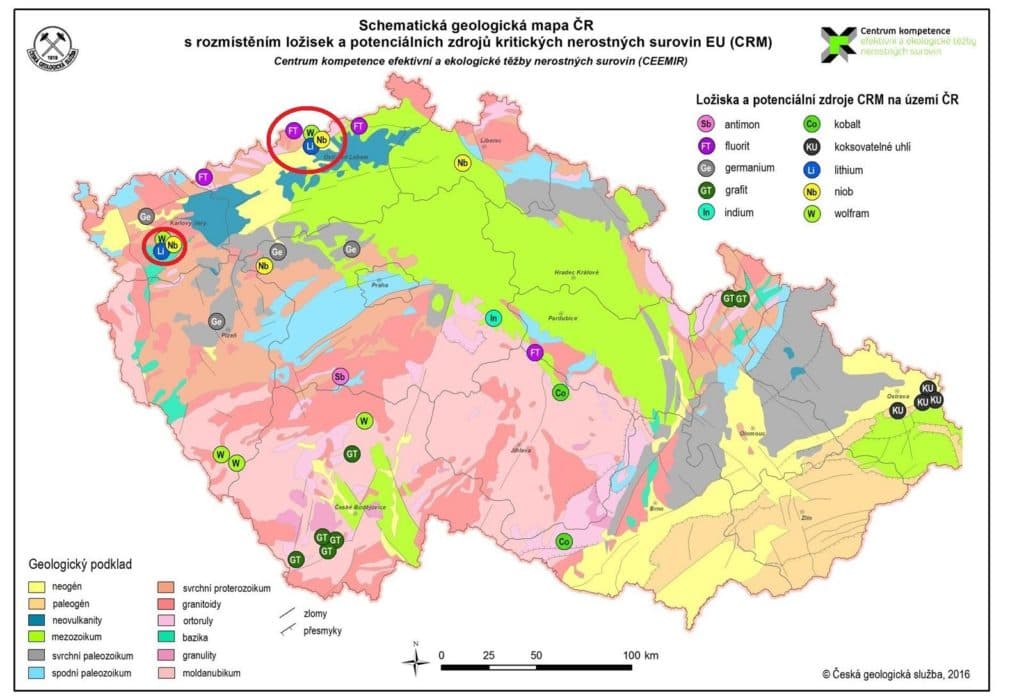
Geological map of the Czech Republic showing mineral deposits, and specifically lithium deposits at Cínovec and in the Krásno area Source: Czech Geological Survey
Geomet ready to buy land at proposed factory site
Plans to build a processing plant for lithium mined at Cínovec are also facing numerous protests from municipal mayors. It is to be built in the industrial park in the municipality of Újezdeček. This location was selected as the best option out of 21 sites examined. These included the cadastral areas of Chabařovice and Hrbovice, as well as the Vršany and ČSA open-pit mines and the Kohinoor underground mine in Mariánské Radčice.
According to the assessment, the Dukla site in the municipality of Újezdeček is the most suitable location in terms of available area, land stability, the possibility of screening residential areas and distance from spa resorts. According to Pohlodek, “there is no alternative more suitable for the processing plant than the Dukla industrial zone”. The process of selecting a suitable site began as early as 2015. Strong interest in the location is also confirmed by the fact that Geomet does not rule out buying family homes.
Government sees project as strategic, mayors want more information
Government representatives have also expressed long-term support for the project. The government sees it as key to increasing energy security and the successful transformation of coal regions.
“The government is doing everything to ensure lithium mining can begin,” said Prime Minister Petr Fiala at a meeting with municipal mayors in the Teplice area at the end of September.To facilitate the gradual implementation and further specification of the project, the government also wants to establish a working group to deal with it. Its members should include a government guarantor ensuring that municipalities, the region and residents are informed in detail. Mayors have long complained precisely about a lack of information. As the IBRS agency survey shows, support for the project increases with greater awareness.
“For us and our residents, it is important that we have sufficient information about the project, because it significantly affects us. A dialogue must be initiated with all affected municipalities, and decisions must not be made about us without us,”said Dubí Mayor Jiří Kašpar.
“The talks should be as open as possible, and I therefore welcome the commitment by ČEZ and Geomet to establish an information centre for citizens, continue public consultations and improve communication with representatives of municipalities and the region,” Kašpar added.
Translation disclaimer
This article is a machine translation of the Czech original and has not yet been fully reviewed. In case of any doubt, please refer to the Czech version.
Sdílejte článek prostřednictvím:
You might also like
22 September 2026, 12:50
22 September 2026, 06:09
21 September 2026, 15:25