Pressure is mounting on the French government to secure low electricity prices
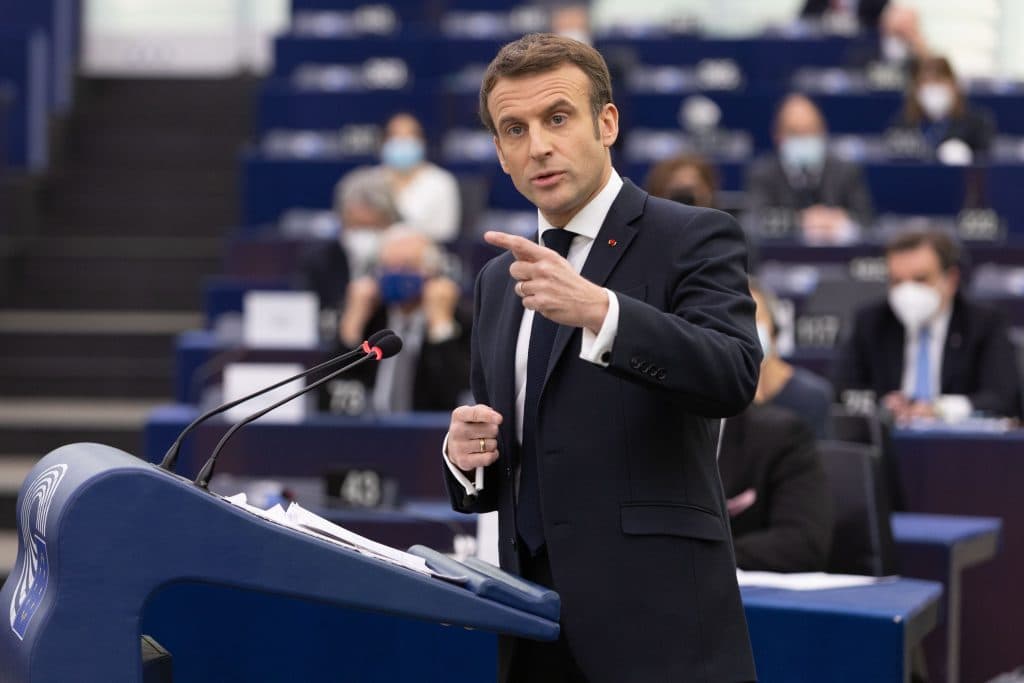
French opposition MPs have criticized what they see as the government’s inadequate efforts to curb electricity prices in EU talks on electricity market reform. They say the president is incapable of protecting the interests of the French people, Euractiv reports.
The European Commission presented a proposal for electricity market reform in March 2023 with the aim of curbing rising electricity prices caused by the war in Ukraine and reduced supplies of Russian gas. What was supposed to be a quick process, however, ended up in debates over state aid for electricity producers.
Nuclear vs. renewables
As part of the reform, Paris wants to apply so-called contracts for difference (CfDs), in line with the European Commission’s original proposal, to finance lifetime extensions for its 56 existing nuclear reactors.
This does not sit well with some countries preparing to transition to electricity generation from renewable energy sources. They fear that this would give France an unfair competitive advantage.
Spain, which currently holds the rotating presidency of the Council of the EU, is one such country. It has therefore put forward a new proposal that removes entirely the option of financing existing power plants through CfDs.
The question of using CfDs is not just a substantive one. For Emmanuel Macron, it is also a political issue. The opposition accuses President Emmanuel Macron of being unable to defend French interests.
If the president appears to be following orders from Brussels, it will put him in a weaker position when facing far-right advocates of leaving the EU electricity market.
Seeking to avoid such a situation, the French president has already announced that by the end of the year, his government will “take back control of electricity prices”, whatever the outcome of talks in Brussels and Paris.
France turns up the pressure on the EU
Even before Macron’s statement, Energy Transition Minister Agnès Pannier-Runacher had laid the groundwork with a threat. If France’s demands are not met, “we will not hesitate to put into our national legislation what we are proposing in Europe,” she said in August.
“France is putting pressure on other member states by saying: ‘You’re blocking things; we’re moving ahead,’” Andreas Rüdinger, an energy transition researcher at the Institute for Sustainable Development and International Relations (IDDRI), told Euractiv France.
However, by threatening to go it alone, the French government is taking two risks. The first is legal, since “no in-depth analysis of legal compatibility with European law has been carried out, nor has the impact of a national regulatory solution been assessed,” Rüdinger says.
He points out that the French executive has not yet secured a guarantee that the European Commission will approve the regulation of electricity prices at national level. In this situation, “the government cannot let Brussels off the hook on CfDs for existing nuclear power plants,” says Phuc-Vinh Nguyen, an energy policy researcher at the European think tank Institut Jacques Delors.
There is also a political risk, with the European Parliament elections approaching in June 2024.
Translation disclaimer
This article is a machine translation of the Czech original and has not yet been fully reviewed. In case of any doubt, please refer to the Czech version.




