23 October 2026, 11:01
Loading...
Rosneft will not modernize its refineries
Klára Čeperová
1 December 2024, 08:41
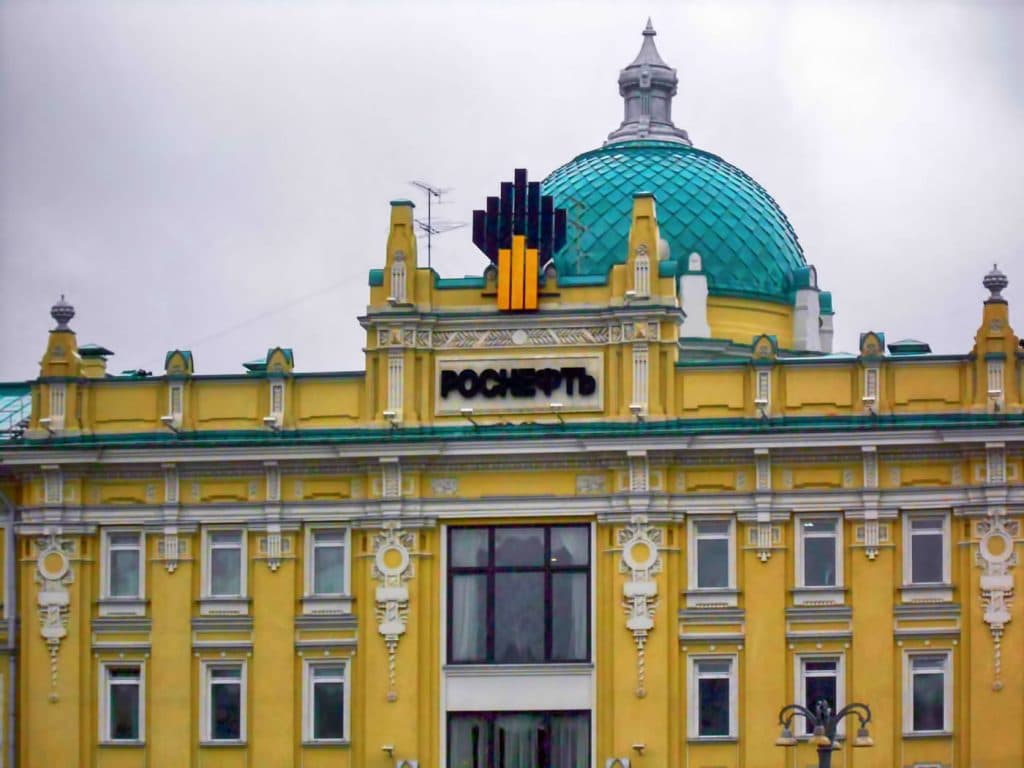
At least three Russian refineries, including the Rosneft-owned facility in Tuapse, have had to halt processing or scale back operations because of financial losses. This is reportedly due to export restrictions, rising oil prices and high borrowing costs. Yet in September, Russia’s Ministry of Economic Development was still expecting exports to increase year on year.
Rosneft, Russia’s largest oil producer, said it may delay the modernization of its refineries because of high interest rates and taxes, after its nine-month profit fell 13.9% year on year to 926 billion rubles, or 8.4 billion dollars.
The company said its production of oil and gas condensate from January to September totaled 138.3 million tonnes, averaging 3.753 million barrels per day. Rosneft did not provide comparable production figures for the previous year, but said output was under pressure from the OPEC+ production-cut agreement.
Interest rates at their highest level
The central bank raised its key interest rate to 21% last month, its highest level since the early years of Putin’s rule in 2000, when Russia was recovering from the chaos that followed the collapse of the Soviet Union. Rosneft, which has resumed its share buyback programme, did so amid high volatility in the stock markets. Reuters reports.
Rosneft chief Igor Sechin, a longtime ally of President Vladimir Putin, has long criticized the central bank for its tight monetary policy.
“To protect shareholders’ interests and prevent losses, Rosneft is considering the need to suspend refinery modernization projects. At the same time, meeting domestic demand for high-quality oil products remains a priority,” the company said.
Production set to rise
As for Russian oil production, the country’s Ministry of Economic Development raised its forecasts for revenue from oil and gas sales, a key source of budget funding, in September. It expects revenue of around 239.7 billion dollars in 2024, thanks to a more positive price outlook.
The improved outlook for Russia’s oil and gas trade underscores the challenge facing the West as it seeks to inflict lasting damage on the Russian economy through unprecedented sanctions, including oil price restrictions and import curbs, over Moscow’s war against Ukraine.
In September, the Ministry of Economic Development expected Russian oil exports to rise to 239.9 million tonnes (4.8 million barrels per day) in 2024, from 238.3 million tonnes in 2023.
The ministry also expects the average price of Russian oil sold for export to rise to 70 dollars per barrel this year, 5 dollars above its April estimate. This is also higher than the 64.5 dollars recorded in 2023 and above the 60-dollar-per-barrel price cap imposed by the West.
Recently, reports also emerged that the Russian government is planning a merger of the country’s largest oil companies, which would make the resulting entity, comprising Rosneft and Gazprom Neft, the world’s second-largest oil producer after Saudi Aramco.
Translation disclaimer
This article is a machine translation of the Czech original and has not yet been fully reviewed. In case of any doubt, please refer to the Czech version.
Sdílejte článek prostřednictvím:
You might also like


23 October 2026, 06:34