
23 October 2026, 14:38
Loading...
Czech LEX OZE III amendment: Consumer flexibility and new opportunities for solar PV and batteries
Jakub Musil
5 November 2024, 14:58
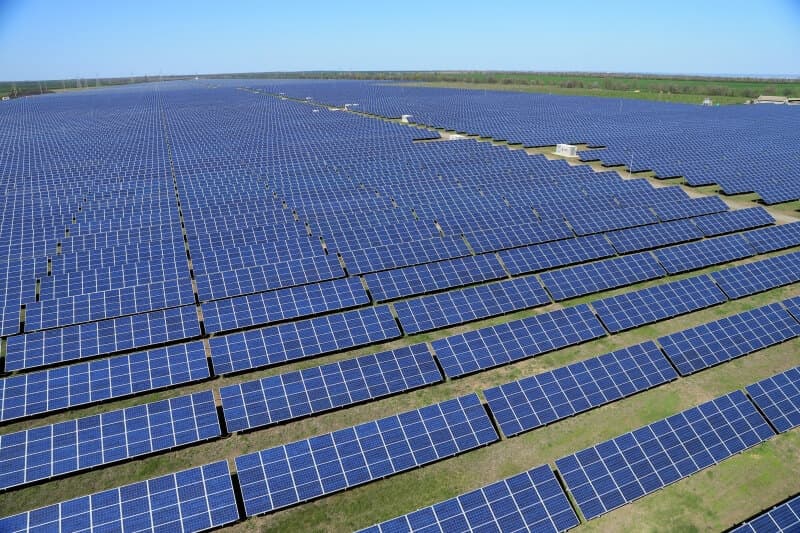
The LEX OZE III amendment to the Energy Act will allow end consumers to provide balancing services through flexibility aggregators, which could, for example, improve returns on investments in solar power plants with batteries. An EDF pilot project in London showed that revenues from these services can exceed the savings from self-consumption. Flexibility from distributed resources can also help limit the need for physical reinforcement of distribution grids.
The LEX OZE III amendment to the Energy Act, which is expected to be approved by the end of 2024, should allow end consumers of electricity to provide balancing services through flexibility aggregators. Flexibility could be provided by both small consumers, such as households operating solar photovoltaic (PV) systems, batteries and controllable appliances, and large consumers, such as shopping malls, data centres and industry. Consumers will be paid for providing these services.
A pilot study by French utility EDF and its partners under the Urban Energy Club (UEC) project showed that using residential PV systems with battery storage to provide balancing services can have a significant impact on the return on investment in these resources.
One of the project’s conclusions was that revenue from providing system services was higher in every case than the savings from using the battery for self-consumption. It should be noted that the revenue from providing system services may vary between countries and regions. However, the UEC project results show that using PV systems and batteries for system services could also have a significant impact on the return on investment in these resources in Czechia.
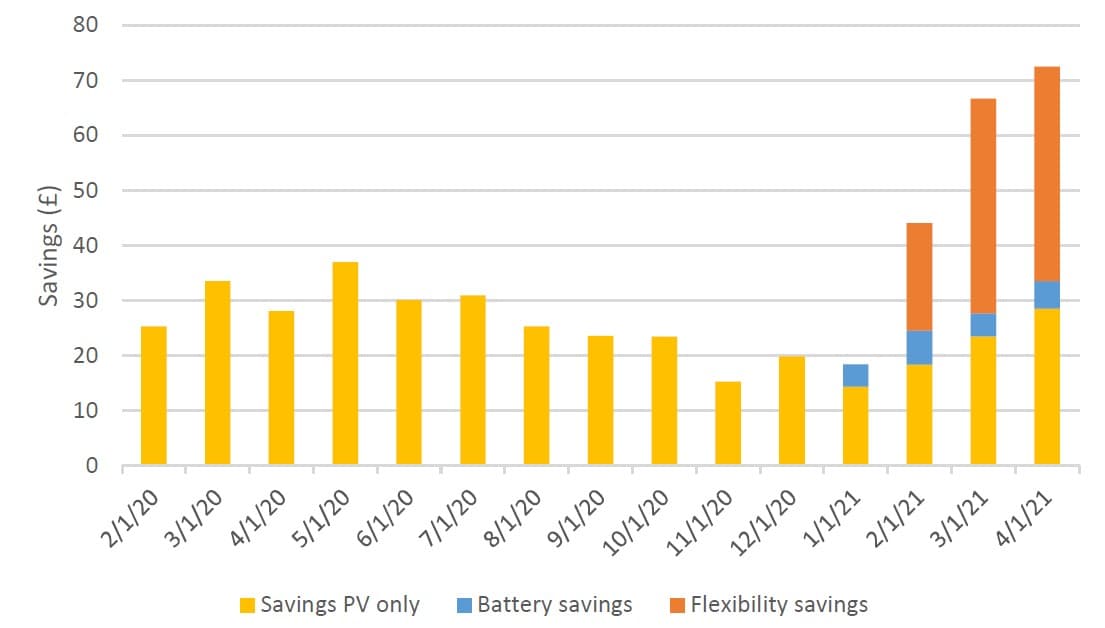
Total monthly savings for households participating in the UEC project
The possibility of providing system services could be an additional incentive to install PV systems and batteries for several reasons. In addition to potentially higher returns, prospective investors in PV and storage may be motivated by the fact that the system can deliver greater savings to its owner even when electricity from the PV system and battery is only partly used, or not used at all. This incentive could increase demand for PV system installations, presenting both an opportunity and a challenge.
Strong interest in PV installations has already necessitated faster development of distribution grids in many locations. The electrification of heating and transport is also likely to place greater demands on distribution grids in the future. Flexibility from smaller distributed resources can be used to reduce peak loads on the distribution grid, potentially replacing investment in distribution network infrastructure, as in the case of the Brooklyn Queens DSM programme.
The aggregation and use of flexibility from smaller electricity consumers, which the LEX OZE III amendment to the Energy Act is intended to enable, could therefore reduce the regulated component of energy prices not only by providing balancing services to ČEPS, but also by providing services at the distribution system level.
Translation disclaimer
This article is a machine translation of the Czech original and has not yet been fully reviewed. In case of any doubt, please refer to the Czech version.
Sdílejte článek prostřednictvím:
You might also like


23 October 2026, 11:01


23 October 2026, 06:34